BAGANBAZAR GRAPHEXPLORE · ANALYZE · GROW
Theme
LiveDesk
Home/Category desk
CATEGORY INTELLIGENCE

Science

Structured, source-linked reporting from the BAGANBAZAR GRAPH Science desk. Every indexed item remains attributable to its original outlet.

Indexed stories4,183
Active outlets34
DESK PRIORITY

The latest signal.

Search Science ↗
BAGANBAZAR GRAPHSource-attributed newsSCIENCE desk
Science

GenAI use among online adult learners associated with academic performance and technology confidence

University of Phoenix scholars have published research examining how nontraditional undergraduate students use generative artificial intelligence (GenAI) in online higher education. The study found that more frequent GenAI use was significantly associated with higher academic performance and stronger confidence in technology skills. Lower confidence in reading, writing and math, and greater time demands from work, study or family responsibilities, did not significantly predict use.

Original sourcePhys.org - latest science and technology news stories
FULL COVERAGE

More Science reporting.

56 current items
BAGANBAZAR GRAPHSource-attributed newsSCIENCE desk
Science

Self-driving lab automates semiconductor ink synthesis and thin-film characterization

Developing new functional materials often requires testing numerous material combinations. Conventional experiments reach their limits quickly when many variants must be compared. To overcome this bottleneck, the new Energy Materials Acceleration Platform (E-MAP) at KIT automates key lab steps.

Original sourcePhys.org - latest science and technology news stories
BAGANBAZAR GRAPHSource-attributed newsSCIENCE desk
Science

Delaying cherry blossom to reduce frost damage

Climate change is causing many fruit trees to flower earlier, increasing their exposure to damaging late spring frosts. A study led by the University of Göttingen shows that the plant growth regulator ethephon can delay flowering in Kordia, a sweet cherry variety, potentially protecting blossoms and developing fruitlets from frost. The treatment did not significantly delay flowering in a second sweet cherry variety or two apple varieties, highlighting the importance of crop and cultivar selection. The results are published in BMC Plant Biology.

Original sourcePhys.org - latest science and technology news stories
BAGANBAZAR GRAPHSource-attributed newsSCIENCE desk
Science

Crown-of-thorns starfish can help reefs thrive

Crown-of-thorns starfish (COTS) are infamous in the marine world. Their toxin-loaded thorns give them a menacing appearance, and they have a reputation as destroyers of coral reefs. New research from the University of Sydney challenges the perception of COTS as purely destructive. The findings suggest controlled populations can have a positive impact on coral prevalence and diversity.

Original sourcePhys.org - latest science and technology news stories
BAGANBAZAR GRAPHSource-attributed newsSCIENCE desk
Science

Science talk : Movie releases of a chemical kind, exercise and coffee

Dr Alice is back in the house for science chat and she's got popcorn for Dr Karl! But wait, why? They are talking movies and the science behind knowing what's going on in a film by measuring the chemicals released by the audience. Who knew there could be a link between 'The Hunger Games', the Amazon rainforest and being able to diagnose medical conditions? Find out what happened in the case of the 'poisoned pants' and what's the best time to exercise to lose weight? They ask the big questions about coffee – good or bad – and, should you really have a hot cup of tea to cool you down?

Original sourceShirtloads of Science
BAGANBAZAR GRAPHSource-attributed newsSCIENCE desk
Science

Nutrition, Dietetics and Your Toilet Bowl

Clare Collins is a Professor in Nutrition and Dietetics at the University of Newcastle. She joins Dr Karl for a colourful conversation about your toilet bowl and what it can tell you about your health. Don't be shy, listen up and discover what weird colours you should not see, and what they could mean. Got green poo? There's an explanation. How about 'cappuccino' wee or purple pee? You'll be surprised. Find out when to see your GP and what to show and tell. Perhaps you'll take away Dr Karl's new mantra: 'while the eyes are the window to your soul, the toilet bowl is a window to your health.

Original sourceShirtloads of Science
BAGANBAZAR GRAPHSource-attributed newsSCIENCE desk

Science

Science talk: Watering plants, the first night effect and talking to dogs

Dr Karl and Dr Alice put their heads together to discuss the latest research into well… all sorts of stuff! What do hairy leaves have to do with burning plants? Is Dr Karl's fruit and veggie classification (serve it with ice-cream it's a fruit, with gravy it's a vegetable) scientifically accurate? And what exactly do killer kangaroos have to do with being unable to sleep in an unfamiliar bed? Listen up as the Doctors tackle these questions and more. And, if you talk to dogs (like Dr Alice does) there's an experiment you might just want to try.

Original sourceShirtloads of Science
BAGANBAZAR GRAPHSource-attributed newsSCIENCE desk

Science

The Quest for Longitude

Maritime history's greatest scientific breakthrough was working out longitude, the distance (measured in degrees, minutes, and seconds) of how far a point is, either East or West, of the Prime (Greenwich) Meridian. Dr Karl unravels this discovery with Kevin Sumption and James Hunter from the Australian National Maritime Museum in Sydney, as they talk about the history of navigation and their 2016 exhibition, Ships, Clocks and Stars: The Quest for Longitude. Hear about extraordinary nautical instruments, different methodologies for calculating longitude, and the impact of these inventions and explorations on the world today.

Original sourceShirtloads of Science
BAGANBAZAR GRAPHSource-attributed newsSCIENCE desk
Science

The Open Source Malaria Project

Over 200 million people are infected with malaria every year. Dr Alice Williamson, research chemist, lecturer and science communicator at the University of Sydney talks to Dr Karl about her work with Open Source Malaria. This is a worldwide drug discovery project that shares all data and results (no patents please!) in an incredible collaborative effort to tackle the disease. Hear about the problems encountered, Alice's work in the lab, the thrill of working together with high school and undergraduate students, and the problem researchers are hoping to have that will point towards a possible cure.

Original sourceShirtloads of Science
BAGANBAZAR GRAPHSource-attributed newsSCIENCE desk
Science

The Kepler Mission Scientist: Part 2

Part Two reveals what happened when one, and then two (!!) of the Kepler Spacecraft reaction wheels went to lunch, how the news almost drove Dr Karl to whiskey, and how the engineers found a brilliant solution and continued on with Kepler Mission 2. A jaw-dropping discussion about the discoveries made, including potentially habitable earth-sized planets, the inconstancy of stars, and the probability of finding evidence of life beyond planet Earth.

Original sourceShirtloads of Science
BAGANBAZAR GRAPHSource-attributed newsSCIENCE desk
Science

The Kepler Mission Scientist

Dr Karl looks to the stars to kick off his new podcast with NASA Ames research astrophysicist Dr Natalie Batalha, the Kepler Mission Scientist. From 2009 to 2013, the Kepler Space telescope looked for exoplanets – planets outside our solar system. It stared unblinkingly at a patch of sky which Dr Batalha had selected hoping to find not just exoplanets, but exoplanets in the Goldilocks zone. Find out what happened, what can go wrong and how Dr Karl's mind was blown to astronomical proportions.

Original sourceShirtloads of Science
BAGANBAZAR GRAPHSource-attributed newsSCIENCE desk
Science

Episode 30: WOOP, There It Is

Many of us have heard that we should think positive... Visualize ourselves achieving our goals. But researcher Gabriele Oettingen finds, this isn't actually the best advice. Instead, we should use her strategy — which she calls WOOP. Hosted by Simplecast, an AdsWizz company. See pcm.adswizz.com for information about our collection and use of personal data for advertising.

Original sourceHidden Brain
BAGANBAZAR GRAPHSource-attributed newsSCIENCE desk
Science

Episode 29: Traffic

Traffic. You hate it, we hate it, the rest of the world hates it, and unfortunately, our best efforts to curb it usually only make it worse. This week on Hidden Brain, we visit a few of the world's most congested cities, and investigate a few options to make driving safer and less maddening. Hosted by Simplecast, an AdsWizz company. See pcm.adswizz.com for information about our collection and use of personal data for advertising.

Original sourceHidden Brain
BAGANBAZAR GRAPHSource-attributed newsSCIENCE desk
Science

Episode 28: #AirbnbWhileBlack

The sharing economy is great. It gives us opportunities to connect with strangers... to pool resources... to get a cheap ride, or a weekend away. But this week on Hidden Brain, we'll look at how these new platforms can amplify some old biases. Hosted by Simplecast, an AdsWizz company. See pcm.adswizz.com for information about our collection and use of personal data for advertising.

Original sourceHidden Brain
BAGANBAZAR GRAPHSource-attributed newsSCIENCE desk
Science

Episode 35: Creature Comforts

This week, Hidden Brain considers the power of touch. First, Alison MacAdam tells us the story of her security blanket, called Baba. Then, Shankar interviews writer Deborah Blum about groundbreaking experiments into the importance of affection for young children. Hosted by Simplecast, an AdsWizz company. See pcm.adswizz.com for information about our collection and use of personal data for advertising.

Original sourceHidden Brain
BAGANBAZAR GRAPHSource-attributed newsSCIENCE desk
Science

Episode 31: Your Brain on Uber

Uber is built on the scourge of surge. When demand is high, the company charges two, three, even NINE-POINT-NINE times as much as normal for a ride. Riders hate it . . . but not so much that they stop riding. Yep, "dynamic pricing" has helped the company to grow into one of the largest taxi services in the world. What's the psychology behind it? Shankar sits down with Uber's Head of Economic Research Keith Chen to talk about when we're most likely pay for surge, when we hate it the most, and why monkeys would probably act and feel the same way. That's right. Monkeys. Hosted by Simplecast, an AdsWizz company. See pcm.adswizz.com for information about our collection and use of personal data for advertising.

Original sourceHidden Brain
BAGANBAZAR GRAPHSource-attributed newsSCIENCE desk
Science

Encore of Episode 7: Lonely Hearts

Jesse always wanted to fall in love. So when the perfect woman started writing him letters, it seemed too good to be true. Because it was. This week, a story about a con — with a twist. When the con was exposed, its victims defended the con artists. They still wanted to believe the lie Hosted by Simplecast, an AdsWizz company. See pcm.adswizz.com for information about our collection and use of personal data for advertising.

Original sourceHidden Brain
BAGANBAZAR GRAPHSource-attributed newsSCIENCE desk
Science

Episode 37: Smoke & Mirrors

Six months ago, Hidden Brain's Max Nesterak made a resolution to quit smoking. But as we all know... resolutions are made to be broken. This week, we check in with Max to find out how he's fared, and give you social science insight to help you quit your bad habits too. Hosted by Simplecast, an AdsWizz company. See pcm.adswizz.com for information about our collection and use of personal data for advertising.

Original sourceHidden Brain
BAGANBAZAR GRAPHSource-attributed newsSCIENCE desk
Science

Biggest political donors so far

Using data from the Federal Election Commission, the Washington Post called out the fifty biggest donors in 2026 and categorized them by the parties they donated to. The gray rectangles are donations from organizations, which happen to be related to cryptocurrency, gambling, AI, and guns. Together, this small group of donors have donated $1.7 billion. Tags: donors, election, politics, Washington Post

Original sourceFlowingData
BAGANBAZAR GRAPHSource-attributed newsSCIENCE desk
Science

Music generated through live freeway traffic feed

A live Caltrans feed of the southbound 101 highway in California is translated to music-ish tones. Each vehicle that passes is a note. Select the instruments you want. It doesn’t compare to actual composition, but the live aspect is interesting. You might want to view it on a computer that is younger than a decade, as mine buckled under the pressure. Tags: highway, music, traffic

Original sourceFlowingData
BAGANBAZAR GRAPHSource-attributed newsSCIENCE desk
Science

Marine Biology Adventures

Marine biologist, diver and author Dr Helen Scales takes Dr Karl deep beneath the waves to share her passion for life in the ocean. Helen talks about her new book 'Spirals in Time' on the secret life of shells. Hear about 'clacking' oysters, the legend of the Golden Fleece (sea silk) and a creature resembling a pinecone crossbred with a slug. There's mathematics in the spirals of shells, slave trading in the history of the cowrie shell and just imagine a Harry Potter golden snitch of the sea… it's real and has an incredibly important role to play in ocean life.

Original sourceShirtloads of Science
BAGANBAZAR GRAPHSource-attributed newsSCIENCE desk
Science

Episode 205 - April Richardson

April Richardson (@apey) of Almost Genius, Go Bayside and @midnight joins Matt and Andy to talk about living next door to The Flash, Johnny Depp's Aussie apology, Orson Welles' Paul Masson ad, Dyson face, Andy’s possible bidet purchase, a dung-based clue to Hannibal’s crossing route, a paralyzed man (sort of) playing guitar, dinosaurs and their eggs and a real-time re-creation of the sinking of the Titanic.

Original sourceProbably Science
BAGANBAZAR GRAPHSource-attributed newsSCIENCE desk
Science

Episode 204 - Jon Huck and Sunah Bilsted

Comedian/actors Jon Huck (@jonhuck) and Sunah Bilsted (@thesunah) join Matt and Andy to talk about showering techniques, new pets, that Warner Bros. frog, chemistry on acid, a Carl Sagan tribute act, the historic SpaceX landing, hyperhidrosis, antiperspirant conspiracies, a too-stealthy sea vessel, the upcoming book Grunt, Hawking and the Russians sending a tiny craft to Alpha Centauri, a bullshit paper on creepiness, and antimemories.

Original sourceProbably Science
BAGANBAZAR GRAPHSource-attributed newsSCIENCE desk
Science

Episode 203 - Jason Belleville

Jason Belleville (@bigbelleville) has written for Ground Floor and Angie Tribeca, among many other shows, and he joins Matt and Andy to discuss mustaches and tattoos, academic papers, encyclopedias, Stan and Donavan Freberg, using giant lasers to hide from aliens, grammar correction and being an asshole, Andy getting a thing wrong, growing skin and nude mice, a battery-operated salty fork, flavors on planes and the greatest number of digits of pi we'll ever really need.

Original sourceProbably Science
BAGANBAZAR GRAPHSource-attributed newsSCIENCE desk
Science

Episode 202 - Jessica Michelle Singleton and Christina Walkinshaw

Comedians Jessica Michelle Singleton (@JMScomedy) and Christina Walkinshaw (@walkinsauce) join Matt and Andy to discuss bachelor parties, dating, Alaska, super coffee, Google’s April Fools, Microsoft AI, a scientifically impossible Indiegogo, Edx.org's free learning, Vasalgel in rabbits, butt stuff, bunnies in wine glasses, rabbit kidneys, long term good drug effects and fracking-induced earthquakes.

Original sourceProbably Science
BAGANBAZAR GRAPHSource-attributed newsSCIENCE desk
Science

Episode 201 - Tom Bell

Tom Bell (@tombellforever) of The Leisure Class/Project Greenlight and comedy duo Tommy and the Weeks joins Matt and Andy for a bedroom recording involving a call from a private investigator, Boaty McBoatface, Diana and Mother Teresa, Bob the Robot and Horrible Science, following our robot overlords to disaster, unscrambling eggs to cure cancer, an academic paper that cites The Creator, a video game ProbSci shoutout, eagles vs. drones, Janna Levin's new book and spider boners in amber.

Original sourceProbably Science
Record-setting Fat Bear Week turnout overloads voting siteSource linked
Science

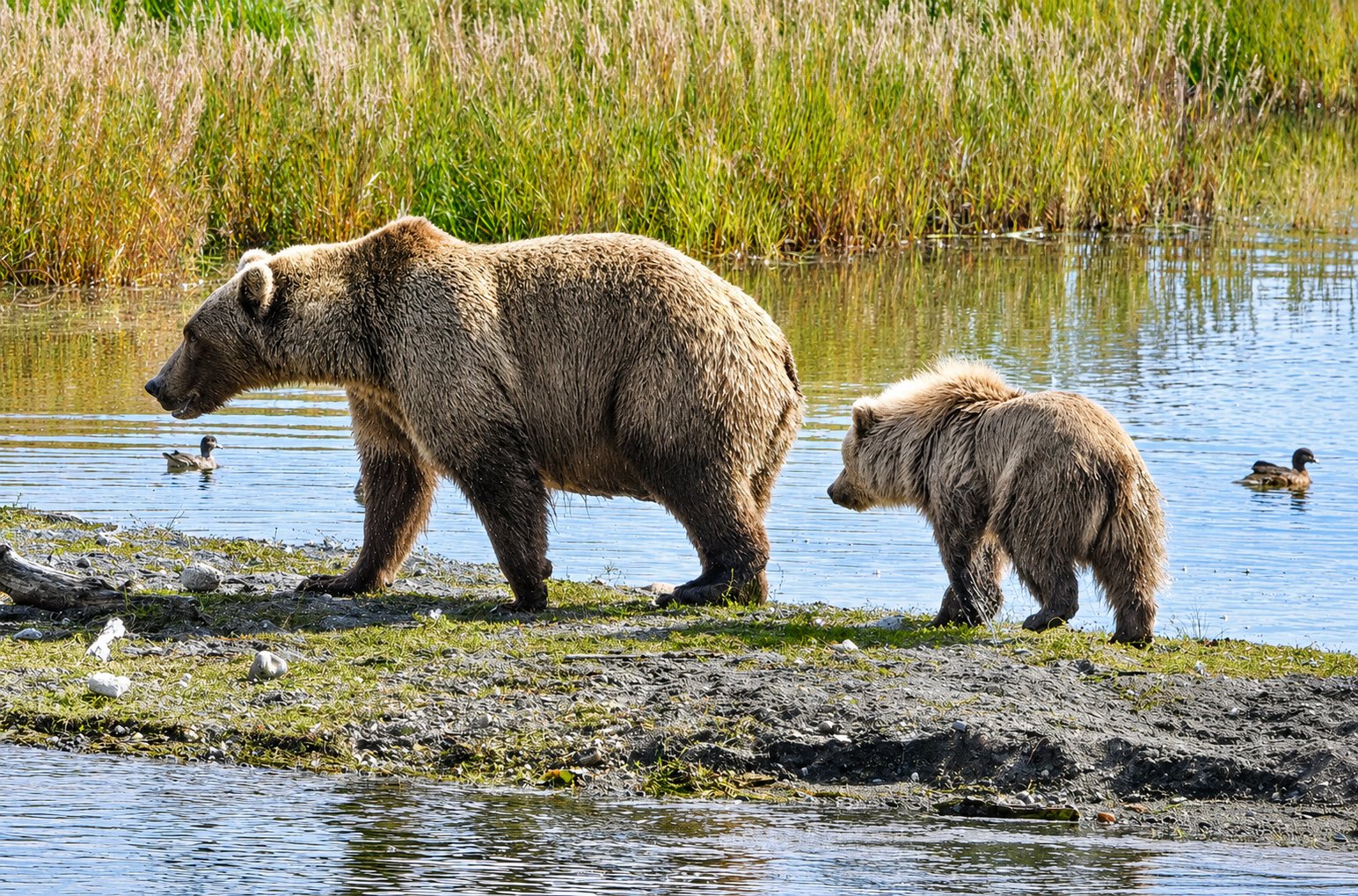
Record-setting Fat Bear Week turnout overloads voting site

If you spent your day trying to vote for your favorite chunky bear without any luck, you’re not alone. The biggest Fat Bear Week turnout of all time triggered 404 errors and slow-loading pages for fans eager to cast their votes online. On Facebook, explore.org announced that the Day 1 voting would continue tomorrow, September 23. And if you were able to cast your vote (lucky you!), your vote still counted. Explore.org asked fans who successfully cast a vote to close the voting page when done. “The platform we use to host Fat Bear Week is throttling the number of people who can view a poll at once,” the organization explained on their site. “We are working with them to resolve this. If you have voted in Fat Bear Week already please close the page to allow others to view the polls.” As a reminder, Day 1 of Fat Bear Week included four head-to-head matches of mom and single females: Bear 132 and cubs vs. Bear 284 and cubs Bear 806 vs. Bear 901 Bear 909 vs. Bear 428 Bear 131 vs. Bear 910 You can learn more about all the bears competing in Popular Science‘s deep-dive Day 1 breakdown. Voting is open between 12-9pm EDT (9am-6pm PDT, 8am-5pm AKDT) at explore.org. The winner will be crowned on Tuesday, September 29. If you’d like another way to support the bears, donations can be made to Katmai Conservancy’s Otis Fund. The Otis Fund is named after Bear #480 (Otis), who won four Fat Bear Week titles before his death around 2024. All donations made between September 22 and October 3 will be matched by explore.org. The post Record-setting Fat Bear Week turnout overloads voting site appeared first on Popular Science.

SourcePopular Science
Plesiosaurs vomited indigestible pellets like owlsSource linked
Science

Plesiosaurs vomited indigestible pellets like owls

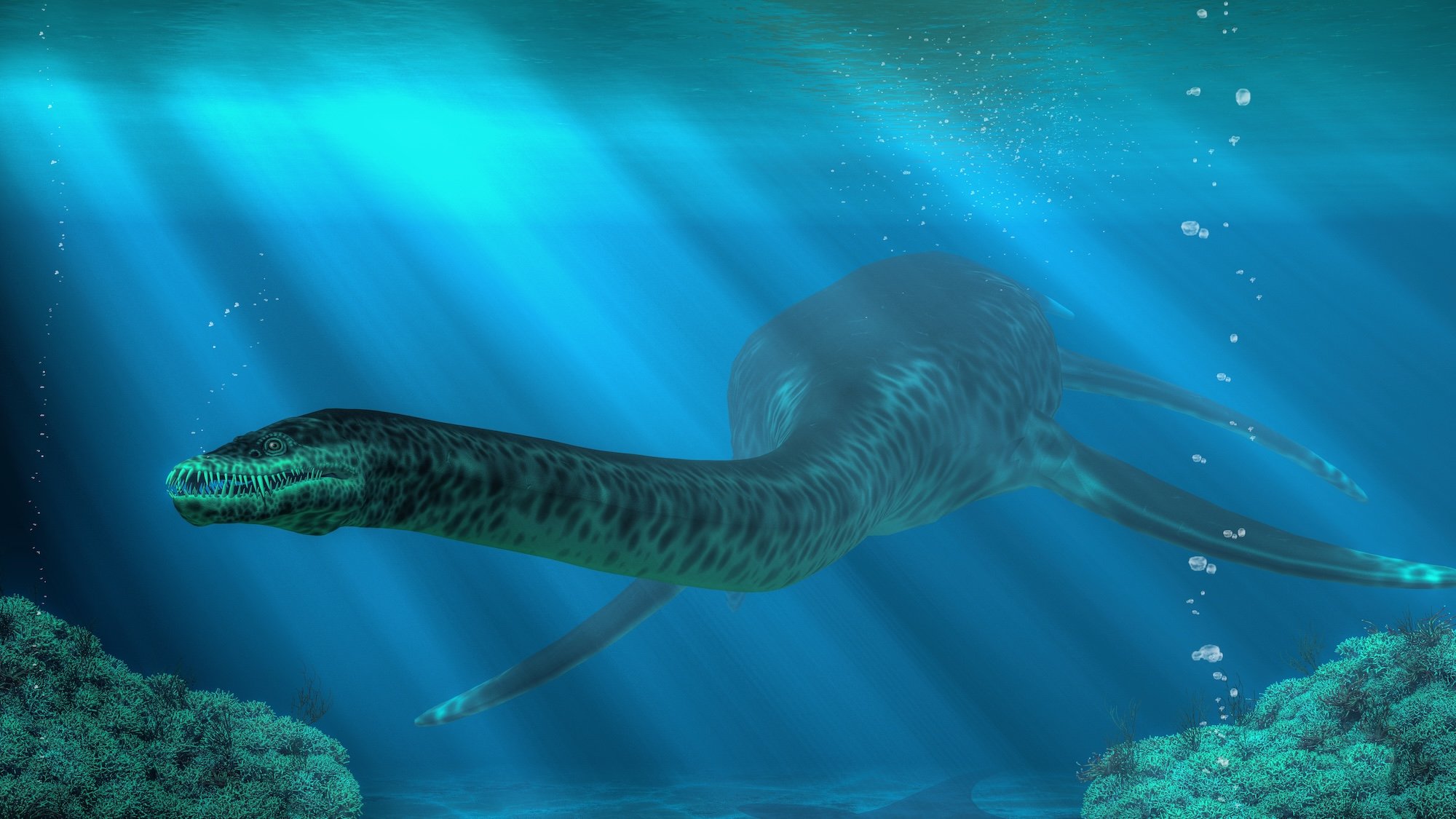
The long-necked plesiosaurs that swam in oceans during the Jurassic Period frequently made detours into shallower river deltas to regurgitate indigestible portions of their meals. The evidence detailed in a study published today in the journal Geological Magazine isn’t for the squeamish. Paleontologists base their new theory on fossilized vomit similar to owl pellets. While owls famously regurgitate the indigestible bones and fur of their prey, other animals also routinely spit out unwanted leftovers. Many fur seals and marine crocodiles behave similarly; although their regular post-meal efforts require a bit more work. While an owl simply deposits pellets wherever they feel like it, these aquatic species first travel onto land before regurgitating. It now appears some of the planet’s most successful ocean predators engaged in the same digestive workarounds. Plesiosaurs belong to a family of marine reptiles that existed for over 140 million years between the Middle Jurassic and Early Cretaceous periods. Generally ranging between 6.5 and 43 feet in length, the species featured lengthy necks and sleek, flippered bodies. This anatomy allowed them to excel at gobbling up ancient fish and cephalopods, but paleontologists believe the reptiles also often craned their heads down to devour shellfish resting on the ocean floor. Drill core image of 160-million-year-old delta sand containing a clump of shells and plant remains, interpreted as plesiosaur vomit. Credit: Dirk Knaust Dirk Knaust Plesiosaurs went extinct about 100 million years ago, but skeletal fossils aren’t all that remains from the era. Under specific conditions, animal feces and even vomit were also preserved in the forms of coprolites and regurgitalites. For decades, paleontologist Dirk Knaust has primarily examin

SourcePopular Science
Tiny two-headed turtle found in Cape CodSource linked
Science

Tiny two-headed turtle found in Cape Cod

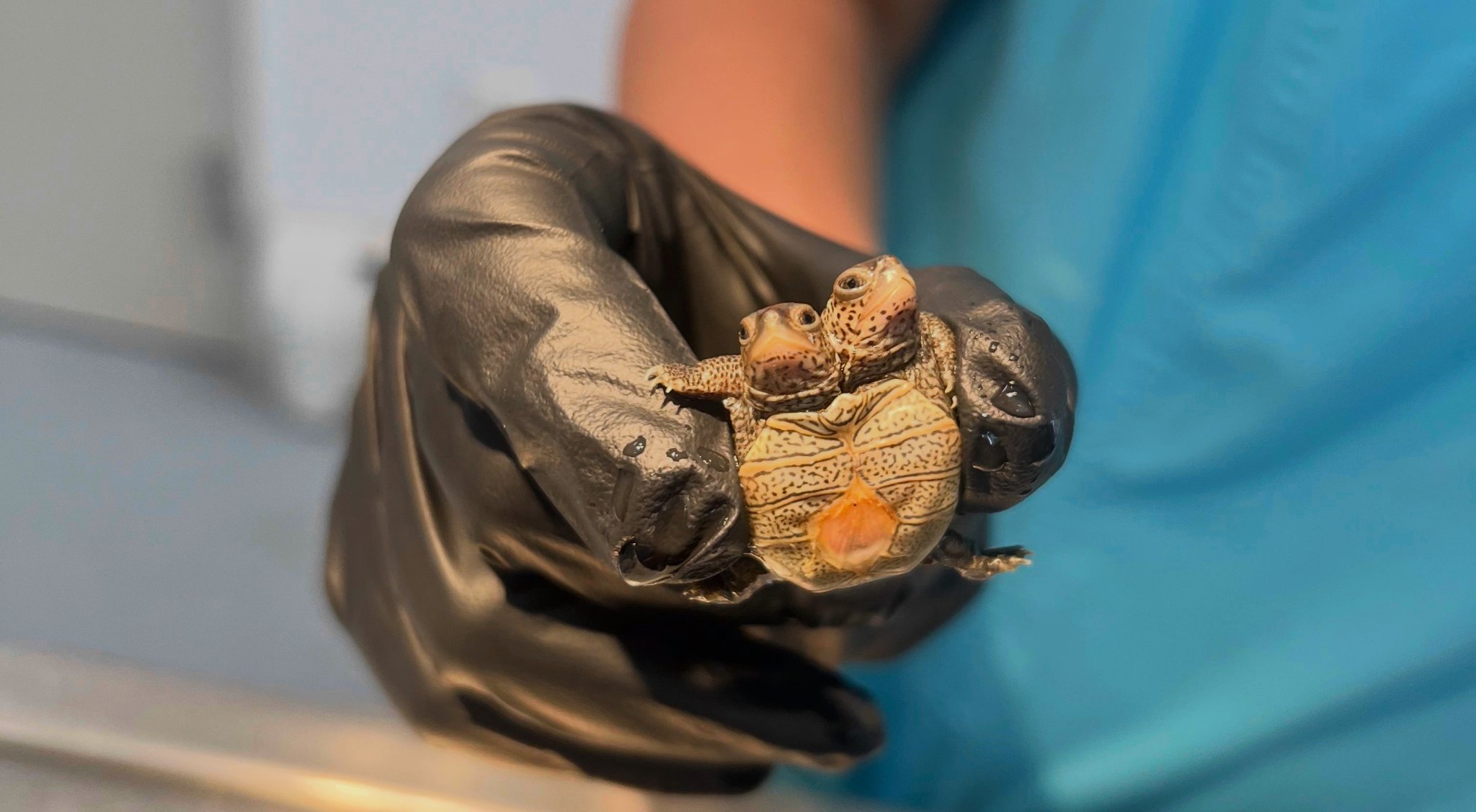
Last week, something strange arrived at the Cape Wildlife Center. Not one turtle, not two turtles—something in between. A tiny two-headed turtle weighing less than a nickel ended up at the Cape Cod facility. The bicephalic (two-headed) reptile is a diamondback terrapin (Malaclemys terrapin), aquatic turtles found in brackish waters along the United States’ Atlantic and Gulf coasts. Diamondback terrapins are classified as Threatened by the Massachusetts Endangered Species Act, and their broader conservation status at the federal level is currently under review. The two-headed turtle hatched in a protected nesting site in Wellfleet, Cape Cod, after which the Mass Audubon Wellfleet Bay Wildlife Sanctuary transferred it to the Cape Wildlife Center. Its arrival didn’t come as a complete surprise to the staff because it’s not the first time they’ve cared for a two-headed diamondback terrapin, Zak Mertz, CEO of New England Wildlife Centers (including the Cape Wildlife Center), tells Popular Science. The turtle weighs less than a standard nickel. Image: New England Wildlife Center Staff, used with permission “This is actually the third set we have seen within the last six years,” he explains. “The belief is that bicephaly happens when an embryo goes to split—like it would for twins or something—but doesn’t separate fully. And because of that, each case might have a slightly different orientation, they might have more or less overlapping anatomy.” The team’s impression is that this recent case involves slightly more shared anatomy than previous pairs, which Mertz thinks is a good thing. While the team hasn’t conducted advanced imaging to see what’s going on beneath the shell yet, the hatchling appears to be in good health, and needs to grow a little more before they can determin

SourcePopular Science
China’s new supersonic plane could travel twice as fast as soundSource linked
Science

China’s new supersonic plane could travel twice as fast as sound

The United States isn’t the only nation itching to restart supersonic passenger air travel. Earlier this month, China announced its TMS-10 experimental demonstrator plane has entered the final assembly phase and is on schedule to conduct its first test flight by the end of the year. The fullscale aircraft engineered by Tianmushan Laboratory in collaboration with Beihang University marks a major step forward from the 1:18-scale prototype tested in June 2025. In that phase, the smaller model flew below Mach 0.2 while researchers assessed the the plane’s low-speed takeoff, stability, control, and landing capabilities. This time around, the TMS-10 will attempt to reach supersonic speeds while mitigating any accompanying sonic boom. The TMS-10 project’s goal is to introduce a new business-class airplane that seats 10–15 passengers. Its overall design is markedly different from NASA’s X-59 supersonic plane, which relies on dampening any sonic boom so that it’s perceived as a much quieter sonic “bump” by anyone on the ground. Instead, TMS-10’s forward wing (known as a canard) and its T-tail shape work together to prevent shock waves formed around the nose and wings from combining into a single, louder wave. Meanwhile, rear features will also redirect and further weaken soundwaves to avoid unwanted decibels. If successful, the TMS-10 will one day ferry travelers at an upward cruising speed of Mach 2 (around 1,300 miles per hour). The plane will also support subsonic flights at about Mach 0.95 (730 mph). Those speeds would hypothetically cut the current two-hour flight from Beijing to Shanghai down to only 30 minutes. There is a lot to consider when creating a supersonic aircraft for everyday travel. The design must be durable enough to handle the heat generated at such high spe

SourcePopular Science
Fragment of oldest known peace treaty discovered in TurkeySource linked
Science

Fragment of oldest known peace treaty discovered in Turkey

Around 1259 BCE, two ancient kingdoms finally decided to let bygones be bygones. After two centuries of intermittent skirmishes for regional control, the Egyptian Pharaoh Ramesses II and Hittite King Ḫattušili III agreed to what is now known as the Kadesh Peace Treaty. The rulers signed their agreement about 15 years after the famous Battle of Kadesh, marking the oldest known peace proclamation in recorded history. Archaeologists have extensively documented treaty fragments preserved on Akkadian cuneiform tablets and Egyptian temple wall hieroglyphics, but a newly discovered section found in present-day Turkey offers a resonant message 3,200 years after its inscription. To celebrate the International Day of Peace on September 21, Turkey’s Ministry of Culture and Tourism announced the recent identification of a cuneiform fragment corresponding to Articles 12–20 in the famed treaty. Excavated at the Büyükkale royal palace site of Hattusha in northern Anatolia, the clay tablet details how both kingdoms should handle receiving refugees who fled from either side during the conflict. A full transcription of the recently recovered section isn’t available yet, although ministry officials mentioned a portion of it focuses on protecting citizens’ homes from destruction. While the regulations differ from present-day asylum protections and more resemble mutual obligations agreed upon by Ramesses and Ḫattušili, the section still shows how strained kingdoms still managed to find common ground over 3,000 years ago. Hattusha has provided archaeologists with thousands of cuneiform artifacts contextualizing the politics, culture, and day-to-day life of the ancient Hittites. The first fragments of the Kadesh Peace Treaty were discovered amid excavations during the early 20th century, and

SourcePopular Science
BAGANBAZAR GRAPHSource-attributed newsSCIENCE desk
Science

Reversing Parkinson's

Parkinson’s Disease is one of the major neurodegenerative conditions. Cells die, for reasons not fully understood, causing a reduction in the production of the neurotransmitter, dopamine, and a raft of physical and behavioural problems. Although effective drug treatments are available, they wear off over time and have side effects. The highly individual nature of the condition and variation in its progression also makes dosage difficult. Sue Broom reports on two new approaches that could lead to treatments for Parkinson’s. One potential therapy is to replace the dying cells with new ones. This was tried several decades ago but the results were not promising. The new Transeuro trial of cell therapy hopes to lead to better outcomes. The second approach is to use stem cells. Sue Broom talks to the doctors and patients involved in these trials. Image: Parkinson's disease MRI brain scan,© Science Photo LibraryPresenter/Producer: Sue Broom

Original sourceDiscovery
BAGANBAZAR GRAPHSource-attributed newsSCIENCE desk
Science

Researchers find convenience, drinking water access and advertising drive global bottled water consumption

Over 1 million plastic water bottles are bought globally every minute. That translates into more than 1.3 billion every day and more than 500 billion every year. That's a lot of plastic, and much of it winds up in human bodies and landfills. The long-term health implications are still unknown, but preliminary research shows risks to human health, with nano- and microplastics accumulating in our livers, kidneys and intestines.

Original sourcePhys.org - latest science and technology news stories
BAGANBAZAR GRAPHSource-attributed newsSCIENCE desk
Science

Zika virus assembles without protein segment long deemed essential

For years, scientists were certain that two factors were involved in the assembly of active, highly infectious Zika viruses in human cells: a specific viral protein in its entirety and a turncoat human enzyme that assured viral maturity. New research suggests that Zika virus has been far less reliant on those components than previously thought.

Original sourcePhys.org - latest science and technology news stories
BAGANBAZAR GRAPHSource-attributed newsSCIENCE desk
Science

Pigeons' proposed inner-ear compass runs into a noise problem

A pigeon turning its head might seem an unlikely electricity generator. Yet one proposed explanation for the bird's magnetic sense depends on exactly that: Turning through Earth's magnetic field would produce tiny electrical signals inside its ears. However, a theoretical study suggests that this miniature generator cannot supply directional information fast enough to work as a compass. The problem is electrical noise produced within the proposed sensor itself.

Original sourcePhys.org - latest science and technology news stories