BAGANBAZAR GRAPHEXPLORE · ANALYZE · GROW
Theme
GLOBAL SEARCH

Find the signal.

180 source-attributed results for “Science”

Precision Neuroscience raises $250m at a $1bn valuation, NYT reportsSource linked
Technology

Precision Neuroscience raises $250m at a $1bn valuation, NYT reports

Precision Neuroscience has raised $250m in a Series D round for its brain-computer interface, the New York company announced on Thursday. Bill Ackman’s Pershing Square, the Ackman Oxman Institute and an unnamed life sciences fund led the round. The round values Precision at just over $1bn, The New York Times reported. Pershing Square and the […] This story continues at The Next Web

SourceThe Next Web
BAGANBAZAR GRAPHSource-attributed newsTECHNOLOGY desk
Technology

75: Aluminum Foil Everything

The Apple Car can't be real, right? Plus NSA and Samsung TV spying and Apple's greatest threats. This episode of Clockwise is sponsored by: Loot Crate: Like getting a cool gift from someone who knows what you like. Get $3 off a new order with code CLOCKWISE. Guest Starring: Georgia Dow and Glenn Fleishman Links and Show Notes: Support Clockwise with a Relay FM Membership Features Of The Apple Car | The Onion - America's Finest News Source Apple Gears Up to Challenge Tesla in Electric Cars - WSJ Motorola ROKR debuts as first iTunes phone | Macworld Ford 021C - Wikipedia, the free encyclopedia The World's Most Sophisticated Malware Ever Infects Hard Drive Firmware | Popular Science Jonathan Ive and the Future of Apple - The New Yorker Daring Fireball: Thinking About the Split in Apple Watch Sales by Model Homer Car

Original sourceClockwise
BAGANBAZAR GRAPHSource-attributed newsSCIENCE desk

Science

Episode 199 - Rick Rosner, the Man with the Second-Highest IQ in the World

Rick Rosner (@dumbassgenius) has the second-highest IQ score in the world, and his resume includes stints as a bouncer, a stripper, a nude art model and a writer on numerous TV shows. Rick joins Matt, Andy and returning guest Dax Jordan (@daxjordan) to discuss What3Words, xkcd's take on passwords, IQ tests, Rick's Errol Morris interview, spending ten years in high school, stupid California tax rules, Rick's informational theory of the universe, Olbers’ Paradox, The Singularity, Ray Kurzweil, being Borg-ed up, Alcor freezing heads, taking 70 vitamins per day, Rick's gym obsession, writing for MTV's Remote Control, doing nude art modeling with shingles, Rick's Who Wants To Be A Millionaire controversy and his books on Amazon.

Original sourceProbably Science
BAGANBAZAR GRAPHSource-attributed newsSCIENCE desk
Science

Episode 197 - Dr. Chiara Mingarelli

Dr. Chiara Mingarelli (@gravitate_to_me), a Marie Curie Fellow in gravitational wave astrophysics at Caltech, joins the proceedings to talk about low-frequency gravitational waves, pulsar timings arrays and black hole binary systems with masses that are billions of times that of the Sun. This episode was recorded before LIGO's recent announcements confirming the detection of gravitational waves.

Original sourceProbably Science
BAGANBAZAR GRAPHSource-attributed newsSCIENCE desk
Science

Gravitational Wave LIGO Spectacular!

One of the biggest scientific breakthroughs of our time calls for an emergency special episode featuring returning guests Dr. Jamie Rollins and Dr. Larry Price, both of whom worked on LIGO, the device that for the first time in history confirmed the existence of gravitational waves, along with theoretical astrophysicist and black hole expert Dr. Janna Levin. Topics discussed include Matt's surprising illness, science fluff, Marco Drago's discovery?, How LIGO works, 30 solar mass black holes, test signals, the actual paper explaining the recent gravitational wave findings, Janna's new book, Relativity 101, BICEP's failure, new black holes, Scorpion!, our T-shirts, Apple vs. the FBI and what the point of all this is. Visit LIGO.org or LIGO.caltech.edu for all your gravitational wave needs!

Original sourceProbably Science
BAGANBAZAR GRAPHSource-attributed newsSCIENCE desk
Science

Episode 195 - Maude Garrett

Maude Garrett (@maudegarrett) of SourceFedNERD and Geek Bomb joins Andy (@andytwood) and Matt (@mattkirshen) to discuss the weather, Marge, the rains are here, Foley artists, weird childhood memorization, geek vs. nerd diagrams, the ending of Grease and Jurassic Park, a computer that beat a Go champion, E-sports, a new planet, a new HIV treatment, how quickly conspiracies would reveal themselves, and a monkey head transplant. Also, we realize sound cuts out intermittently in the last half of the episode and for that we apologize!

Original sourceProbably Science
BAGANBAZAR GRAPHSource-attributed newsSCIENCE desk
Science

Episode 193 - Adam Savage and Paul and Storm live from SF Sketchfest

MythBusters' Adam Savage (@donttrythis) and musical comedy duo extraordinaire Paul and Storm (@paulandstorm) join Matt (@mattkirshen) and Andy (@andytwood) for a live performance at the California Academy of Sciences (@calacademy) as part of SF Sketchfest (@SFSketchfest), discussing science myths that won't die, Billy Joel videos, our overeducated audience, soaking kiwis and the wet strength of Charmin. This episode is brought to you by 1Password. Simplify your online life and stop worrying about remembering dozens of passwords by visiting https://agilebits.com/store?d=science for 25% off of your 1Password purchase.

Original sourceProbably Science
BAGANBAZAR GRAPHSource-attributed newsSCIENCE desk
Science

Episode 192 - Ryan Conner

Matt and Andy are back from a holiday hiatus to welcome Last Comic Standing alum Ryan Conner (@rccomedy) to the podcast, delving into topics including the passing of David Bowie, Alvin Stardust, British pantomimes, American and British Gladiators, computer programming, Andy Sidaris movies, a mountain lion with horrifying teeth growing out of its head, praying mantises in 3D glasses, wine story corrections, types of drunks, sperm switches, bone foam, Ryan's family and adult industry namesake and Ryan's podcast Caligula's Grotto.

Original sourceProbably Science
BAGANBAZAR GRAPHSource-attributed newsSCIENCE desk
Science

2015 Recap Bonus Episode

With Jesse and Matt still out of town, Andy invited friends of the show TJ Chambers, Rylee Newton, Travis Clark, Karl Hess, Laura House, Jackie Kashian and Mitch Burrow to give recommendations on things from 2015 that are worth checking out. Enjoy this attempt at positivity and please forgive the poor sound quality and near-constant crosstalk. We'll be back with new episodes soon! Happy 2016!

Original sourceProbably Science
BAGANBAZAR GRAPHSource-attributed newsSCIENCE desk
Science

AI-guided mutations help viruses infect bacteria up to 1 million times more effectively

Biochemists at the University of Wisconsin–Madison are using AI to tackle one of modern medicine's most pressing challenges: the rise of antibiotic-resistant bacterial infections. Using data collected in their lab, biochemistry professor Vatsan Raman and his team built an AI model to identify new possibilities for fighting bacteria with one of their natural enemies. Their findings, published in the journal Cell Systems, could help accelerate the development of alternatives to traditional antibiotic drugs.

Original sourcePhys.org - latest science and technology news stories
BAGANBAZAR GRAPHSource-attributed newsSCIENCE desk
Science

New post office policy could lead to the rejection of tens of thousands of mail-in ballots in November

A new post office policy that might sound like a technicality—one truck per day to rural post offices instead of two—could result in the rejection of tens of thousands of mail-in ballots in November, according to a new report from the Brookings Institution.

Original sourcePhys.org - latest science and technology news stories
BAGANBAZAR GRAPHSource-attributed newsSCIENCE desk
Science

NASA to study human health and performance during Crew-13 mission

During NASA's SpaceX Crew-13 mission aboard the International Space Station, astronauts will support a series of biomedical and human performance investigations, including a new collaborative effort to study how spaceflight affects blood flow and clotting. NASA also is testing crew members' manual piloting skills, evaluating methods to counter vision and brain changes, gathering essential health data to inform future missions, and measuring forces astronauts experience during their return to Earth to help refine re-entry hardware and procedures.

Original sourcePhys.org - latest science and technology news stories
BAGANBAZAR GRAPHSource-attributed newsSCIENCE desk
Science

Picosecond pulses push superconductors beyond their critical-current limit

Superconductors can carry electrical current without resistance, but only up to a maximum value known as the critical current. The critical current is a crucial figure of merit for applications, and materials science has long been focused on increasing this limit. Researchers at the Max Planck Institute for the Structure and Dynamics of Matter (MPSD) have now shown that, in type-II superconductors, this conventional limit can be exceeded when the current is applied for only a few picoseconds.

Original sourcePhys.org - latest science and technology news stories
BAGANBAZAR GRAPHSource-attributed newsSCIENCE desk
Science

The “big one” might not come alone: Two major West Coast faults may strike back to back

The Cascadia subduction zone and northern San Andreas fault may sometimes rupture in rapid succession, according to evidence preserved in 3,100 years of ocean sediments. Researchers identified unusual sediment layers suggesting that earthquakes on the two systems have occurred just minutes to hours apart, including around the massive Cascadia earthquake of 1700. If such synchronization happened again, several major West Coast cities could face emergencies at nearly the same time.

Original sourceLatest Science News -- ScienceDaily
BAGANBAZAR GRAPHSource-attributed newsSCIENCE desk
Science

Scientists say a critical Atlantic Ocean current is weakening and the effects could be global

Scientists have found strong observational evidence that a key part of the Atlantic Meridional Overturning Circulation has been weakening across a wide stretch of ocean for nearly two decades. The slowdown could eventually reshape weather patterns, rainfall, storms, winters, and coastal sea levels around the Atlantic.

Original sourceLatest Science News -- ScienceDaily
BAGANBAZAR GRAPHSource-attributed newsSCIENCE desk
Science

Why Viking museums still can’t escape the warrior myth

Scandinavian museums are trying to move beyond the familiar image of Vikings as sword-wielding male warriors, highlighting women, farmers, traders, and a far more complicated society. But the enduring popularity of the Viking myth means exhibitions often balance historical accuracy with stories that reflect modern ideas about national identity and culture.

Original sourceLatest Science News -- ScienceDaily
BAGANBAZAR GRAPHSource-attributed newsSCIENCE desk
Science

Stonehenge’s 6-ton altar stone may have traveled from Scotland by glacier

Stonehenge’s six-ton Altar Stone may have been carried from Scotland to Dogger Bank by glaciers before prehistoric people transported it hundreds of kilometers to Salisbury Plain. The possible multistage journey suggests remarkable organization and raises the possibility that the stone was valued long before it became part of Stonehenge.

Original sourceLatest Science News -- ScienceDaily
BAGANBAZAR GRAPHSource-attributed newsSCIENCE desk
Science

These tropical trees breathe at night to survive drought

Some tropical trees have evolved a clever way to survive drought by taking in carbon dioxide at night, allowing them to keep their pores closed during the hot daytime and conserve water. By comparing three Clusia species, researchers discovered that this water-saving form of photosynthesis, known as CAM, did not arise through a single evolutionary change. Instead, ancient genome duplications followed by millions of years of genetic reshuffling produced strikingly different strategies, from strong CAM to stress-triggered and hybrid forms.

Original sourceLatest Science News -- ScienceDaily
BAGANBAZAR GRAPHSource-attributed newsSCIENCE desk
Science

A broken rib from the world’s largest T. rex hid a 66-million-year-old secret

A broken rib from Scotty, the largest known T. rex skeleton, contains an extraordinary fossilized network of blood vessels formed while the dinosaur was healing. Scientists used neutron and X-ray imaging to look inside the 66-million-year-old bone without damaging it, revealing details rarely preserved in fossils.

Original sourceLatest Science News -- ScienceDaily
BAGANBAZAR GRAPHSource-attributed newsSCIENCE desk
Science

The Arctic sea ice melt season grew longer for decades, but something strange happened around 2010

The Arctic sea ice melt season is roughly 40 days longer than it was in 1979, yet its rapid expansion unexpectedly leveled off around 2010. Scientists say changing clouds and increasingly thin ice may explain the pause, but continued Arctic warming could eventually trigger another period of rapid change.

Original sourceLatest Science News -- ScienceDaily
BAGANBAZAR GRAPHSource-attributed newsSCIENCE desk
Science

Rare pregnancy infections may triple the risk of autism

A major Swedish study of 3.7 million people has found that rare TORCH infections passed from a pregnant woman to the fetus are linked to much higher risks of autism and intellectual disability later in life. Children with a congenital TORCH infection were about three times more likely to be diagnosed with autism, more than seven times more likely to have an intellectual disability, and up to 30 times more likely to have severe to profound intellectual disability.

Original sourceLatest Science News -- ScienceDaily
BAGANBAZAR GRAPHSource-attributed newsBUSINESS desk
Business

Brian Nosek on Truth, Science, and Academic Incentives

Brian Nosek of the University of Virginia talks with EconTalk host Russ Roberts about how incentives in academic life create a tension between truth-seeking and professional advancement. Nosek argues that these incentives create a subconscious bias toward making research decisions in favor of novel results that may not be true, particularly in empirical and experimental work in the social sciences. In the second half of the conversation, Nosek details some practical innovations occurring in the field of psychology, to replicate established results and to publicize unpublished results that are not sufficiently exciting to merit publication but that nevertheless advance understanding and knowledge. These include the Open Science Framework and PsychFileDrawer.

Original sourceEconTalk
BAGANBAZAR GRAPHSource-attributed newsWORLD desk
World

Redefine Surgery Closes Oversubscribed Pre-Seed Round and Announces Catalyst OrthoScience Partnership

Backed predominantly by surgeon investors, Redefine has raised $10 million to advance its surgical intelligence platform toward commercialization. Catalyst OrthoScience joins as its Founding Partner in developing surgical intelligence for shoulder arthroplasty. EDISON, N.J. — Redefine Surgery, a medical technology company building physical AI for surgery, today announced the closing of an oversubscribed pre-seed financing […]

Original sourceFinancial Post
BAGANBAZAR GRAPHSource-attributed newsSCIENCE desk
Science

ADHD and autism diagnoses have surged. A massive study may help explain why

A large Danish study found that children diagnosed with ADHD or autism today more closely resemble their peers in the general population than those diagnosed 10 years ago. The shift suggests that rising diagnosis rates may partly reflect broader identification and changing diagnostic patterns, rather than only an increase in the underlying conditions.

Original sourceLatest Science News -- ScienceDaily
BAGANBAZAR GRAPHSource-attributed newsSCIENCE desk
Science

Distant time crystals can somehow fall into the same rhythm

Researchers have shown that multiple time crystals inside a semiconductor can synchronize their oscillations, much like pendulum clocks gradually falling into the same rhythm. The coupling is carried by spin-polarized electrons, allowing time crystals separated by up to 40 micrometers to lock to a common frequency. The discovery reveals surprisingly long-range connections between these exotic spin systems and could help researchers develop future spin-based devices.

Original sourceLatest Science News -- ScienceDaily
BAGANBAZAR GRAPHSource-attributed newsSCIENCE desk
Science

Scientists thought they knew how this 70-year-old leukemia drug worked

A 70-year-old leukemia drug is still revealing new secrets. Researchers found that removing a protein called NUDT5 protected cells from the drug, even though simply blocking the protein had little effect. The unexpected result points to a hidden cellular role that could help explain why people respond differently to certain leukemia treatments.

Original sourceLatest Science News -- ScienceDaily
BAGANBAZAR GRAPHSource-attributed newsSCIENCE desk
Science

More REM sleep linked to lower risk of 83 diseases

A large study tracking more than 95,000 people suggests that how you sleep may be linked to your risk of developing dozens of diseases. People who spent more time in REM sleep had lower risks of 83 conditions, including dementia, heart failure, and Parkinson’s disease, while more deep sleep was associated with lower risks of conditions such as type 2 diabetes and major depression.

Original sourceLatest Science News -- ScienceDaily
BAGANBAZAR GRAPHSource-attributed newsSCIENCE desk
Science

When what you see doesn’t make sense, your brain does something remarkable

The brain may have a built-in way to quickly settle disagreements between regions processing the same scene. Researchers found that matching signals between two visual areas lasted longer, while conflicting signals rapidly faded away. This “consensus building” mechanism could help explain how the brain turns many specialized inputs into one unified view of the world.

Original sourceLatest Science News -- ScienceDaily
BAGANBAZAR GRAPHSource-attributed newsSCIENCE desk
Science

GLP-1 weight loss and diabetes drugs linked to nutritional deficiencies in nearly 1 in 6 children

Children taking GLP-1 medications (such as Victoza, Saxenda, Trulicity, and Ozempic) for weight loss, prediabetes, or type 2 diabetes may face an overlooked risk: nutritional deficiencies. A new study found that nearly 1 in 6 young patients developed a diagnosed deficiency within a year of starting treatment, with vitamin D deficiency affecting about 12%.

Original sourceLatest Science News -- ScienceDaily
BAGANBAZAR GRAPHSource-attributed newsSCIENCE desk
Science

These massive stars could explain Webb’s strangest galaxies

Hubble observations of massive stars in metal-poor dwarf galaxies are revealing clues to why the early universe looks so unusual. Researchers found that stellar winds weaken sharply at extremely low metallicities, potentially allowing massive stars to retain more material and evolve in unexpected ways. The team also found large differences in iron abundance, a key ingredient in stellar winds and supernovae.

Original sourceLatest Science News -- ScienceDaily
BAGANBAZAR GRAPHSource-attributed newsWORLD desk
World

IIT Bombay Postpones Mid-Sem Exams Again, Plans New SOPs After Student's Death

Mumbai: The Indian Institute of Technology Bombay (IIT-B) has postponed its mid-semester examinations once again following the death of second-year student Sahil Wakode, with the exams now scheduled to be held in October.The institute had earlier rescheduled the mid-semester examinations to September 26 after postponing them following Wakode’s death on September 18. The latest revision means students will have to appear for the examinations under new standard operating procedures (SOPs) and guidelines that are expected to be framed by a committee constituted by the institute.Examination schedule revisedThe decision comes amid protests by students and demands for a review of examination procedures and disciplinary mechanisms following Wakode’s death. Wakode, a second-year BTech student in Energy Science and Engineering, died after an incident during an examination in which he was suspected of using a mobile phone and ChatGPT.IIT Bombay had said that no disciplinary action had been initiated against Wakode and that the instructor and head of department had spoken to and counselled him following the examination incident.Maharashtra Forms Panel To Frame Policy For Regularisation Of Pre-2011 Encroachments In Mumbai, PuneCommittee to review caseThe institute has since constituted a 10-member high-level committee to examine the circumstances surrounding Wakode’s death. Professor Suryanarayana Doolla, who was involved in the examination incident, has also been sent on leave.The revised examination schedule is expected to be aligned with the recommendations and procedures prescribed by the newly constituted committee. The move is also likely to bring renewed attention to how examination malpractice cases are handled and how students are informed about disciplinary procedures.Als

Original sourceFree Press Journal
BAGANBAZAR GRAPHSource-attributed newsSCIENCE desk
Science

China Science Rising

China is super-sizing science. From building the biggest experiments the world has ever seen to rolling out the latest medical advances on a massive scale and pushing the boundaries of exploration in outer space - China’s scientific ambitions are immense.Just a few decades ago the nation barely featured in the world science rankings. Now, in terms of research spending and the number of scientific papers published, it stands only behind the US. But despite this rapid progress, China faces a number of challenges. Rebecca Morelle discusses China's science with Charlotte Liu, Nature Springer publishers.Image: Artist impression of completed Fast radio telescope, China © BBCPresenter: Rebecca Morelle Producer: Paula McGrath

Original sourceDiscovery
BAGANBAZAR GRAPHSource-attributed newsSCIENCE desk
Science

The Power of Cute

Zoologist and broadcaster Lucy Cooke explores the science behind our seeming obsession with all things adorable. There has been an explosion in interest in cuteness, particularly online, with an ever growing number of websites dedicated to pandas, kittens, puppies and of course babies. If you are feeling a bit down in the dumps, what better way to brighten your day than looking at some cute baby animal frolicking about. But what is it that makes these creatures so darn attractive to us and can you be addicted to cute? Lucy investigates the latest scientific research looking at just what makes babies cute, and what looking at them does to our brain, with some surprising results. She visits London Zoo to visit her number one cute creature of choice, the sloth, to find out why sloths hit the top of the cute charts, but the Chinese giant salamander definitely doesn't, and why in terms of conservation, that matters.Image: Hoffmann"s Two-Toed Sloth, credit: Science Photo Library

Original sourceDiscovery
BAGANBAZAR GRAPHSource-attributed newsSCIENCE desk
Science

What makes gingers ginger?

Doctors Adam Rutherford and Hannah Fry set out to solve the following perplexing cases sent in by listeners:The Scarlet Mark Sheena Cruickshank in Manchester asks, "My eldest son is ginger but I am blonde and my husband brunette so we are constantly asked where the red came from. Further, people do say the 'ginger gene' is dying out, but how good is that maths or is it just anecdotal?"Our science sleuths set out to discover what makes gingers ginger with a tale of fancy mice, Tudor queens and ginger beards. Featuring historian and author Kate Williams and Jonathan Rees from the University of Edinburgh, who discovered the ginger gene.The Hairy Hominid "How does leg hair know it has been cut? It does not seem to grow continuously but if you shave it, it somehow knows to grow back," asks Hannah Monteith from Edinburgh in Scotland.Hannah Fry consults dermatologist Dr Susan Holmes, from the Hair Clinic at Southern General Hospital in Glasgow, to discover why the hairs on your legs do not grow as long as the hairs on your head.Adam attempts to have a serious discussion about the evolutionary purpose of pubic hair with anatomist and broadcaster Prof Alice Roberts. If you have a scientific mystery for the team to investigate, please email curiouscases@bbc.co.ukProducer: Michelle MartinImage: A woman with splendid hair, lying on grass, Credit: Thinkstock

Original sourceDiscovery
BAGANBAZAR GRAPHSource-attributed newsSCIENCE desk
Science

Why do we faint?

Swooning maidens and clever horses feature in today's Curious Cases, sent in by listeners to curiouscases@bbc.co.uk.The Squeamish Swoon Science sleuths Hannah Fry and Adam Rutherford investigate the following question sent in by Philip Le Riche:'Why do some people faint at the sight of blood, or a hypodermic needle, or even if they bash their funny bone? Does it serve any useful evolutionary purpose, or is just some kind of cerebral error condition?'Adam is strapped onto a hospital tilt table in an attempt to make him blackout and Hannah receives an aromatic surprise.Featuring consultant cardiologists Dr Nicholas Gall and Dr Adam Fitzpatrick and cardiac physiologist Shelley Dougherty.The Counting Horse Our second case was sent in by retired primary school teacher Lesley Marr, who asks: "Can horses count? I think they can. Any ideas about which animals can count and which can't?”The team considers the case of Clever Hans, and hears from Dr Claudia Uller who has been conducting modern studies on equine counting.Mathematician Prof Marcus Du Sautoy explains the basic concept of counting to Adam, and Hannah looks across the animal kingdom to find the cleverest mathematical creature.If you have any questions you'd like the duo to investigate, please email curiouscases@bbc.co.ukProducer: Michelle MartinImage: A Canadian guard faints, Credit: Carolo Allegri/AFP/Getty Images

Original sourceDiscovery
BAGANBAZAR GRAPHSource-attributed newsSCIENCE desk
Science

Why do people shout on their cellphones?

How does traffic jam? And, why do some people shout into their cellphones in public places? Two subjects guaranteed to annoy even the most patient listeners.The Phantom Jam Listener Matthew Chandler wrote to us: "I travel on the motorway for work and often I find myself sitting in a traffic jam for ages, thinking there must be roadworks or an accident ahead, then suddenly the jam mysteriously disappears to reveal… nothing! There's no apparent reason whatsoever."Doctors Rutherford and Fry discover the cause of these phantom jams. Adam ventures on to the M25 in search of a tailback, and Hannah looks at projects around the world designed to thwart traffic tailbacks.This case features Neal Harwood from the Transport Research Laboratory and BBC technology reporter, Jane Wakefield. Plus a special guest appearance from Greg Marston, aka 'Masdar City Man'.The Aural Voyeur Listener Daniel Sarano, from New Jersey, asks why people shout on their mobile phones in public: "I have no interest in hearing about people’s private lives. I don’t enjoy the aural voyeurism. If people want to say 'honey I’m running late, be home in 5'. That’s OK, but discussing business or, worse, personal details…. I hate it. The whole idea would have seemed an anathema to older generations. I think they would have considered it rude to talk loudly in public. No sense of that in the 21st Century.”We discover the answer to this annoying modern habit by delving into the inner workings of telephony. What follows is a tale of engineering rivalry, Victorian etiquette and early otolaryngology. Providing the answers are acoustic technologist Nick Zakarov and historian Greg Jenner, author of 'A Million Years in a Day: A Curious History of Daily Life'.If you have any everyday mysteries for the team to investigate us

Original sourceDiscovery
BAGANBAZAR GRAPHSource-attributed newsSCIENCE desk
Science

How do you make the perfect cup of tea?

A story of sorrow and comfort today, as Doctors Adam Rutherford and Hannah Fry investigate two mysteries sent in by listeners.The Psychic Tear Edith Calman challenges our scientific sleuths to answer the following question: “What is it about extreme pain, emotional shock or the sight of a three-year-old stumbling their way through an off-key rendition of Away in a Manger that makes the brain send messages to the lacrimal glands to chuck out water?"Hannah discovers how the eye produces tears, with the help of Dr Nick Knight. Broadcaster Claudia Hammond, author of Emotional Rollercoaster, describes why Darwin experimented on his children until they cried. And, Adam watches a tearjerker to take part in a psychological study, but ends up getting angry instead.The Tea Leaf Mystery The team examine how to make the perfect cup of British tea, in response to Fred Rickaby from North Carolina: "When we are preparing a cup of tea and the cup contains nothing but hot, brewed tea we need to add milk and sugar. My wife always adds the sugar first, stirs the cup to make sure it is dissolved and then add the milk. So, is that an optimum strategy for adding milk and sugar to a cup of tea?"Adam consults Prof Andrea Sella from University College London about the chemistry of tea. Hannah visits a tea factory in Kent where Master Blender Alex Probyn teaches her an unusual method for tasting tea.They conclude with the most important question: should you add the milk first or last? And, can tea professionals really tell the difference?If you have any everyday mysteries for the team to investigate using the power of science, please email curiouscases@bbc.co.ukProducer: Michelle MartinImage: A woman holds a cup of tea, Credit: Thinkstock

Original sourceDiscovery
BAGANBAZAR GRAPHSource-attributed newsSCIENCE desk
Science

Could we send our litter into space?

Two spacey cases today for doctors Rutherford and Fry to investigate, both sent in to BBC Future via Facebook.The Stellar Dustbin 'Can we shoot garbage into the sun?' asks Elisabeth Hill. The doctors embark on an astronomical thought experiment to see how much it would cost to throw Hannah's daily rubbish into our stellar dustbin. From space elevators to solar sails, they explore the various options that could be used to send litter to the Sun. Featuring space scientist Lucie Green and astrophysicist Andrew Pontzen.A Study in Spheres Another stellar question comes from Brian Passineau who wonders: 'why everything in space tends to be circular or spherical?'Hannah gazes at Jupiter at The Royal Observatory, Greenwich with public astronomer, Dr Marek Kukula. Science writer, Philip Ball, explains how the astronomical obsession with celestial spheres came to an untidy end. And, physicist Dr Helen Czerski helps Adam on his quest to find the perfect natural sphere.If you have any everyday mysteries for the team to investigate using the power of science, please email: curiouscases@bbc.co.ukProducer: Michelle MartinImage: A spiral galaxy, Credit: Fox Photos/Hulton Archive/Getty Images

Original sourceDiscovery
US rejects global AI governance at UN Security CouncilSource linked
Technology

US rejects global AI governance at UN Security Council

The United States is rejecting any global governance of advanced AI, telling the UN Security Council in New York today that each country should regulate the technology itself. Michael Kratsios, director of the White House Office of Science and Technology Policy, delivers the US statement after the meeting’s four briefers from science and industry. “The frontier of […] This story continues at The Next Web

SourceThe Next Web
BAGANBAZAR GRAPHSource-attributed newsSCIENCE desk
Science

In House primaries, organized groups may matter more than voters

In most of the nation's 435 congressional districts, the general election is not much of a contest. With the vast majority of U.S. House seats considered safe for one party or the other, the primary usually determines who goes to Congress—and it is the election Americans know the least about. A new book co-authored by a researcher at the Annenberg Public Policy Center (APPC) of the University of Pennsylvania finds that voters are rarely the most important influence on the outcome.

Original sourcePhys.org - latest science and technology news stories
BAGANBAZAR GRAPHSource-attributed newsSCIENCE desk
Science

Astrophysicists use wave simulations to open a new window on dark matter

Astrophysicists from The University of Hong Kong (HKU), working with a research team led by Beijing Normal University (BNU), have developed a more physically realistic approach to testing how ultralight, or "fuzzy," dark matter could influence gravitationally lensed images. The study is the first to make gravitational-lensing predictions directly from three-dimensional wave simulations of fuzzy dark matter.

Original sourcePhys.org - latest science and technology news stories
BAGANBAZAR GRAPHSource-attributed newsSCIENCE desk
Science

Scientists make progress in mapping chemicals to six groups of common diseases

Exposure to hazardous chemicals can contribute to noncommunicable diseases and remains a key public health challenge. Most chemicals used in consumer products, including food packaging, lack sufficient data to determine whether they are safe. Current testing approaches cannot effectively check for all possible health outcomes, and many testing requirements check only for genotoxicity and examine one substance at a time. Yet evidence shows that consumers are simultaneously exposed to complex mixtures of chemicals from many types of products.

Original sourcePhys.org - latest science and technology news stories
BAGANBAZAR GRAPHSource-attributed newsSCIENCE desk
Science

GenAI use among online adult learners associated with academic performance and technology confidence

University of Phoenix scholars have published research examining how nontraditional undergraduate students use generative artificial intelligence (GenAI) in online higher education. The study found that more frequent GenAI use was significantly associated with higher academic performance and stronger confidence in technology skills. Lower confidence in reading, writing and math, and greater time demands from work, study or family responsibilities, did not significantly predict use.

Original sourcePhys.org - latest science and technology news stories
BAGANBAZAR GRAPHSource-attributed newsSCIENCE desk
Science

Self-driving lab automates semiconductor ink synthesis and thin-film characterization

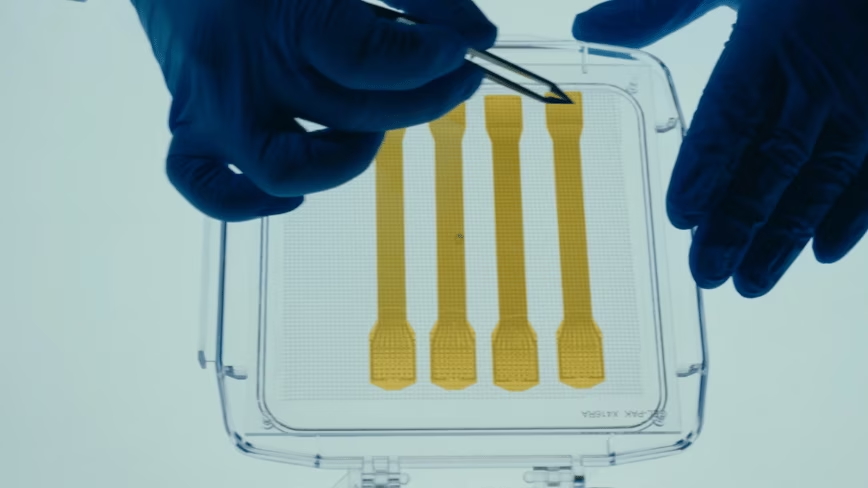
Developing new functional materials often requires testing numerous material combinations. Conventional experiments reach their limits quickly when many variants must be compared. To overcome this bottleneck, the new Energy Materials Acceleration Platform (E-MAP) at KIT automates key lab steps.

Original sourcePhys.org - latest science and technology news stories
BAGANBAZAR GRAPHSource-attributed newsSCIENCE desk
Science

Delaying cherry blossom to reduce frost damage

Climate change is causing many fruit trees to flower earlier, increasing their exposure to damaging late spring frosts. A study led by the University of Göttingen shows that the plant growth regulator ethephon can delay flowering in Kordia, a sweet cherry variety, potentially protecting blossoms and developing fruitlets from frost. The treatment did not significantly delay flowering in a second sweet cherry variety or two apple varieties, highlighting the importance of crop and cultivar selection. The results are published in BMC Plant Biology.

Original sourcePhys.org - latest science and technology news stories
BAGANBAZAR GRAPHSource-attributed newsSCIENCE desk
Science

Crown-of-thorns starfish can help reefs thrive

Crown-of-thorns starfish (COTS) are infamous in the marine world. Their toxin-loaded thorns give them a menacing appearance, and they have a reputation as destroyers of coral reefs. New research from the University of Sydney challenges the perception of COTS as purely destructive. The findings suggest controlled populations can have a positive impact on coral prevalence and diversity.

Original sourcePhys.org - latest science and technology news stories
BAGANBAZAR GRAPHSource-attributed newsBUSINESS desk
Business

Jonathan Rodden on the Geography of Voting

Jonathan Rodden, political science professor at Stanford and a senior fellow at the Hoover Institution speaks with EconTalk host Russ Roberts about the geography of voting. The main focus is on the tendency of urban voters around the world to vote for candidates on the left relative to suburban and rural voters. Rodden argues that this pattern is related to the geography of work and housing going back to the industrial revolution. He also discusses the implications of various voting systems such as winner-take-all vs. proportional representation, the electoral college and how political systems and voter preferences can produce unexpected outcomes.

Original sourceEconTalk
BAGANBAZAR GRAPHSource-attributed newsSCIENCE desk
Science

Science talk : Movie releases of a chemical kind, exercise and coffee

Dr Alice is back in the house for science chat and she's got popcorn for Dr Karl! But wait, why? They are talking movies and the science behind knowing what's going on in a film by measuring the chemicals released by the audience. Who knew there could be a link between 'The Hunger Games', the Amazon rainforest and being able to diagnose medical conditions? Find out what happened in the case of the 'poisoned pants' and what's the best time to exercise to lose weight? They ask the big questions about coffee – good or bad – and, should you really have a hot cup of tea to cool you down?

Original sourceShirtloads of Science
BAGANBAZAR GRAPHSource-attributed newsSCIENCE desk
Science

Nutrition, Dietetics and Your Toilet Bowl

Clare Collins is a Professor in Nutrition and Dietetics at the University of Newcastle. She joins Dr Karl for a colourful conversation about your toilet bowl and what it can tell you about your health. Don't be shy, listen up and discover what weird colours you should not see, and what they could mean. Got green poo? There's an explanation. How about 'cappuccino' wee or purple pee? You'll be surprised. Find out when to see your GP and what to show and tell. Perhaps you'll take away Dr Karl's new mantra: 'while the eyes are the window to your soul, the toilet bowl is a window to your health.

Original sourceShirtloads of Science
BAGANBAZAR GRAPHSource-attributed newsSCIENCE desk
Science

Science talk: Watering plants, the first night effect and talking to dogs

Dr Karl and Dr Alice put their heads together to discuss the latest research into well… all sorts of stuff! What do hairy leaves have to do with burning plants? Is Dr Karl's fruit and veggie classification (serve it with ice-cream it's a fruit, with gravy it's a vegetable) scientifically accurate? And what exactly do killer kangaroos have to do with being unable to sleep in an unfamiliar bed? Listen up as the Doctors tackle these questions and more. And, if you talk to dogs (like Dr Alice does) there's an experiment you might just want to try.

Original sourceShirtloads of Science
BAGANBAZAR GRAPHSource-attributed newsSCIENCE desk
Science

The Quest for Longitude

Maritime history's greatest scientific breakthrough was working out longitude, the distance (measured in degrees, minutes, and seconds) of how far a point is, either East or West, of the Prime (Greenwich) Meridian. Dr Karl unravels this discovery with Kevin Sumption and James Hunter from the Australian National Maritime Museum in Sydney, as they talk about the history of navigation and their 2016 exhibition, Ships, Clocks and Stars: The Quest for Longitude. Hear about extraordinary nautical instruments, different methodologies for calculating longitude, and the impact of these inventions and explorations on the world today.

Original sourceShirtloads of Science
BAGANBAZAR GRAPHSource-attributed newsSCIENCE desk
Science

The Open Source Malaria Project

Over 200 million people are infected with malaria every year. Dr Alice Williamson, research chemist, lecturer and science communicator at the University of Sydney talks to Dr Karl about her work with Open Source Malaria. This is a worldwide drug discovery project that shares all data and results (no patents please!) in an incredible collaborative effort to tackle the disease. Hear about the problems encountered, Alice's work in the lab, the thrill of working together with high school and undergraduate students, and the problem researchers are hoping to have that will point towards a possible cure.

Original sourceShirtloads of Science
BAGANBAZAR GRAPHSource-attributed newsSCIENCE desk
Science

The Kepler Mission Scientist: Part 2

Part Two reveals what happened when one, and then two (!!) of the Kepler Spacecraft reaction wheels went to lunch, how the news almost drove Dr Karl to whiskey, and how the engineers found a brilliant solution and continued on with Kepler Mission 2. A jaw-dropping discussion about the discoveries made, including potentially habitable earth-sized planets, the inconstancy of stars, and the probability of finding evidence of life beyond planet Earth.

Original sourceShirtloads of Science
BAGANBAZAR GRAPHSource-attributed newsSCIENCE desk
Science

The Kepler Mission Scientist

Dr Karl looks to the stars to kick off his new podcast with NASA Ames research astrophysicist Dr Natalie Batalha, the Kepler Mission Scientist. From 2009 to 2013, the Kepler Space telescope looked for exoplanets – planets outside our solar system. It stared unblinkingly at a patch of sky which Dr Batalha had selected hoping to find not just exoplanets, but exoplanets in the Goldilocks zone. Find out what happened, what can go wrong and how Dr Karl's mind was blown to astronomical proportions.

Original sourceShirtloads of Science
BAGANBAZAR GRAPHSource-attributed newsSCIENCE desk
Science

Episode 37: Smoke & Mirrors

Six months ago, Hidden Brain's Max Nesterak made a resolution to quit smoking. But as we all know... resolutions are made to be broken. This week, we check in with Max to find out how he's fared, and give you social science insight to help you quit your bad habits too. Hosted by Simplecast, an AdsWizz company. See pcm.adswizz.com for information about our collection and use of personal data for advertising.

Original sourceHidden Brain
BAGANBAZAR GRAPHSource-attributed newsSCIENCE desk
Science

Marine Biology Adventures

Marine biologist, diver and author Dr Helen Scales takes Dr Karl deep beneath the waves to share her passion for life in the ocean. Helen talks about her new book 'Spirals in Time' on the secret life of shells. Hear about 'clacking' oysters, the legend of the Golden Fleece (sea silk) and a creature resembling a pinecone crossbred with a slug. There's mathematics in the spirals of shells, slave trading in the history of the cowrie shell and just imagine a Harry Potter golden snitch of the sea… it's real and has an incredibly important role to play in ocean life.

Original sourceShirtloads of Science
BAGANBAZAR GRAPHSource-attributed newsWORLD desk
World

The All-In-ification of Trump's AI agenda

President Trump's accelerationist AI doctrine increasingly bears the stamp of the "All-In" podcast, whose tech-investor network now feeds ideas and talent directly into the White House.Why it matters: An unlikely marriage of convenience between MAGA and Silicon Valley has proved remarkably durable, deepening as Trump sheds support elsewhere and stakes more of his legacy on dominating the AI race.Zoom in: No figure has done more to bridge the two worlds than David Sacks, the "All-In" co-host who spent Trump's first year as his AI czar and remains a powerful outside adviser with direct access to the president.Sacks helped build Trump's original AI agenda around a simple premise: move fast, sweep away regulatory barriers and treat China — not catastrophic risk — as the overriding threat.Anthropic's highly capable Mythos model posed the first serious challenge to that doctrine in May, rattling the White House enough to consider pre-release oversight of frontier models.But Trump watered down the 90-day review plan after Sacks and industry leaders warned that three months amounted to an eternity in frontier AI — and could slow U.S. labs as China raced ahead.Zoom out: Sacks left the White House but not Trump's inner circle, shaping AI policy as co-chair of the president's science council while the broader "All-In" network embeds itself deeper across Trumpworld.David Friedberg serves on the same council alongside investor Marc Andreessen, Meta CEO Mark Zuckerberg and other tech leaders — putting half of "All-In"'s core cast on the president's formal science-policy panel.Chamath Palihapitiya, another co-host and prominent Trump booster, is among the names being floated for the new AI czar job Trump announced last weekend.Brad Gerstner, a frequent fill-in on the podcast, helped c

Original sourceAxios
BAGANBAZAR GRAPHSource-attributed newsSCIENCE desk
Science

Episode 205 - April Richardson

April Richardson (@apey) of Almost Genius, Go Bayside and @midnight joins Matt and Andy to talk about living next door to The Flash, Johnny Depp's Aussie apology, Orson Welles' Paul Masson ad, Dyson face, Andy’s possible bidet purchase, a dung-based clue to Hannibal’s crossing route, a paralyzed man (sort of) playing guitar, dinosaurs and their eggs and a real-time re-creation of the sinking of the Titanic.

Original sourceProbably Science
BAGANBAZAR GRAPHSource-attributed newsSCIENCE desk
Science

Episode 204 - Jon Huck and Sunah Bilsted

Comedian/actors Jon Huck (@jonhuck) and Sunah Bilsted (@thesunah) join Matt and Andy to talk about showering techniques, new pets, that Warner Bros. frog, chemistry on acid, a Carl Sagan tribute act, the historic SpaceX landing, hyperhidrosis, antiperspirant conspiracies, a too-stealthy sea vessel, the upcoming book Grunt, Hawking and the Russians sending a tiny craft to Alpha Centauri, a bullshit paper on creepiness, and antimemories.

Original sourceProbably Science
BAGANBAZAR GRAPHSource-attributed newsSCIENCE desk
Science

Episode 203 - Jason Belleville

Jason Belleville (@bigbelleville) has written for Ground Floor and Angie Tribeca, among many other shows, and he joins Matt and Andy to discuss mustaches and tattoos, academic papers, encyclopedias, Stan and Donavan Freberg, using giant lasers to hide from aliens, grammar correction and being an asshole, Andy getting a thing wrong, growing skin and nude mice, a battery-operated salty fork, flavors on planes and the greatest number of digits of pi we'll ever really need.

Original sourceProbably Science
BAGANBAZAR GRAPHSource-attributed newsSCIENCE desk
Science

Episode 202 - Jessica Michelle Singleton and Christina Walkinshaw

Comedians Jessica Michelle Singleton (@JMScomedy) and Christina Walkinshaw (@walkinsauce) join Matt and Andy to discuss bachelor parties, dating, Alaska, super coffee, Google’s April Fools, Microsoft AI, a scientifically impossible Indiegogo, Edx.org's free learning, Vasalgel in rabbits, butt stuff, bunnies in wine glasses, rabbit kidneys, long term good drug effects and fracking-induced earthquakes.

Original sourceProbably Science
BAGANBAZAR GRAPHSource-attributed newsSCIENCE desk
Science

Episode 201 - Tom Bell

Tom Bell (@tombellforever) of The Leisure Class/Project Greenlight and comedy duo Tommy and the Weeks joins Matt and Andy for a bedroom recording involving a call from a private investigator, Boaty McBoatface, Diana and Mother Teresa, Bob the Robot and Horrible Science, following our robot overlords to disaster, unscrambling eggs to cure cancer, an academic paper that cites The Creator, a video game ProbSci shoutout, eagles vs. drones, Janna Levin's new book and spider boners in amber.

Original sourceProbably Science
Plesiosaurs vomited indigestible pellets like owlsSource linked
Science

Plesiosaurs vomited indigestible pellets like owls

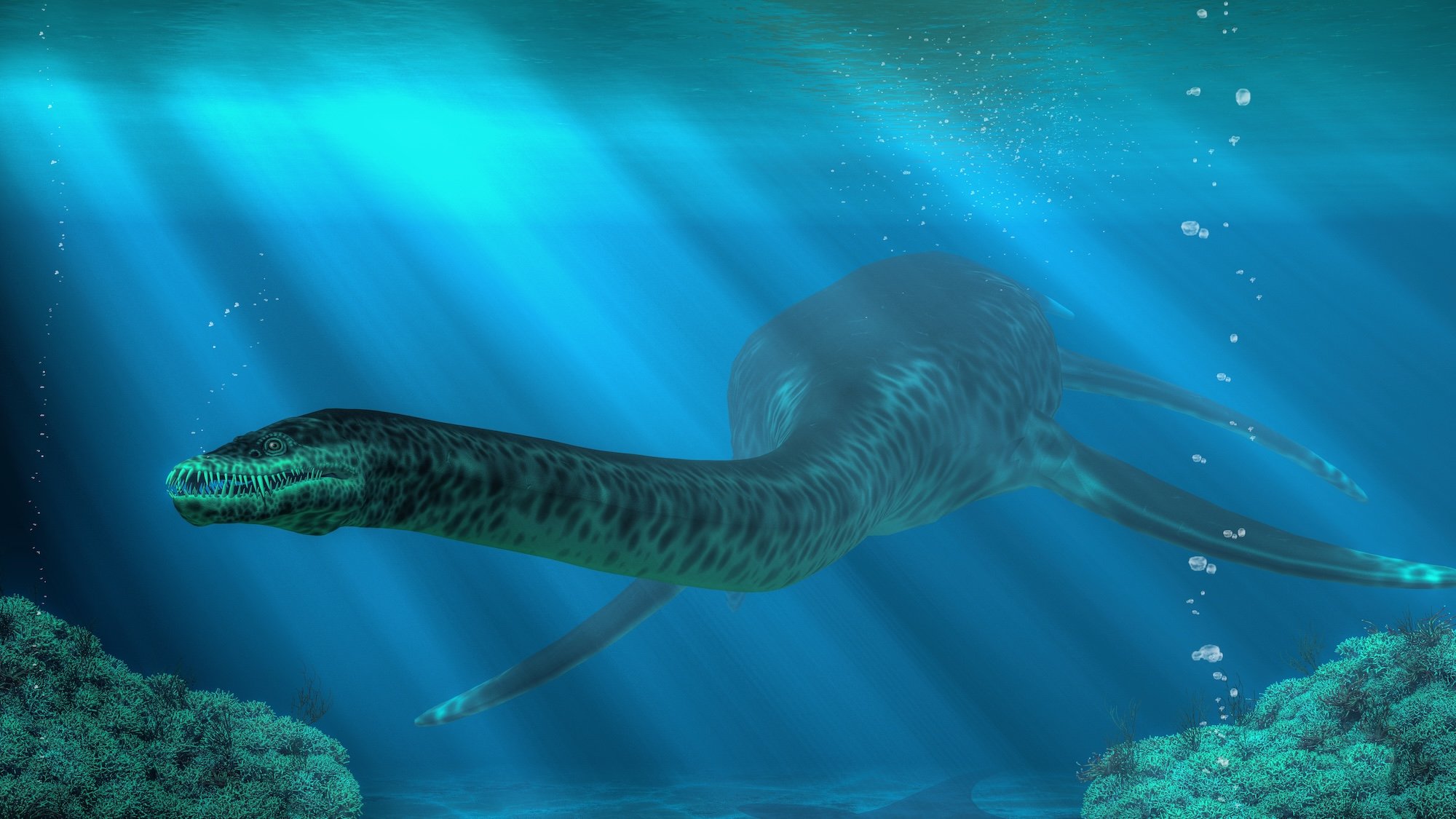
The long-necked plesiosaurs that swam in oceans during the Jurassic Period frequently made detours into shallower river deltas to regurgitate indigestible portions of their meals. The evidence detailed in a study published today in the journal Geological Magazine isn’t for the squeamish. Paleontologists base their new theory on fossilized vomit similar to owl pellets. While owls famously regurgitate the indigestible bones and fur of their prey, other animals also routinely spit out unwanted leftovers. Many fur seals and marine crocodiles behave similarly; although their regular post-meal efforts require a bit more work. While an owl simply deposits pellets wherever they feel like it, these aquatic species first travel onto land before regurgitating. It now appears some of the planet’s most successful ocean predators engaged in the same digestive workarounds. Plesiosaurs belong to a family of marine reptiles that existed for over 140 million years between the Middle Jurassic and Early Cretaceous periods. Generally ranging between 6.5 and 43 feet in length, the species featured lengthy necks and sleek, flippered bodies. This anatomy allowed them to excel at gobbling up ancient fish and cephalopods, but paleontologists believe the reptiles also often craned their heads down to devour shellfish resting on the ocean floor. Drill core image of 160-million-year-old delta sand containing a clump of shells and plant remains, interpreted as plesiosaur vomit. Credit: Dirk Knaust Dirk Knaust Plesiosaurs went extinct about 100 million years ago, but skeletal fossils aren’t all that remains from the era. Under specific conditions, animal feces and even vomit were also preserved in the forms of coprolites and regurgitalites. For decades, paleontologist Dirk Knaust has primarily examin

SourcePopular Science
Tiny two-headed turtle found in Cape CodSource linked
Science

Tiny two-headed turtle found in Cape Cod

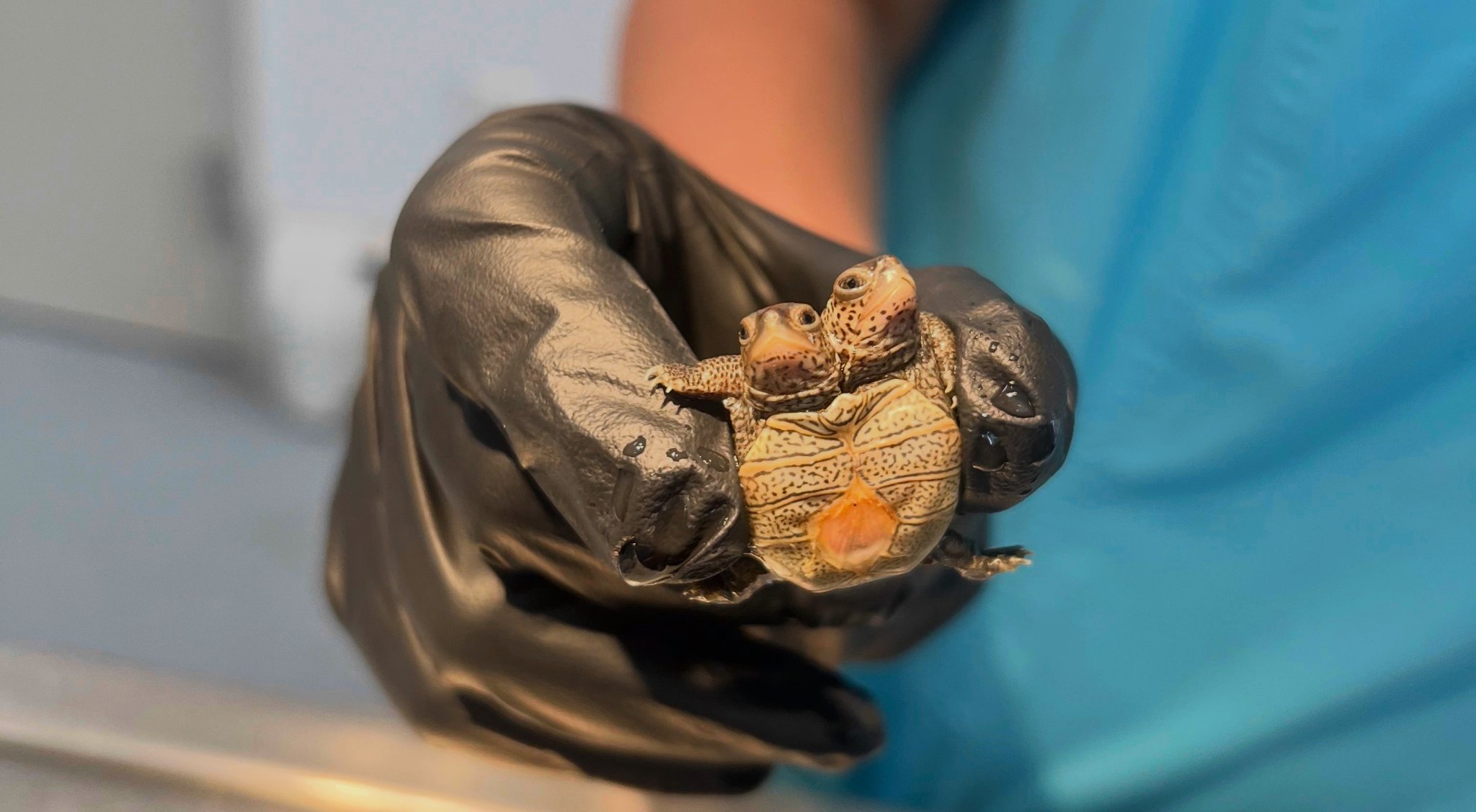
Last week, something strange arrived at the Cape Wildlife Center. Not one turtle, not two turtles—something in between. A tiny two-headed turtle weighing less than a nickel ended up at the Cape Cod facility. The bicephalic (two-headed) reptile is a diamondback terrapin (Malaclemys terrapin), aquatic turtles found in brackish waters along the United States’ Atlantic and Gulf coasts. Diamondback terrapins are classified as Threatened by the Massachusetts Endangered Species Act, and their broader conservation status at the federal level is currently under review. The two-headed turtle hatched in a protected nesting site in Wellfleet, Cape Cod, after which the Mass Audubon Wellfleet Bay Wildlife Sanctuary transferred it to the Cape Wildlife Center. Its arrival didn’t come as a complete surprise to the staff because it’s not the first time they’ve cared for a two-headed diamondback terrapin, Zak Mertz, CEO of New England Wildlife Centers (including the Cape Wildlife Center), tells Popular Science. The turtle weighs less than a standard nickel. Image: New England Wildlife Center Staff, used with permission “This is actually the third set we have seen within the last six years,” he explains. “The belief is that bicephaly happens when an embryo goes to split—like it would for twins or something—but doesn’t separate fully. And because of that, each case might have a slightly different orientation, they might have more or less overlapping anatomy.” The team’s impression is that this recent case involves slightly more shared anatomy than previous pairs, which Mertz thinks is a good thing. While the team hasn’t conducted advanced imaging to see what’s going on beneath the shell yet, the hatchling appears to be in good health, and needs to grow a little more before they can determin

SourcePopular Science
Record-setting Fat Bear Week turnout overloads voting siteSource linked
Science

Record-setting Fat Bear Week turnout overloads voting site

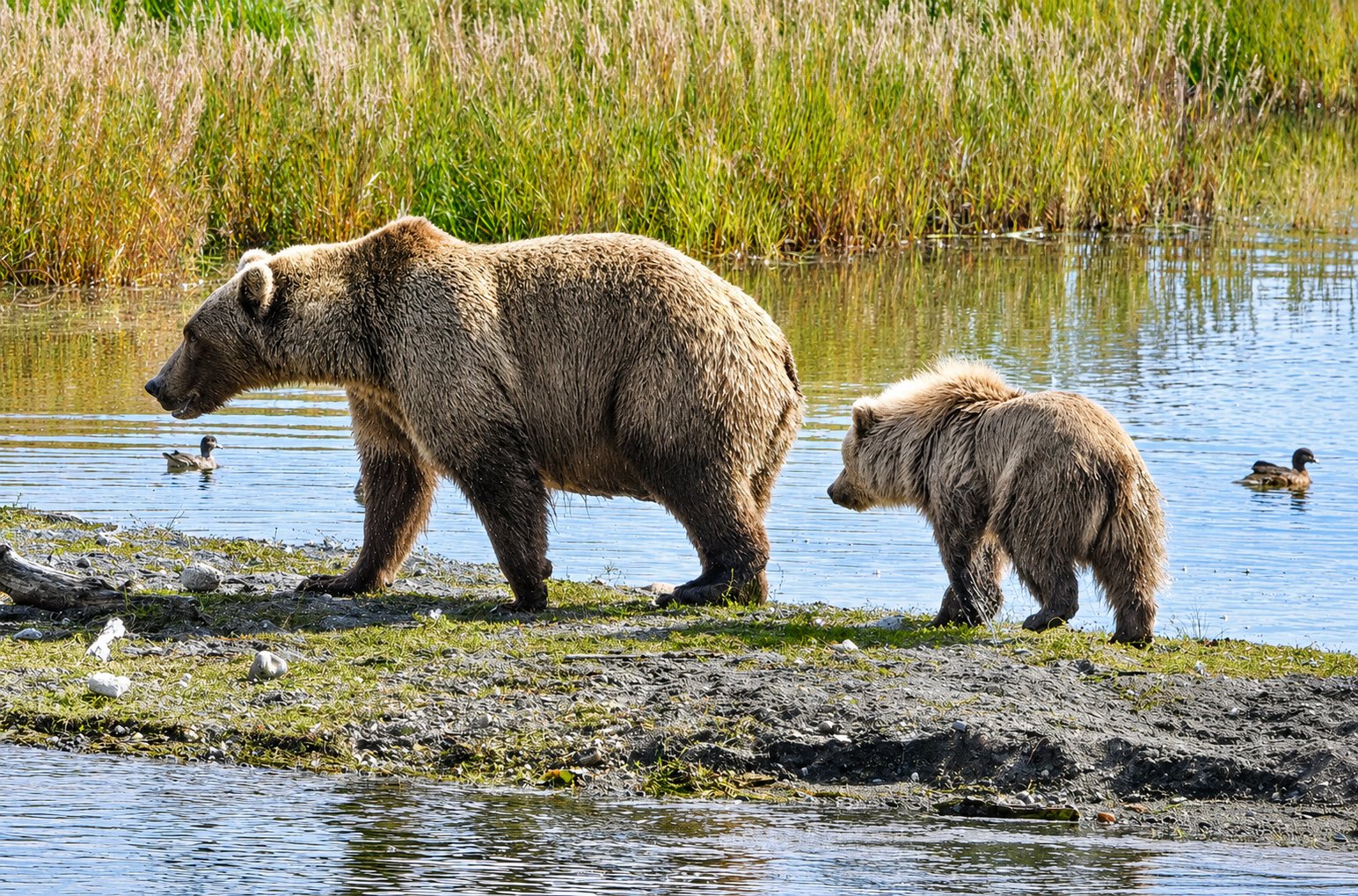
If you spent your day trying to vote for your favorite chunky bear without any luck, you’re not alone. The biggest Fat Bear Week turnout of all time triggered 404 errors and slow-loading pages for fans eager to cast their votes online. On Facebook, explore.org announced that the Day 1 voting would continue tomorrow, September 23. And if you were able to cast your vote (lucky you!), your vote still counted. Explore.org asked fans who successfully cast a vote to close the voting page when done. “The platform we use to host Fat Bear Week is throttling the number of people who can view a poll at once,” the organization explained on their site. “We are working with them to resolve this. If you have voted in Fat Bear Week already please close the page to allow others to view the polls.” As a reminder, Day 1 of Fat Bear Week included four head-to-head matches of mom and single females: Bear 132 and cubs vs. Bear 284 and cubs Bear 806 vs. Bear 901 Bear 909 vs. Bear 428 Bear 131 vs. Bear 910 You can learn more about all the bears competing in Popular Science‘s deep-dive Day 1 breakdown. Voting is open between 12-9pm EDT (9am-6pm PDT, 8am-5pm AKDT) at explore.org. The winner will be crowned on Tuesday, September 29. If you’d like another way to support the bears, donations can be made to Katmai Conservancy’s Otis Fund. The Otis Fund is named after Bear #480 (Otis), who won four Fat Bear Week titles before his death around 2024. All donations made between September 22 and October 3 will be matched by explore.org. The post Record-setting Fat Bear Week turnout overloads voting site appeared first on Popular Science.

SourcePopular Science
China’s new supersonic plane could travel twice as fast as soundSource linked
Science

China’s new supersonic plane could travel twice as fast as sound

The United States isn’t the only nation itching to restart supersonic passenger air travel. Earlier this month, China announced its TMS-10 experimental demonstrator plane has entered the final assembly phase and is on schedule to conduct its first test flight by the end of the year. The fullscale aircraft engineered by Tianmushan Laboratory in collaboration with Beihang University marks a major step forward from the 1:18-scale prototype tested in June 2025. In that phase, the smaller model flew below Mach 0.2 while researchers assessed the the plane’s low-speed takeoff, stability, control, and landing capabilities. This time around, the TMS-10 will attempt to reach supersonic speeds while mitigating any accompanying sonic boom. The TMS-10 project’s goal is to introduce a new business-class airplane that seats 10–15 passengers. Its overall design is markedly different from NASA’s X-59 supersonic plane, which relies on dampening any sonic boom so that it’s perceived as a much quieter sonic “bump” by anyone on the ground. Instead, TMS-10’s forward wing (known as a canard) and its T-tail shape work together to prevent shock waves formed around the nose and wings from combining into a single, louder wave. Meanwhile, rear features will also redirect and further weaken soundwaves to avoid unwanted decibels. If successful, the TMS-10 will one day ferry travelers at an upward cruising speed of Mach 2 (around 1,300 miles per hour). The plane will also support subsonic flights at about Mach 0.95 (730 mph). Those speeds would hypothetically cut the current two-hour flight from Beijing to Shanghai down to only 30 minutes. There is a lot to consider when creating a supersonic aircraft for everyday travel. The design must be durable enough to handle the heat generated at such high spe

SourcePopular Science
Fragment of oldest known peace treaty discovered in TurkeySource linked
Science

Fragment of oldest known peace treaty discovered in Turkey

Around 1259 BCE, two ancient kingdoms finally decided to let bygones be bygones. After two centuries of intermittent skirmishes for regional control, the Egyptian Pharaoh Ramesses II and Hittite King Ḫattušili III agreed to what is now known as the Kadesh Peace Treaty. The rulers signed their agreement about 15 years after the famous Battle of Kadesh, marking the oldest known peace proclamation in recorded history. Archaeologists have extensively documented treaty fragments preserved on Akkadian cuneiform tablets and Egyptian temple wall hieroglyphics, but a newly discovered section found in present-day Turkey offers a resonant message 3,200 years after its inscription. To celebrate the International Day of Peace on September 21, Turkey’s Ministry of Culture and Tourism announced the recent identification of a cuneiform fragment corresponding to Articles 12–20 in the famed treaty. Excavated at the Büyükkale royal palace site of Hattusha in northern Anatolia, the clay tablet details how both kingdoms should handle receiving refugees who fled from either side during the conflict. A full transcription of the recently recovered section isn’t available yet, although ministry officials mentioned a portion of it focuses on protecting citizens’ homes from destruction. While the regulations differ from present-day asylum protections and more resemble mutual obligations agreed upon by Ramesses and Ḫattušili, the section still shows how strained kingdoms still managed to find common ground over 3,000 years ago. Hattusha has provided archaeologists with thousands of cuneiform artifacts contextualizing the politics, culture, and day-to-day life of the ancient Hittites. The first fragments of the Kadesh Peace Treaty were discovered amid excavations during the early 20th century, and

SourcePopular Science
BAGANBAZAR GRAPHSource-attributed newsSCIENCE desk
Science

Reversing Parkinson's

Parkinson’s Disease is one of the major neurodegenerative conditions. Cells die, for reasons not fully understood, causing a reduction in the production of the neurotransmitter, dopamine, and a raft of physical and behavioural problems. Although effective drug treatments are available, they wear off over time and have side effects. The highly individual nature of the condition and variation in its progression also makes dosage difficult. Sue Broom reports on two new approaches that could lead to treatments for Parkinson’s. One potential therapy is to replace the dying cells with new ones. This was tried several decades ago but the results were not promising. The new Transeuro trial of cell therapy hopes to lead to better outcomes. The second approach is to use stem cells. Sue Broom talks to the doctors and patients involved in these trials. Image: Parkinson's disease MRI brain scan,© Science Photo LibraryPresenter/Producer: Sue Broom

Original sourceDiscovery
When climate mitigation becomes politicised: The Guardian uncovers IPCC links to Saudi oil industrySource linked
World

When climate mitigation becomes politicised: The Guardian uncovers IPCC links to Saudi oil industry

François Picard is pleased to welcome Eoghan Gilmartin, an award-winning investigative journalist and part of The Guardian team whose investigation examined links between IPCC authors and Saudi Arabia’s oil industry, including Saudi Aramco. Their findings take us to the intersection of climate science, political and economic interests, and institutional credibility, and into the politically consequential terrain of climate mitigation: how societies decide to respond to climate change.

SourceFrance 24
BAGANBAZAR GRAPHSource-attributed newsSCIENCE desk
Science

Researchers find convenience, drinking water access and advertising drive global bottled water consumption

Over 1 million plastic water bottles are bought globally every minute. That translates into more than 1.3 billion every day and more than 500 billion every year. That's a lot of plastic, and much of it winds up in human bodies and landfills. The long-term health implications are still unknown, but preliminary research shows risks to human health, with nano- and microplastics accumulating in our livers, kidneys and intestines.

Original sourcePhys.org - latest science and technology news stories
BAGANBAZAR GRAPHSource-attributed newsSCIENCE desk
Science

Zika virus assembles without protein segment long deemed essential

For years, scientists were certain that two factors were involved in the assembly of active, highly infectious Zika viruses in human cells: a specific viral protein in its entirety and a turncoat human enzyme that assured viral maturity. New research suggests that Zika virus has been far less reliant on those components than previously thought.

Original sourcePhys.org - latest science and technology news stories
BAGANBAZAR GRAPHSource-attributed newsSCIENCE desk
Science

Pigeons' proposed inner-ear compass runs into a noise problem

A pigeon turning its head might seem an unlikely electricity generator. Yet one proposed explanation for the bird's magnetic sense depends on exactly that: Turning through Earth's magnetic field would produce tiny electrical signals inside its ears. However, a theoretical study suggests that this miniature generator cannot supply directional information fast enough to work as a compass. The problem is electrical noise produced within the proposed sensor itself.

Original sourcePhys.org - latest science and technology news stories
BAGANBAZAR GRAPHSource-attributed newsSCIENCE desk
Science

How the pro‑nicotine 'wellness' movement rebranded an addictive drug

An ironic development emerging alongside the "Make America Healthy Again" movement is the portrayal of nicotine as a wellness and performance-enhancing product. Across social media, podcasts, wellness communities and tech startups, prominent wellness personalities and other influencers are portraying nicotine as a misunderstood compound whose potential benefits have been overshadowed by its negative association with cigarette smoking.

Original sourcePhys.org - latest science and technology news stories
BAGANBAZAR GRAPHSource-attributed newsSCIENCE desk
Science

The secret to a perfect crystal may be a precisely calibrated extra turn

Creating a perfect crystal sounds straightforward: Arrange identical building blocks into a repeating, orderly structure. At the microscopic scale, though, even subtle biases in how particles interact can push them in preferred directions, making it harder to form uniform crystalline materials.

Original sourcePhys.org - latest science and technology news stories
BAGANBAZAR GRAPHSource-attributed newsSCIENCE desk
Science

Injectable nanoparticles make blind retinas respond to light in preclinical study

An international research team has developed microscopic particles that can make blind retinas respond to light. The particles act as tiny light receptors. Researchers inject them into the eye, where they settle close to nerve cells in the retina. When light hits the particles, it triggers electrical and chemical processes that can activate the nerve cells and prompt them to send signals toward the brain.

Original sourcePhys.org - latest science and technology news stories
BAGANBAZAR GRAPHSource-attributed newsSCIENCE desk
Science

'Risk-free' matched betting? More than half of surveyed users report losses

A new peer-reviewed study from Bournemouth University has found a striking gap between how people perceive the risks of matched betting and what some experience in practice. Matched betting involves using free bets given out by online gambling companies as a promotion to attract new customers. This allows people to bet on different results for the same event, such as a football match. It is frequently promoted online as a controlled or even 'risk-free' way of making money.

Original sourcePhys.org - latest science and technology news stories
BAGANBAZAR GRAPHSource-attributed newsSCIENCE desk
Science

Snapshots reveal key molecular machine in tropical parasites at near-atomic resolution

A study conducted by the University of Liège and Rockefeller University reveals, with near-atomic precision, the three-dimensional structure and function of a gigantic molecular machine essential to the survival of trypanosomatid parasites, which cause serious diseases in humans, animals and plants. The work has been published in Nature Communications.

Original sourcePhys.org - latest science and technology news stories
BAGANBAZAR GRAPHSource-attributed newsSCIENCE desk
Science

Research project identifies pathways to climate-resilient water and soil management

How can regions better adapt their water and soil resources to the impacts of climate change? After four years of research, the European collaborative project Blue Transition, led by the LIAG Institute for Applied Geophysics in Hanover, takes stock. The final report brings together the findings from 16 pilot regions in six countries and identifies three key levers to strengthen climate resilience: changing land use, improving soil health and diversifying water resources and optimizing their use.

Original sourcePhys.org - latest science and technology news stories
BAGANBAZAR GRAPHSource-attributed newsSCIENCE desk
Science

Livestock grazing may boost soil carbon storage in Iceland's subarctic grasslands

Grassland plants transfer large amounts of carbon to soil through their roots, and most of that carbon is stored underground. Therefore, promoting soil carbon storage can help combat climate change. Grazers feed on grassland plants, and conventional wisdom often assumes that removing grazers benefits carbon storage, but a new study in Global Change Biology Communications reveals that the opposite may be the case.

Original sourcePhys.org - latest science and technology news stories
BAGANBAZAR GRAPHSource-attributed newsSCIENCE desk
Science

One of America’s largest reservoirs just hit a record low

Lake Powell has fallen to its lowest level on record after an exceptionally dry and warm winter left the Colorado River Basin with little mountain snow to melt. Lake Mead also reached record lows, raising concerns for a river system that supplies water and power to more than 40 million people. Federal officials have taken emergency steps to stabilize Lake Powell, including sending in water from another reservoir and reducing releases downstream.

Original sourceLatest Science News -- ScienceDaily
BAGANBAZAR GRAPHSource-attributed newsSCIENCE desk
Science

The LHC just ruled out another hiding place for quantum black holes

Physicists searching through Large Hadron Collider data found no evidence that the machine has been producing microscopic quantum black holes, but the result sharply narrows where such exotic physics could still be hiding. These hypothetical black holes could form if extra spatial dimensions make gravity much stronger at extremely tiny scales, potentially offering clues toward the long-sought theory of quantum gravity.

Original sourceLatest Science News -- ScienceDaily
BAGANBAZAR GRAPHSource-attributed newsWORLD desk
World

EADV 2026: Galderma to Unveil New Data Advancing Understanding of Skin Diseases, Skin Longevity, and Real-world Patient Experiences

ZUG, Switzerland -- Galderma (SIX: GALD), the pure-play dermatology category leader, will present 19 abstracts and deliver a broad scientific education program at the 2026 European Academy of Dermatology and Venereology (EADV) Congress. Through these activities, Galderma will showcase how it continues to advance its pipeline and the science of dermatology, deepening understanding of biological and quality-of-life factors, while driving innovation in targeted treatments, skin longevity and evidence-based care. Read More

Original sourceFinancial Post
BAGANBAZAR GRAPHSource-attributed newsSCIENCE desk
Science

Dr. Linda Spilker knows lots about Saturn (you'd swear she's been there). Well she has - virtually.

Dr Karl's Shirtloads takes you to where Water-Ice is rock, salty Geysers blow (just like earth's underwater Hydrothermic jets) and the prospects for life in our own Solar System are tantalisingly close. Dr Linda Spilker has been with NASA's Jet propulsion Lab since 1977. Her work spans Voyager missions and the current Cassini mission. With 40 years of exploration experience, enjoy our extended edition of Shirtloads. Also find out why you should put September 15th in your diary and how Australia may play a vital role in decoding Saturn's rings. (Warning: Contains Physics, Chemistry and traces of Biology).

Original sourceShirtloads of Science
BAGANBAZAR GRAPHSource-attributed newsSCIENCE desk
Science

Science Talk = Zealandia, Autism and the Soap we had to ban

Planets are popping up everywhere but what about that new Continent on Earth - Why has it taken us so long to find it ? Which part of the human brain is revealing a relationship with Autism .... and why did we have to ban a certain type of soap ? Surely something as simple as soap can't be that bad ? Dr Karl, Dr Alice and Dr (almost) Jessica discuss the latest.

Original sourceShirtloads of Science
BAGANBAZAR GRAPHSource-attributed newsSCIENCE desk
Science

Ben Goldacre - Fact Checking Scientist

"Fake News" was 2016's word of the year (according to the Macquarie Dictionary). Can "fake news" make you sick ? Doctor Karl meets a fact-checking scientist. Ben Goldacre reviews articles in medical Journals. Ben is "Senior Clinical Research Fellow" at the Center for Evidence-Based Medicine at Oxford University and he says there are reasons to be concerned. (His Dead cat is a professional member of the American Association of Nutritional Consultants - proof that fancy titles means nothing.)

Original sourceShirtloads of Science
BAGANBAZAR GRAPHSource-attributed newsSCIENCE desk
Science

The "E" in STEM - Dr Karl & Dr Kanga talk Engineering

Meet Dr. Marlene Kanga. She is about to become president of an international governing body looking after 2 million professionals. Our future depends on innovation and the creative heart is Engineering. She talks with Dr Karl of the value Engineers bring to society, which specialties are attracting female engineers and what Australia can do to catch up with some of the leading nations.

Original sourceShirtloads of Science
BAGANBAZAR GRAPHSource-attributed newsSCIENCE desk
Science

Warwick Holmes - the Rosetta Mission's Aussie Avionics System Engineer

We rarely get to hear "insider's" stories of extraterrestrial discovery. Doctor Karl meets Warwick Holmes - avionics systems engineer on the Rosetta mission that orbited comet seeking the chemical signatures of life. He gives us a blow by blow account of extraterrestrial exploration in the 21st Century. How do you test hardware to fly by the sun and withstand comet dust. How does a lad from South Australia land the best job on earth ? Beam us up Warwick !

Original sourceShirtloads of Science
BAGANBAZAR GRAPHSource-attributed newsSCIENCE desk
Science

Space Historian

Self-described 'professional space history nerd' Amy Shira Teitel joins Dr Karl to talk about spaceflight before NASA in her book 'Breaking the Chains of Gravity'. Hear about cutting edge rocket planes like the X-15 (and its surprising link with tractor seats), the team of seamstresses behind the launch of high-altitude balloons to the edge of space, and how paper plates inspired the engineering of early spacecraft. Tune in for extraordinary, intimate stories from a time that is often forgotten in space-age literature.

Original sourceShirtloads of Science
BAGANBAZAR GRAPHSource-attributed newsSCIENCE desk
Science

Science Talk

Dr Alice has been shark hunting in the Arctic waters (i.e. through scientific papers) and discovered the oldest vertebrate in the world is at least 272 years old. Meanwhile, back on the land, why are two scientists riding a roller coaster holding a bag with an artificial kidney and stones? Dr Karl is considering a 'fusion' breakfast after hearing that spicy food may be good for your health. Fruit salad with chilli anyone? And why does the Zebra finch sing a different song to its eggs just before they hatch?

Original sourceShirtloads of Science
BAGANBAZAR GRAPHSource-attributed newsSCIENCE desk
Science

Creating the Crick

The Francis Crick Institute, in the centre of London, is the UK’s brand new, game-changing centre for biology and medical research. Roland Pease joins the scientists as they move into the building. Sir Paul Nurse, Nobel Laureate, one of the UK’s top biologists and director of the Crick explains what makes the new institute so special. Professor Richard Treisman, who helped shape its vision, shows Roland how the building is designed to encourage collaboration. And Roland learns how cancer researcher Dr Caroline Hill is packing up and moving her experimental subjects – thousands of fish. Named for Francis Crick – the British scientist who unravelled the structure of DNA and how it codes the design of the molecules of life – this central London Institute is set to be the heart of British biomedical science – bringing together experts from 3 other world famous institutes, from three of London’s great universities, and from industry.Picture: Scientists Move Into The Newly-built Francis Crick Institute in King's Cross on August 25, 2016, credit: Dan Kitwood/Getty ImagesPresenter: Roland Pease Editor: Deborah Cohen

Original sourceDiscovery
BAGANBAZAR GRAPHSource-attributed newsSCIENCE desk
Science

The Whale Menopause

Killer whales and humans are almost unique in the animal kingdom. The females of both species go through the menopause in their 40s or 50s, and then live for decades without producing any more offspring themselves. It is an extremely rare phenomenon. No other mammal does this, including other apes, monkeys and elephants, with the exception of another species of toothed whale. There are good grounds for thinking the menopause evolved for a reason, but why?BBC science reporter Victoria Gill takes to the sea off the north-west coast of the USA with scientists who believe the killer whales in this part of the world can explain why the menopause evolved in both orca whales and our own species.Victoria encounters 'Granny', the world's oldest known orca - a matriarch killer whale who is estimated to be between 80 and 105 years old. 'Granny' has not had a calf for at least 40 years and is still very much the leader of her family group.(Photo: An Orca whale jumps out of the water © Jane Cogan)

Original sourceDiscovery
BAGANBAZAR GRAPHSource-attributed newsSCIENCE desk
Science

The Inflamed Mind

Depression or psychotic illness is experienced by hundreds of thousands, perhaps millions, of people in the UK. James Gallagher talks to the psychiatrists investigating this new understanding of mental illness and to people who may benefit from treatments aimed at the immune systems rather than their brain cells.“I believe this is one of the strongest discoveries in psychiatry in the last twenty years”, says Professor Carmine Pariante of his and other research on the immune system and depression. "It allows us to understand depression no longer as just a disorder of the mind and not even a disorder of the brain, but a disorder of the whole body. It shifts conceptually what we understand about depression."James also talks to New York journalist Susannah Cahalan. She began to experience paranoid delusions and florid hallucinations when her immune system made damaging antibodies against part of the molecular circuitry in her brain. Treatment to eliminate the antibodies prevented her committal to psychiatric hospital. Psychiatrist professor Belinda Lennox at the University of Oxford says she has evidence that a significant proportion of people presenting for the first time with psychotic symptoms are victims of a similar autoimmune problem. (Photo: Brain Cells © Science Photo Library)

Original sourceDiscovery
BAGANBAZAR GRAPHSource-attributed newsSCIENCE desk
Science

Xiuhtezcatl Martinez - Climate Change Activist (31)

From the age of six, Xiuhtezcatl has been out to improve our world. He worked locally to get pesticides out of parks, coal ash contained, and fracking moratoriums. He has addressed the General Assembly at the United Nations in New York. He is currently a plaintiff in a youth-led lawsuit against the US federal government for their failure to protect the atmosphere for future generations. On a brief visit to Australia he talks with Dr. Karl on how to achieve meaningful change as a youth activist.

Original sourceShirtloads of Science
BAGANBAZAR GRAPHSource-attributed newsSCIENCE desk
Science

Marine Permaculture (Brian von Herzen) (29)

Imagine cooling down 2,300 km of Barrier Reef along the Australian coast using renewable energy. Mind-blowing, right? Dr Brian Von Herzen has such a plan. It's part of a bigger picture that he calls Marine Permaculture - using nature to restore habitat in the oceans. It is a project he has been working towards for over a decade including demonstrations off Hawaii. Dr Karl discussed Dr Brian's vision in Queensland earlier this year. The audio quality varies as it was recorded on location.

Original sourceShirtloads of Science
BAGANBAZAR GRAPHSource-attributed newsSCIENCE desk
Science

SOS_26 Space Junk, FRB & a Fab new Forensic Tool

Imagine laying a sheet of smart film on a masterpiece like "Starry Starry Night". Without contaminating the surface, you can lift off chemical signatures. Discover what paint Van Gogh used, what drugs he might have been taking and even if he was suffering from a recognisable disease. Dr Alice has the story plus Dr Karl on the growing rubbish dump above our heads and (almost) Dr Jessica on those one-off intergalactic tweets called FRBs - what are they ?

Original sourceShirtloads of Science
BAGANBAZAR GRAPHSource-attributed newsSCIENCE desk
Science

Swimming with Bacteria (and Dr Matt Baker) #27

Bacteria are more like submarines than fish. They have propellors and motors. This is one of the extraordinary discoveries that Sydney researcher Dr Matt Baker has been part of. In fact he has gone deeper and is looking inside the different motors bacteria species have. What powers these micro machines ? How they are made ? His stories of life at a micron level are almost beyond belief.

Original sourceShirtloads of Science
BAGANBAZAR GRAPHSource-attributed newsSCIENCE desk
Science

What is so BIG that ... ?

LIGO - Laser Interferometer Gravitational Wave Observatory was the detector. It has found the most elusive of all cosmic vibrations. One hundred years ago Einstein said they were possible - so mind-bending he changed his opinion twice. A mathematician in the WWI trenches confirmed their theoretical existence and then ... Well this story is so big it'll take two podcasts. Welcome to our Shirtloads "Gravitational Wave Special Part One" and the Associate Head for Research at the School of Physics, Sydney University, Professor Geraint Lewis. Dark energy, gravitational lensing, galactic cannibalism - our Shirtloads of Science" guest eats them for breakfast.

Original sourceShirtloads of Science
BAGANBAZAR GRAPHSource-attributed newsSCIENCE desk
Science

Prof. Claire Collins - 5 Simple foods that might save your life

Cholesterol is a waxy, fat-like substance that your body needs. When you have too much in your blood, it can build up on your artery walls. Too much cholesterol puts you at risk for heart disease and stroke, two leading causes of death. Prof. Claire Collins has 5 simple changes to your diet - that may improve your life and beat these notorious killers.

Original sourceShirtloads of Science
BAGANBAZAR GRAPHSource-attributed newsSCIENCE desk
Science

Episode 217 - Ahmed Bharoocha and Auggie Smith

Comedians Ahmed Bharoocha (@ahmedbharoocha) and Auggie Smith (@auggiesmith) join Matt and Andy for the final recording from Bluebell Ranch, which happens to coincide with an apocalyptic forest fire in the area, and the crew discuss topics including bouncy castle economics, zorbs in Russia, a new hard material, the Mohs hardness scale, Pliny the Elder, the Randi paranormal challenge, new brain areas, listening to music while drinking, a new biohybrid creature, a Mars laser with free will, artwork damagers and what to call Ahmed's album.

Original sourceProbably Science
BAGANBAZAR GRAPHSource-attributed newsSCIENCE desk
Science

Episode 214 - Derek Sheen and Sean Jordan

Pacific Northwest comics Derek Sheen (@dereksheen) and Sean Jordan (@SeanSJordan) join Andy and Matt back at Bluebell to talk about going to a Scientology boarding school, non-ice cream heir Tony Robbins, amateur Australian ball surgery, Juno's pics of Jupiter, AIDS ceasing to be an epidemic in Australia, good news on the ozone hole's healing, and even more good news about finding new reserves of helium.

Original sourceProbably Science
BAGANBAZAR GRAPHSource-attributed newsSCIENCE desk
Science

Episode 212 - Alie Ward

Podcaster, host and science communicator Alie Ward (@alieward) appears with Matt and Andy on Science Channel's upcoming How To Build Everything (premiering June 22nd at 10pm) and she makes her first appearance on the podcast to discuss supernumerary nipples, McNuggetinis, owl pellet mouse skeletons, a third lizard sex, an inflatable space station room, Alie's aeronautic training, antibiotic-resistant bacteria, MRSA, wrestling bugs and swimming pool pee.

Original sourceProbably Science
BAGANBAZAR GRAPHSource-attributed newsSCIENCE desk
Science

Episode 210 - Ella Gale and Sarah Mirk

This episode was taped live at the 2016 Bridgetown Comedy Festival in Portland, Oregon, with Matt and Andy welcoming comedian/environmental engineer Ella Gale (@hellakale) and author/podcaster/@BitchMedia editor Sarah Mirk (@sarahmirk) to discuss gender biases in science reporting, women in science (and comedy) and why it's hard to make bagels when it's hot outside.

Original sourceProbably Science
BAGANBAZAR GRAPHSource-attributed newsSCIENCE desk
Science

Episode 209 - Mary Roach

Popular science author Mary Roach's (@mary_roach) books have tackled a wide variety of topics including sex, the afterlife, digestion and space travel. In her soon-to-be-released book Grunt, she takes on the curious science of humans at war, delving into combat medic training, stink bombs, genital transplant surgery, the war on heat, shark repellant and diarrhea as a threat to national security. Pre-order your copy of Grunt now!

Original sourceProbably Science
BAGANBAZAR GRAPHSource-attributed newsSCIENCE desk
Science

Episode 208 - Zach Sherwin

Comedian/rapper/writer Zach Sherwin (@ZachSherwin) can be seen on Epic Rap Battles of History, among many other places, and he joins Matt and Andy to talk about writing a JAP battle rap battle on Crazy Ex-Girlfriend, p-branes, playing Einstein, the new Ghostbusters script, Andy's bidet, magician hacks and Joel Hodgson's ventriloquism mask invention, Shy Tony, silver underwear, John Oliver's science story, a teen's Mayan discovery that may not be what it seems, everyone yells air ball at the same pitch, diving robots, being bepenised, and long-lasting batteries.

Original sourceProbably Science
BAGANBAZAR GRAPHSource-attributed newsSCIENCE desk
Science

Episode 207 - Fahim Anwar

Fahim Anwar (@fahimanwar) recently made his first appearance on Conan as well as the Tina Fey movie Whiskey Tango Foxtrot, and he joins Matt and Andy to discuss birthday escape rooms, engineering degrees to subsidize comedy, bringing people back from the dead, more head transplant news, archaeology vs. paleontology, another EM Drive debunking from Sean Carroll, tons of oral spider sex, enzyme corrections, 3D-printed fake rhino horns, breast cancer gene mapping and where to find Fahim Anwar performances.

Original sourceProbably Science