BAGANBAZAR GRAPHEXPLORE · ANALYZE · GROW
Theme
LiveDesk
Source index/Source profile
SOURCE PROFILE

Fortune | FORTUNE

International · Business. A listed publisher in the FAINARON international source registry.

Visit original outlet ↗
ATTRIBUTION STANDARD

Publisher attribution stays visible.

FAINARON NEWS indexes and organizes reporting from this outlet. It identifies the original publisher and directs readers to the originating report, rather than presenting the coverage as independently reported.

SOURCE STREAM

Coverage from Fortune | FORTUNE.

28 recent items
BAGANBAZAR GRAPHSource-attributed newsBUSINESS desk
Business

Meta announces new lightweight virtual reality glasses to one-up Apple’s Vision Pro

Meta and Apple are fierce rivals, and on Wednesday, the Facebook creator upped the ante by announcing new lightweight virtual reality glasses that make Apple’s Vision Pro headset look like bulky old tech. Mark Zuckerberg showed off Meta’s new glasses, named Meta VR Glasses, at the company’s annual Connect event in Menlo Park, Calif. The glasses weigh 100 grams, the CEO said, making them light enough to compare to a regular pair of glasses. The glasses, which Meta said will ship in spring 2027, are designed for cinematic experiences such as watching movies, spatial computing, and gaming. They will cost $1,299. “We made the decision to focus a little bit less on metaverse for now; build fewer VR devices and only release them when we have real breakthroughs,” Zuckerberg said Wednesday. “We’ve also heard that a lot of people are less interested in wearing a headset. So, we’ve built a new kind of VR device.” To show off the glasses, Zuckerberg played a video of creators such as YouTuber Casey Neistat and NBA star Draymond Green reacting to the device. In the demo, Meta showed people wearing the glasses while watching an NBA game and multitasking between applications. The glasses are marketed with a connected battery pack. The new VR glasses are a clear shot at Apple and its Vision Pro headset, which has failed to take off as a consumer device in part because of its large frame, its weight, and its cost (around $3,700). Apple is also reportedly working on smart glasses, as well as camera-enabled AirPods. Apple recently held its own hardware event, where it unveiled its first foldable phone, named the iPhone Duo, but didn’t have any updates on the Vision Pro. Andrew Bosworth, chief technology officer and head of Reality Labs at Meta Platforms, demonstrates the Meta VR glasses

Original sourceFortune | FORTUNE
BAGANBAZAR GRAPHSource-attributed newsBUSINESS desk
Business

Exclusive: OpenAI poaches Brian McCarthy from SpaceX to be its VP of worldwide sales

OpenAI has hired Brian McCarthy from SpaceX to become its vice president of worldwide sales. McCarthy joined SpaceX in August through its acquisition of Cursor. At both companies he served as the president of global revenue and worldwide field operations. He previously led enterprise sales teams at Rubrik, ThoughtSpot, AppDyanamics, and Qlik. He is the first major hire by Dali Rajic, OpenAI’s chief revenue officer who started less than a month ago on Aug. 24. This is a newly created position and McCarthy will not be replacing anyone. Rajic has also recruited two sales executives from the AI data company Snowflake, according to a source familiar. That includes Mark Fleming, Snowflake’s SVP of enterprise sales, and Jaime Patel, Snowflake’s VP of enterprise sales engineering for North America. They did not immediately respond to our request for comment. McCarthy reported to Rajic when two worked together at AppDynamics from 2017-2018, when Rajic was chief revenue officer and McCarthy was vice president of sales. Both were on the team as AppDynamics prepared to go public, but then Cisco swooped in to purchase it a day before the planned listing. “Brian combines a deep commitment to customers with a belief in what technology can do for people,” Rajic said in an OpenAI LinkedIn post. “I’m excited to partner with him as we scale our business, help enterprises transform, and bring the benefits of AI to more people around the world.” McCarthy will work with Rajic to build out the sales team, and to scale and accelerate enterprise growth, including overseas, OpenAI said. Corporate adoption of frontier AI models has been a key battleground for OpenAI and rival Anthropic, and an important revenue stream for OpenAI as it moves closer to an IPO, expected sometime next year. Despite t

Original sourceFortune | FORTUNE
BAGANBAZAR GRAPHSource-attributed newsBUSINESS desk
Business

Sam Altman says OpenAI’s IPO window has been pushed to 2027—but markets aren’t the culprit

OpenAI’s still looking at an IPO—but not in 2026. On Friday, OpenAI CEO Sam Altman told Fortune editor-in-chief Alyson Shontell that it wasn’t the right time. “I actually think that, given everything happening with safety, right now would be an ill-advised moment to go public, and we don’t feel pressure on that,” he said in an interview for Shontell’s Titans and Disruptors of Industry podcast. Altman was referencing the outpouring of concern, fear, and chatter that emerged last week, when researcher Jacob Coxon (who’d also worked at OpenAI) resigned from Anthropic, with a very public message: AI’s makers are moving quickly and irresponsibly. Anthropic CEO Dario Amodei sounded off over the weekend, and Altman told Shontell that OpenAI’s go-public ambitions are linked to safety. As she wrote on Saturday: He added that OpenAI will go public when the business is ready and when the company is ready as it relates to “what the moment is like in society with this technology.” When pressed on whether 2026 is off the table in favor of 2027, Altman replied, “I would say not 2026. Yeah, we got a lot of stuff to do, like meeting this moment of what is going to be required for safety and alignment, and how the industry and governments can work together.” Altman even suggested that AI’s biggest names, from Amodei to Hassabis, will likely get together to discuss safety at some point. “I’m not going to pre-announce private discussions that I think should be at some point shared as a group,” he told Shontell. “But, yeah, I think that will happen.” All sorts of things are probably true here: The safety fears are absolutely a worthwhile conversation, and deeply valid. At the same time, I do wonder if it’s easier to talk about apocalyptic fears of the future than concerns of the present. (I

Original sourceFortune | FORTUNE
BAGANBAZAR GRAPHSource-attributed newsBUSINESS desk
Business

‘Everybody’s been bugging me’ — Trump says he’ll remove his 10% tariff on Irish whiskey during trophy ceremony at a golf tournament in Ireland

U.S. President Donald Trump announced on Sunday at the close of a golf tournament in Ireland that he plans to remove a 10% tariff on Irish whiskey. Trump said during the trophy ceremony for the Irish Open that he had been asked about the issue by everyone, including some of the golfers. “Everybody’s been bugging me” to do it, the Republican president said. “And I said, ‘On behalf of the United States of America, I am going to take the tariffs off'” Irish whiskey. Irish whiskey currently faces the standard tariff imposed by Trump on most imports from the European Union, which was reduced from 15% to 10% in July. Trump announced in May that he was lifting certain tariffs on U.K. whiskey, which includes Scotch and spirits made in Northern Ireland. Trump’s apparent surprise announcement at the conclusion of the tournament was met with loud whistling and cheers from the crowd of spectators. In May, the Irish Whiskey Association called for the tariffs to be removed, arguing that such a step would help many U.S. companies with Irish products in their portfolios and avoid uncertainty for consumers. Details on how soon the tariff would be lifted were not immediately available. Trump said on April 30 that he gave the United Kingdom a tariff break on whiskey after King Charles III and Queen Camilla visited the White House. “The King and Queen got me to do something that nobody else was able to do, without hardly even asking!” Trump posted on social media. The Scotch Whisky Association said July 24 that the zero-tariff policy had come into effect. This story was originally featured on Fortune.com

Original sourceFortune | FORTUNE
BAGANBAZAR GRAPHSource-attributed newsBUSINESS desk
Business

Fortune 500 Power Moves: Which executives gained and lost power this week

This is Fortune 500 Power Moves, a column tracking executive shifts—from appointments and promotions to resignations and retirements—within the highest ranks of Fortune 500 companies. Below is a recap of the C-suite developments at America’s highest-revenue-generating companies announced between Sept. 5-11, 2026, organized by sector. Titles included in this roundup: CTOs (Chief Technology Officers) and CMOs (Chief Marketing Officers). We also include CEOs (Chief Executive Officers), CFOs (Chief Financial Officers), COOs (Chief Operating Officers), CIOs (Chief Information Officers), CHROs (Chief Human Resources Officers), Chief People Officers, and Chief Customer Officers when there are Power Moves within the Fortune 500 announced pertaining to those roles. For daily updates, subscribe to Fortune’s weekday newsletters, including CEO Daily, CFO Daily, and MPW Daily, as well as Next to Lead (weekly Mondays), and CIO Intelligence (weekly Wednesdays). Financials Equinix (No. 436) appointed DD Dasgupta CMO. He previously served as VP, Product and Solution Marketing at the company and held similar roles at Cisco Systems (No. 83) and Juniper Networks, now a part of Hewlett Packard Enterprise (No. 133), before then. He succeeds Adam Berlew. Media Sirius XM Holdings (No. 463) appointed Sean Gibbons SVP, Chief Product and Technology Officer. Gibbons has been with the company since 2000. Joseph Inzerillo served as the company’s EVP, Chief Product and Technology Officer until Dec. 2024 when he left to pursue other opportunities; he now serves as President of Enterprise and AI Technology at Salesforce (No. 114). Technology Workday (No. 430) appointed Sarah Kennedy Ellis CMO, effective Oct. 5. She most recently served as VP, Global Marketing, Google Cloud and Google Workspace at Googl

Original sourceFortune | FORTUNE
BAGANBAZAR GRAPHSource-attributed newsBUSINESS desk
Business

We’ve now got the full text of the U.S.-Iran peace deal—and allies are appalled at the gains it hands to Iran

Good morning. On Fortune’s radar today: We’ve now got the full text of the U.S.-Iran peace deal. Allies are glad the war is over but appalled at the gains it hands to Iran. Markets threw a fit over Kevin Warsh’s first appearance as Fed chief. Europe’s Most Innovative Companies: See the definitive list here. Elon Musk may have accidentally chosen the future prime minister of Britain. Delinquent U.S. credit card debt is “back in line with the Global Financial Crisis peak,” Goldman Sachs warns. There’s a specific financial reason why Hollywood is full of British people. [Fortune 500 Digest will take a day off on Friday and resume on Monday.] This story was originally featured on Fortune.com

Original sourceFortune | FORTUNE
BAGANBAZAR GRAPHSource-attributed newsBUSINESS desk
Business

The art of the bail: Iran got what it wanted. Did the U.S.? Everyone is judging Trump’s MIA MOU

Good morning. On Fortune’s radar today: Did Iran win the war? Some people think so. Markets: It’s a mixed bag, tbh. Regime change at the Fed—what to watch for. Global military spending is on the rise. AI is changing what students choose to major in. Gen-Z’s addiction to “slop bowls.” This story was originally featured on Fortune.com

Original sourceFortune | FORTUNE
BAGANBAZAR GRAPHSource-attributed newsBUSINESS desk
Business

OpenAI’s financials have leaked, showing $21 billion in losses against $13 billion in revenue

Good morning. On Fortune’s radar today: OpenAI’s financials have leaked. We have the details. In Smalltown USA, new AI data centers pit neighbor against neighbor. The new Fortune Southeast Asia 500 is here. Markets: Global rally. U.S.-Iran peace deal may include $300 billion for Tehran. The jet fuel crisis never existed, sources say. This story was originally featured on Fortune.com

Original sourceFortune | FORTUNE
BAGANBAZAR GRAPHSource-attributed newsBUSINESS desk
Business

Trump gets the peace deal he wants and rages against Israel’s Netanyahu: ‘He has no f—ing judgement. I let him know that’

Good morning. On Fortune’s radar today: Peace at last—and markets are loving it. Trump has lost faith in Netanyahu. The Fed’s Warsh walks a tightrope. Anthropic blindsided by 90-minute national security ultimatum. The Ozempic dividend could reach $200,000 per person. This story was originally featured on Fortune.com

Original sourceFortune | FORTUNE
BAGANBAZAR GRAPHSource-attributed newsBUSINESS desk
Business

When SpaceX starts trading, some ‘shareholders’ will discover they own nothing at all

Good morning. On Fortune’s radar today: SpaceX IPO will reveal which “shareholders” got scammed. It might be cheaper to have your AI data center in orbit. Trump says he has ended the war. Iran isn’t so sure. Markets: Yay! Statistically, Mondays are the worst day of the week for stocks. Has the president cursed the New York Knicks? This story was originally featured on Fortune.com

Original sourceFortune | FORTUNE
BAGANBAZAR GRAPHSource-attributed newsBUSINESS desk
Business

T-minus 24 hours: On the eve of SpaceX IPO liftoff some Wall Street analysts say the stock is worth only half of Elon Musk’s price

Good morning. On Fortune’s radar today: The bull and bear cases for the SpaceX IPO. The Fortune Crypto 100: The best companies ranked. “Dunesday” clash looms in Hollywood. Trump rages against Iran and the media. AI spending projected at $14 trillion. High school yearbook Nostradamus predicted Knicks victory way back in 2020. This story was originally featured on Fortune.com

Original sourceFortune | FORTUNE
BAGANBAZAR GRAPHSource-attributed newsBUSINESS desk
Business

The U.S. strategic petroleum reserve is so low it’s near panic levels

Good morning. On Fortune’s radar today: U.S. emergency oil supplies are dwindling toward panic levels. Markets: Global selloff continues. The end of “tokenmaxxing” is the biggest risk to AI, Wells Fargo says. AI is driving GDP growth and the stock market, KKR warns. Drone boat rescues chopper pilots in Iran war. Chart: What OpenAI and Anthropic’s revenues look like over time. CEO sets thirst-trap for journalists with $200,000 job offers. This story was originally featured on Fortune.com

Original sourceFortune | FORTUNE
BAGANBAZAR GRAPHSource-attributed newsBUSINESS desk
Business

AI’s productivity boom will likely create a ‘winner-takes-all’ economy, top EY economist warns

Good morning. On Fortune’s radar today: Who are the real winners of AI transformation? Don’t blame the Fed for bond yields, says JPMorgan. Markets: Cautiously optimistic ahead of key jobs data. Chart: Cracks in subprime auto loans. Eating out is a waste of money, according to Suze Orman. This story was originally featured on Fortune.com

Original sourceFortune | FORTUNE
BAGANBAZAR GRAPHSource-attributed newsBUSINESS desk
Business

Former Cowboys star Emmitt Smith is sued by a Native American investment company over a $2.5 million loan for wind farm project

NFL career rushing leader Emmitt Smith is being sued by a Native American investment company over claims that the former Dallas Cowboys running back and his business partners misappropriated a $2.5 million loan that was supposed to fund a wind farm project in Texas. Kituwah LLC claimed in a lawsuit filed this week in Delaware that 4 13 Solutions used the money to repay an investor from previous dealings with Smith’s company. Kituwah seeks to invest in business opportunities for the Eastern Band of Cherokee Indians. Kituwah’s attorneys said Smith and the Pro Football Hall of Famer’s longtime business partner, David Mosley, misrepresented their efforts to secure a U.S. Department of Energy loan that would have triggered repayment to Kituwah. Kituwah claims the loan has accrued about $600,000 in interest and is asking a jury to determine damages. A message sent to 4 13 Solutions wasn’t immediately returned. There was no information on an attorney for Smith or his company in the filing. According to the lawsuit, Darrel Wilson of Wilson Holdings of North America LLC told Kituwah that he accepted a $2.5 million payment from Smith’s company and said he didn’t know what triggered the payment. Kituwah’s attorneys said it was, “Essentially, like a ponzi scheme.” Kituwah claims Wilson Holdings was supposed to be repaid only after the wind farm project between Austin and San Antonio, called Project Exodus, secured permanent financing. “Smith and Mosley knew this was improper,” the lawsuit said. “Instead of telling the truth, they represented to Kituwah that 4 13 Solutions had used the money to acquire Project Exodus as promised, but that the acquisition had been held up for one reason or another.” The lawsuit claims Smith and his partners never met the requirements for securing gov

Original sourceFortune | FORTUNE
BAGANBAZAR GRAPHSource-attributed newsBUSINESS desk
Business

White House unveils ‘Build the Wall,’ a Tetris knockoff video game, to ‘protect the border from the coming horde’

The White House website on Thursday unveiled Arcade, a collection of five low-resolution video games that promote different aspects of President Donald Trump’s agenda. “Build the Wall” is a “Tetris” knockoff that transforms the classic game into an effort to “Protect the border from the coming horde.” In “Rio Run,” which resembles the mobile favorite “Snake,” an icon resembling Trump runs around gathering potential border crossers. In “Supply Line,” which looks like a condensed version of the arcade game “Tapper,” food moves along an assembly line and you must reject items that don’t meet “Make America Healthy Again” standards. Two of the games take place over the skies of the nation’s capital. In “Flappy Bill,” an eagle carries a bill across the National Mall. In “Trump Savings Tycoon,” your goal is to collect money flying through the air to “Fill your kids’ Trump Accounts,” the administration savings plan that offers $1,000 to every child born during Trump’s term. In a statement Friday, The Tetris Company said it “was not involved in the creation of ‘Build the Wall’ and did not authorize or license the Tetris brand or intellectual property for the game.” Pointing out that the object of the original game is to avoid building a wall, the company said, “For more than 40 years, Tetris has brought people together across generations and cultures through play and joy.” It added, “We are currently reviewing the matter.” The White House announced Arcade on social media with a series of animations parodying Xbox, PlayStation and Nintendo loading screens. In one such post, the Sega logo turns into “MAGA,” as in Trump’s “Make America Great Again” slogan. This story was originally featured on Fortune.com

Original sourceFortune | FORTUNE
BAGANBAZAR GRAPHSource-attributed newsBUSINESS desk
Business

Federal regulators are investigating Musk’s new steering-wheel-free Cybercabs a day after launch, unconvinced by Tesla’s self-certification process

Federal regulators are opening an investigation into whether Tesla’s new steering-wheel-free taxis comply with safety rules, a day after the company began offering rides in the vehicles. The National Highway Traffic Safety Administration said it was looking into whether Tesla was in full compliance with federal rules when it deployed so-called Cybercabs in Austin, Texas, given that the two-seat cars lack the steering wheels, mirrors and brake pedals typically required in vehicles. The head of the company, Elon Musk, kicked off the Cybercab service in Austin on Thursday with fanfare, sending dozens of the futuristic taxis onto city streets and holding a launch event for invitees. Tesla stock fell nearly 6% to $354.08 on Friday, reversing all its gains from a day earlier amid excitement about the launch. Tesla did not respond to a request for comment. Before the launch, Tesla had said it relied on a self-certification process to ensure the Cybercabs complied with federal standards. But the agency is examining whether the taxis do indeed meet those standards. In its filing about the probe, it said it would conduct an audit to “examine the process and technical data” Tesla used in the certification. Thursday’s launch of the Austin service kicked off what Musk says will be a national rollout of a cheap, driverless taxi service that he promises will transform the way people travel. Musk plans to integrate Cybercabs, which lack manual controls that passengers could use to take over in an emergency, into the company’s existing cab service, which until now has used only conventional Tesla vehicles. That robotaxi network has been operating in Austin for more than a year and has also begun offering rides in five other cities in Texas and Florida. Automakers generally self-certify

Original sourceFortune | FORTUNE
BAGANBAZAR GRAPHSource-attributed newsBUSINESS desk
Business

Billionaire Leon Black is suing Congress for ‘fishing’ into his alleged ties to Epstein

Billionaire investor Leon Black refused to appear for a sworn deposition before Congress on Thursday and instead sued the House Oversight Committee, asking a federal court to block subpoenas issued as part of its investigation into disgraced financier Jeffrey Epstein. The House Oversight Committee served Black with two subpoenas during a closed-door voluntary interview in June after lawmakers said he refused to answer questions about nondisclosure agreements. One subpoena demanded Black produce NDAs and other documents, while the other compelled him to return for a deposition before the committee. Black’s lawsuit argues the subpoenas exceed the committee’s authority by seeking private information unrelated to Epstein or any legitimate legislative purpose. It asks a federal judge to declare the subpoenas invalid and prevent the committee from enforcing them. “The Committee is on a fishing expedition that oversteps its authority and completely ignores its responsibility,” Black’s attorney, Susan Estrich, said in a statement. “This is no longer about finding the truth about Epstein. It is about trying to destroy Mr. Black.” Rep. Robert Garcia, the top Democrat on the Oversight Committee, said Congress “must hold him in contempt immediately.” “By refusing to testify today, Leon Black is now defying two congressional subpoenas,” Garcia said. Black is the co-founder and former chief executive of the private equity firm Apollo Global Management. He stepped down in 2021 during the fallout over his ties to Epstein. He is among a number of influential figures to appear in the investigation into Epstein and the web of wealth and influence around him. Other figures to have appeared for the investigation include former Democratic President Bill Clinton, Commerce Secretary Howard Lut

Original sourceFortune | FORTUNE
BAGANBAZAR GRAPHSource-attributed newsBUSINESS desk
Business

Charter CFO’s move to Blackstone-Google AI venture signals where finance talent is flowing

Good morning. After nearly a decade helping steer Charter Communications’ cable and broadband business, CFO Jessica Fischer is leaving for a Blackstone- and Google-backed venture investing billions to meet soaring demand for AI computing capacity. The move puts an experienced Fortune 500 finance chief at the center of one of corporate America’s biggest investment booms. It also reflects how the AI infrastructure buildout is pulling capital and senior talent from established industries as companies race to add computing capacity. “I’m embarking on an exciting new opportunity in the AI infrastructure space, joining the newly formed joint venture between Blackstone and Google in October,” Fischer wrote on LinkedIn Monday. A Blackstone spokesperson confirmed to CFO Daily that Fischer will become CFO of the venture. Blackstone and Google announced the venture in May, with plans to build a U.S.-based company providing computing infrastructure for AI models and applications. Blackstone is committing an initial $5 billion in equity. The company is targeting 500 megawatts of capacity by 2027 and plans to expand substantially beyond that. Google will provide its AI chips and related technology, while longtime Google infrastructure executive Benjamin Treynor Sloss will serve as CEO. Fischer will step down from Charter on Oct. 15. Kevin Howard, a Charter veteran and its EVP, chief accounting officer, and controller, was appointed interim CFO on Monday. Charter will search for a permanent finance chief. Fischer, age 41, joined Charter as corporate treasurer in 2017, later becoming EVP of finance and CFO in 2021. Before Charter, she was a partner in EY’s national tax department. Charter CEO Chris Winfrey called Fischer a key member of the executive team and credited her with helping

Original sourceFortune | FORTUNE
BAGANBAZAR GRAPHSource-attributed newsBUSINESS desk
Business

GE Vernova lands Rivian’s CFO, leaving EV maker to find successor

Good morning. GE Vernova is hiring a CFO who helped take Rivian public in the biggest U.S. IPO of 2021, putting Claire McDonough at the center of the EV maker’s shift from a closely held startup to a company answering to public-market investors. Her move brings that experience to the energy tech company and puts new attention on the finance team she leaves behind at Rivian. McDonough will join GE Vernova in November and become CFO on Jan. 1, succeeding Kenneth Parks, who is retiring. Derek Mulvey, Rivian’s VP of finance, is expected to serve as interim CFO after McDonough leaves. Rivian shares fell more than 6% intraday Friday after the announcement, while GE Vernova shares declined about 3%. Investors and analysts pointed to Rivian’s lack of a clear long-term successor as one factor weighing on its shares. Cullen Rogers, portfolio manager of the Wedbush ReturnOnLeadership U.S. Large-Cap ETF, told me Rivian’s leadership pipeline helps explain the sharper reaction. “Markets don’t just react to who’s leaving; they react to how visible the succession plan is,” Rogers said. GE Vernova’s announcement offers a clearer handoff, with Parks staying on as an advisor after McDonough arrives. Rivian has yet to name a permanent successor. McDonough joined Rivian as CFO in January 2021, months before its $13.7 billion IPO that November. She also helped negotiate Rivian’s technology joint venture with Volkswagen, which agreed to invest up to $5.8 billion. Rogers said that experience should translate to GE Vernova. “That’s a transferable skill set, not a personal one,” he said. At Rivian, McDonough’s departure will test whether the EV maker has built a finance team that can carry on without her. “The next two quarters are the real test that will tell whether strong leadership was distr

Original sourceFortune | FORTUNE
BAGANBAZAR GRAPHSource-attributed newsBUSINESS desk
Business

Japan doubled defense spending to counter China. Now it wants AI, underwater attack drones and government-owned weapons factories

Japan plans to use drones, artificial intelligence and new methods of warfare as it adapts its defense strategies to suit changing times, according to details of an 8.9 trillion yen ($55.6 billion) budget request for the coming fiscal year disclosed by the Defense Ministry on Monday. The preliminary total is only a small increase from the 8.8 trillion yen ($55 billion) defense budget requested for this fiscal year. It will be much higher eventually, but further details will come later this year after Prime Minister Sanae Takaichi’s government approves the new security and defense strategy aimed at strengthening Japan’s counterstrike capability. Under its five-year defense strategy set in 2022, Japan has doubled its defense spending to about 2% of its gross domestic product to build up its Self-Defense Forces’ offensive role to counter China’s growing assertiveness. Beijing has criticized Japan’s defense buildup as “new militarism.” Japan now aims to “drastically strengthen its deterrence and response capability by transforming its defense capability” by adapting to new warfare as in Ukraine’s deployment of drones, the ministry said in a pamphlet about its budget request. Japan will use attack drones, long-range cruise missiles and interceptors The ministry says new ways of warfare require domestic development and mass-production of low-cost uncrewed weapons to reduce costs, minimize casualties and build a more cost-efficient air defense network. The ministry plans to use attack drones in coordination with long-range missiles for more cost-effective counterstrikes. For the fiscal year beginning in April 2027, it is requesting an unspecified amount of funding to acquire unmanned attack drones for launch from above or under water. Officials say uncrewed weapons could also

Original sourceFortune | FORTUNE
BAGANBAZAR GRAPHSource-attributed newsBUSINESS desk
Business

‘I’m in favor of taxes,’ says Nvidia’s Jensen Huang—but he doesn’t agree with Bill Gates on his plan to slow an AI fallout

Nvidia CEO Jensen Huang is open to ideas about how to share the massive wealth being generated by the AI boom. He’s created billionaires on his executive team, personally ensures his staff are competitively paid, and is “perfectly fine” with proposals to tax the ultra-wealthy more.But he disagrees with a proposal from Microsoft co-founder Bill Gates to tax robots and AI tokens.Gates resurfaced his suggestion in an essay this week, writing: “Right now, if you’re an employer and you hire someone, you pay payroll taxes on their earnings. But if you buy a robot, you can usually write it off right away as a business expense. The tax system nudges you toward replacing people with machines.” The entrepreneur-turned-philanthropist also suggested that governments will need the funds. Gates figures that if AI takes the jobs of humans, then state revenues from income tax will drop. “A tax would slow the rush away from human labor a little and raise money for retraining and a stronger safety net,” Gates explained. Huang disagrees. In an interview with Fox Business’s The Claman Countdown, the chipmaker boss said: “I love the heck out of Bill … but I don’t see what he sees. I see something very, very different. And so my remedies will be a little different.” Huang added: “I’m in favor of taxes. And I think that … for anybody who is productive, it’s a great way for us to contribute back to society and the economy. But the fact of the matter is, there are probably lots of different ways to approach this.” Gates—a self-professed AI optimist—had a markedly more cautious tone in his latest op-ed. He wrote that while AI promises huge boons (such as improving access to medicine and education and streamlining bureaucracy), it also poses huge threats that world leaders aren’t ready for. These

Original sourceFortune | FORTUNE
BAGANBAZAR GRAPHSource-attributed newsBUSINESS desk
Business

Nvidia’s massive future spending commitments ‘make the company’s risk profile more complex,’ Saxo says

Good morning. On Fortune’s radar today: Nvidia’s $366 billion asterisk. Markets: Holding pattern. Warsh speaks today—but will he say anything? Target vs. Walmart: The most misleading chart in stocks. Gap CEO Richard Dickson on where the chain went wrong: “Somewhere along the way, we lost the story and became more about the stuff.” Europe’s vibe shift. Kevin O’Leary (net worth $400 million) pays only $29 for his jeans. ➡️ Did someone forward you this email? If you would like to receive this information directly, every morning before the markets open in New York, sign up here. This story was originally featured on Fortune.com

Original sourceFortune | FORTUNE
BAGANBAZAR GRAPHSource-attributed newsBUSINESS desk
Business

Pope Leo XIV on AI’s new ‘form of domination’: it risks becoming a tool of ‘economic colonialism’

Pope Leo XIV warned that artificial intelligence risks becoming a new form of “economic colonialism,” deepening the gap between wealthy and poor nations, and said algorithms are already creating “a subtle form of domination” over who gets seen and heard. “We must remain vigilant in this regard,” Leo told the network of officeholders who make up the International Catholic Legislators Network (ICLN) on Friday. “Lest innovation become another vehicle for ideological or economic colonialism.” He warned that AI’s rapid development risks leaving poorer countries increasingly dependent on wealthier ones for the technology. He went further, describing what he called “a subtle form of domination when algorithms decide who is seen, and who remains invisible, when digital platforms shape public discourse without accountability, and when the dignity of workers is subordinated to the optimization of systems.” Such developments, he said, “reveal a new face of the ancient temptation to domination and mastery without service.” To guard against that, Leo called for “robust legal frameworks, independent oversight, informed users and a political system that does not abdicate its responsibility,” so that “no single ideology or interest dictates the values embedded in artificial intelligence systems.” The pope’s words to call for a responsible political system echoes language he has used before in tension with the Trump administration’s deregulatory approach to AI. President Donald Trump has pushed to loosen federal AI rules and repealed the Biden administration’s AI executive order in January 2025. When Leo released “Magnifica Humanitas” in May, dubbed the pope’s “AI encyclical,” the Trump administration was split in response when Vice President JD Vance praised it and others dismissed the

Original sourceFortune | FORTUNE
BAGANBAZAR GRAPHSource-attributed newsBUSINESS desk
Business

Burry says he sold Alibaba, calling it pricey before share sale

Michael Burry criticized Alibaba Group Holding Ltd. shares as overvalued and disclosed that he recently exited his position in the Chinese tech giant in order to build a “large” position in rival online retailer JD.com Inc. “I planned to move most of it back after a month or two. No longer,” Burry said in a post on Substack, adding that Alibaba’s share price would have to “fall by half for me to get interested again.” The remarks by the Scion Capital Management founder, made famous in The Big Short for his bets against the US housing market prior to the the 2008 global financial crisis, follow Alibaba announcing its plan to raise about HK$80 billion ($10.2 billion) via a share sale to fund its AI investments — which would be Hong Kong’s largest follow-on offering by a company on record. Read More: Alibaba Seeks $10 Billion From Share Sale for AI Expansion “I cannot bless share issuances,” he said, adding that he expects return on invested capital from the company to continue declining. Alibaba reported a 75% profit decline for the quarter ended in June as it ramped up AI-related capital spending, further spooking investors about future returns from the Chinese tech sector. The company’s American Depositary Receipts are down 18.6% for the year and fell 8.6% Friday. Its Hong Kong-listed shares are also down 13.9% for the year so far. Burry had disclosed in April that he built a new position in Alibaba. The Chinese firm said separately on Sunday that it priced the offering at HK$112.70 per share, compared with the Hong Kong market closing price of HK$123 on Friday. This story was originally featured on Fortune.com

Original sourceFortune | FORTUNE
BAGANBAZAR GRAPHSource-attributed newsBUSINESS desk
Business

Exclusive: Amazon quietly hiked prices on Echo, Fire TV, Kindle, and eero overnight to offset ‘significant increases’ in memory costs

Amazon has raised prices for several of its first-party devices, including its Echo smart speakers and Fire TV line, making it the latest big tech company to increase consumer costs as memory chip shortages pressure several industries. The company overnight raised prices across its hardware product line, according to a review by Fortune. This includes raising the cost of its base Echo Dot from $49.99 to $79.99 and its Echo Show 11 from $219.99 to $249.99. It also raised its 16-gigabyte Kindle from $109.99 to $149.99 and its 16-gigabyte Kindle Paperwhite from $159.99 to $199.99. Its Fire TV Stick HD model increased from $34.99 to $39.99, and its Fire TV Stick 4K Max went from $59.99 to $84.99. The Amazon eero 7 wireless mesh networking system increased from $349.99 to $399.99, and the eero Pro 7 rose from $699.99 to $799.99. Notably, Amazon did not increase prices for its Ring products. The website Pocket-lint earlier reported on the Fire TV increases. An Amazon spokeswoman, who confirmed the price increases, said in a statement that the consumer electronics industry is “facing significant increases in memory and storage component costs. After absorbing these increases for as long as we could, we recently adjusted pricing across our product lines.” The spokeswoman said the company aims to continue to offer products at accessible prices, and that Amazon will also offer promotions across its lineup throughout the year. Companies big and small have been increasing prices due to a memory chip shortage brought on by immense demand for AI compute. In June, Apple was forced to raise prices for its Macs and iPads to account for the increased cost of memory chips. Chief Executive Tim Cook characterized the move as a “100-year flood on memory pricing.” Microsoft also said recently

Original sourceFortune | FORTUNE
Multimillionnaire podcaster Mel Robbins says she learned the secret to spotting the most influential person in the room when she was a waitressSource linked
Business

Multimillionnaire podcaster Mel Robbins says she learned the secret to spotting the most influential person in the room when she was a waitress

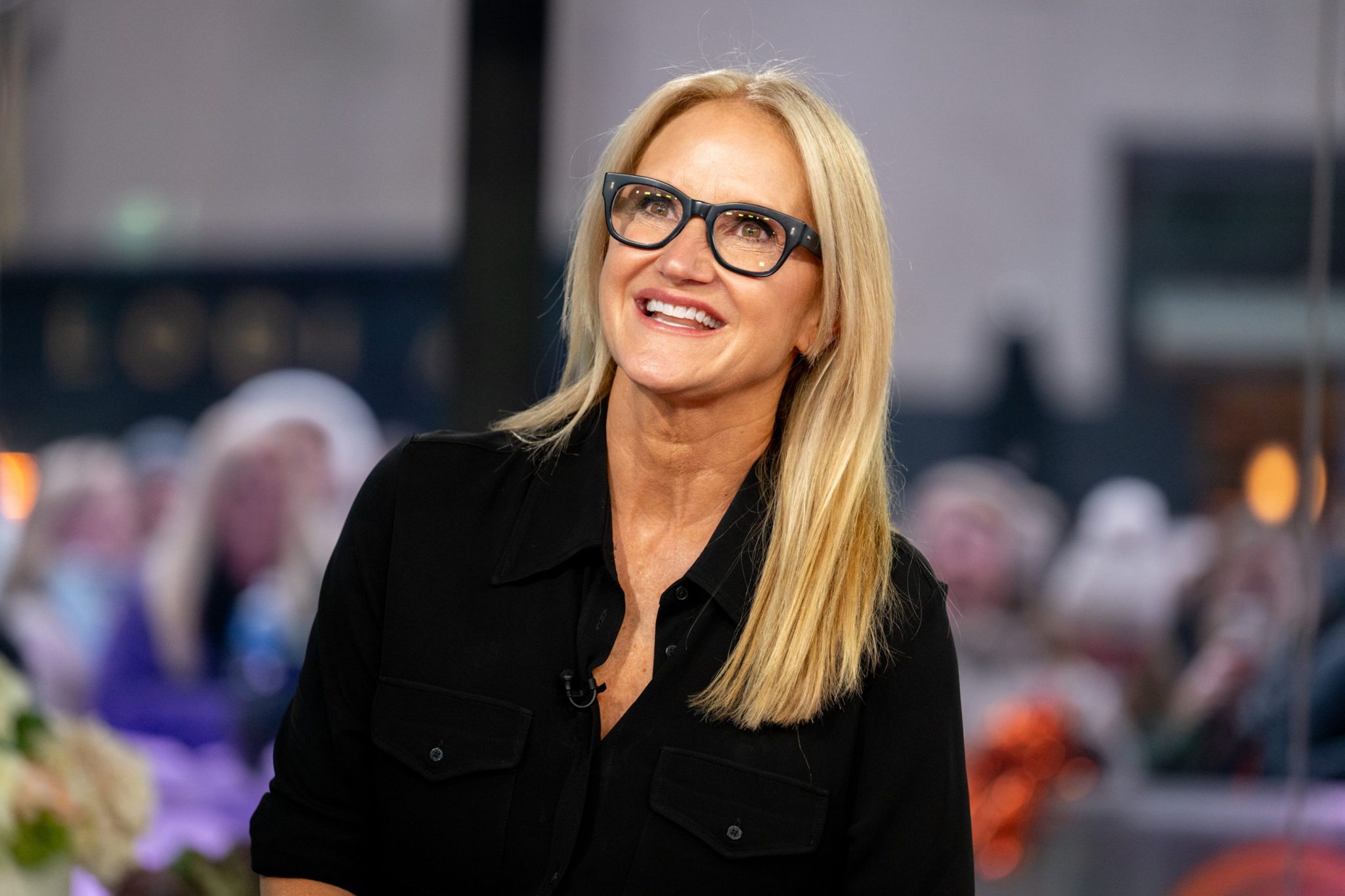
Having an in with powerful people is one way to unlock success—but you don’t need a corner-office career to recognize them from the crowd. Podcaster Mel Robbins says she learned the secret to spotting the most influential person in the room from her “mentor boss” Ruth while working her first job waitressing at Red Rooster Tavern in Scenic Drive, Michigan. It’s a lesson she’s carried along with her while building her multimillion-dollar empire.  “She told me when I started waitressing the secret to getting a good tip: Understanding who has influence over who gives you the good tip,” Robbins told the Wall Street Journal in a recent interview.  “A lot of people make the mistake of thinking that if you walk up to a group of couples, that it’s going to be the dudes that pay. The dudes decide to tip. That’s not what happens,” Robbins continued. “What happens often is the women turn to their partners and say ‘She was great, give her a tip.’ And so Ruth told me to ignore the men and to completely take fabulous care of the women.” Figuring out who really holds the power in a corporate setting is a different game, but the trick remains the same.  Putting Robbins’ trick to practice in the corporate world  The 57-year-old creator of The Mel Robbins Podcast and former CNN legal analyst has rubbed shoulders with some of the biggest names in business. Throughout her successful two-decade career as a motivational speaker, best-selling author, Robbins has focused on self-improvement and success after having previously worked in law. She’s interviewed the likes of real estate mogul Barbara Corcoran, serial entrepreneur Emma Grede, and former dot-com business executive Seth Godin. And when it comes to spotting the business bigwigs, she’s developed a keen eye in detecting who really holds the power.  Oftentimes, it isn’t the one with the biggest title or sitting at the head of a boardroom table. Just as she found in her job serving burgers and sandwiches, the corporate power player with the most influence is really the one who has the ear of the people in charge. “I think it’s never who you think it is,” Robbins explained. “Pay attention, look at people in positions of power. Who is actually close to them? Who do they listen to? Who’s in charge of their calendars? Honestly, a lot of times in corporations, it’s the assistant that has a lot of influence. And if the assistant likes you, you get in for the meeting. You get on to the calendar.” The people with the most influence can be easy to overlook, but that doesn’t make their power any less real. Whether it be a career in food service, academia, construction, or corporate America, learning to recognize who has influence—and treating them accordingly—can be a valuable career skill. “We always look at the person on stage, when it’s really the person that is standing next to the door that has the job that everybody ignores,” Robbins said. “That is the person you want to know.” Casting a wide net of relationships and valuing others leads to career success Robbins’ lesson is not just about identifying who has influence—it’s also about understanding how job opportunities can hinge on the people you might otherwise overlook. Casting a wide net of relationships and creating a lasting impression on others could make or break career success.  Pat Mitchell, the former president and CEO of The Paley Center for Media, similarly emphasized the power of purposeful relationships over simply boasting a rolodex of executives. Mitchell, a veteran media executive and longtime connector of influential people, says building a strong network can be a powerful source of career influence.  “You can measure power by who you know and your ability to connect people,” Mitchell previously told Fortune. “In the industry I started in, you couldn’t find allies, let alone mentors. Open up your network and invite someone else in.” And sticking by Robbins’ rule can pay off in seemingly inconsequential moments when vying for a career opportunity. Steven Bartlett, the founder and host of The Diary of a CEO podcast, once took a chance on an applicant with a virtually blank CV because she showed kindness and humility to others around her. The candidate may not have had industry pedigree or a long list of impressive credentials, but she made an impression on someone who was paying attention, and it got her into Bartlett’s circle.  “I hired someone whose CV was two lines. Their experience was zero,” Bartlett explained in a LinkedIn post earlier this year. “Much of the reason why I gave her the job was because: She thanked the security guard by name on the way into the building.” This story was originally featured on Fortune.com

SourceFortune | FORTUNE
Harvard fund discloses $2.2 billion stake in Musk’s SpaceXSource linked
Business

Harvard fund discloses $2.2 billion stake in Musk’s SpaceX

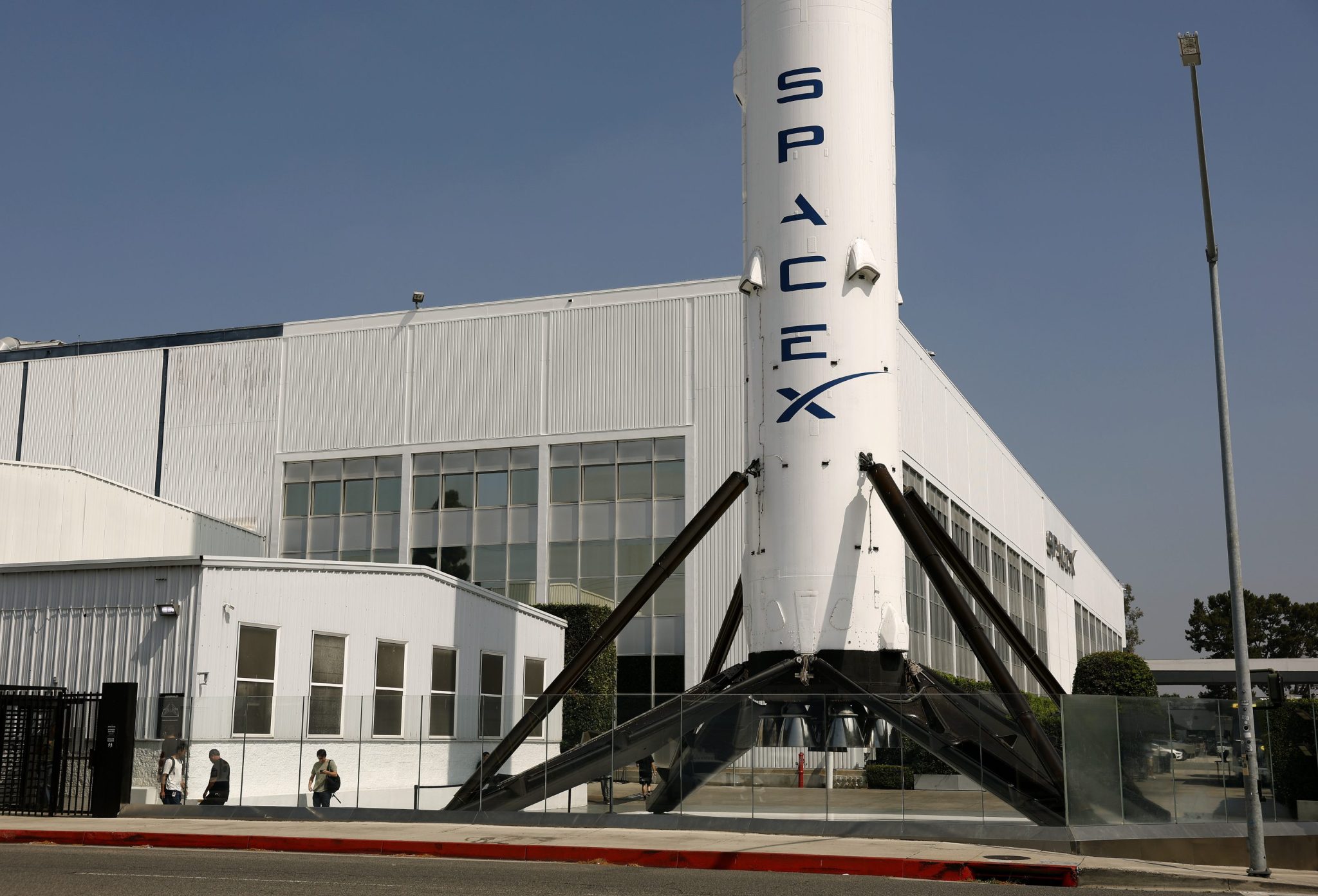
Harvard Management Co. disclosed a $2.2 billion stake in SpaceX, showing how the university’s endowment has profited from an early bet on Elon Musk’s giant rocket company. Harvard  reported it holds the position in its 13F filing on Friday, revealing it’s one of the largest endowment holders of the stock. Space Exploration Technologies Corp. is the largest single stock disclosed in the filing, which shows Harvard held $4.3 billion of US equities. Harvard oversaw  $57 billion  as of June 2025, the latest publicly available figure.  SpaceX’s record-breaking initial public offering in June has  boosted returns  for college endowments that made investments through venture capital firms, sometimes more than a decade ago.  Others that have profited include the University of California’s investment arm, which reported in a filing this week a position worth about $1 billion, as well as the University of North Carolina and  Washington University in St. Louis .   Harvard’s holdings potentially reflect both directly owned shares and distribution from private funds. Patrick McKiernan, a spokesman for Harvard Management, declined to comment on individual investments.  The gains from SpaceX, which currently has a more than $1.8 trillion valuation, come at time when US university finances are constrained from threats to federal research funding, a smaller pool of college-age students due to demographic changes and muted returns from private equity. Endowment funds with more than $500 million returned a median of 18.9% before fees in the year ended in June, according to Wilshire Trust Universe Comparison Service. SpaceX shares have  fluctuated  since the company debuted at $135. Shares fell 0.9% on Friday, closing at $140. Money managers overseeing more than $100 million in US equities have to file a 13F form within 45 days of the end of each quarter to list their holdings in stocks that trade on US exchanges. This story was originally featured on Fortune.com

SourceFortune | FORTUNE
Alibaba AI models hit 3 billion downloads, passing Meta, GoogleSource linked
Technology

Alibaba AI models hit 3 billion downloads, passing Meta, Google

Alibaba Group Holding’s open-weight models have accumulated more than 3 billion global downloads in the past six months, eclipsing Meta Platforms Inc., Alphabet Inc. and domestic peers to become the world’s No. 1 artificial-intelligence model. Qwen, Alibaba’s family of AI models, has open-sourced more than 460 models and its ecosystem has spawned 300,000-plus derivatives, the Chinese technology company said in an emailed statement. Google, part of Alphabet, had 418 million downloads while Meta stood at 227 million in 2026, according to popular open-source AI hub Hugging Face Inc., which published a  state of open models  report on Aug. 14. Open models can be downloaded, customized and used as building blocks for new AI products, making adoption a gauge of which technologies developers are choosing to build on. That has made download and derivative-model figures one measure of influence in the US-China AI race, as Chinese developers including Alibaba push capable models that are relatively cheap and easy to adapt. Qwen’s rise suggests that strategy is gaining traction beyond China. Qwen along with Moonshot AI Inc, DeepSeek and Chinese AI model builders are replicating frontier performance, seeking to bridge the gap with closed models in US, such as OpenAI Inc. and Anthropic PBC. Export controls on chips and AI systems, such as the brief ban on overseas access to Anthropic’s Fable 5 model this summer, don’t appear to be putting the brakes on Chinese competitors. Alibaba’s download data for Qwen makes it “one of the largest foundations of the open AI ecosystem,” the Hugging Face report said. The Hangzhou-based cloud, e-commerce and AI tech company is making gains over local rivals DeepSeek, Moonshot Kimi and MiniMax as well as US models.  “Qwen has become part of the default workflow for developers deciding what models to fine-tune and deploy,” the report said. A broad model family can create a self-reinforcing ecosystem: more developers adopt the models, more derivative versions are built, and that in turn draws in new users. Alibaba has bolstered that cycle by distributing Qwen through its cloud platform to enterprise customers in markets including Southeast Asia and Africa, giving it a reach that many rivals lack. US tech giants are responding. In recent weeks, Meta and Nvidia Corp. have released new open AI models as competition for developers intensifies. This story was originally featured on Fortune.com

SourceFortune | FORTUNE