BAGANBAZAR GRAPHEXPLORE · ANALYZE · GROW
Theme
GLOBAL SEARCH

Find the signal.

180 source-attributed results for “climate”

El Nino: Climate scientists warn of "Godzilla-level" climate eventSource linked
World

El Nino: Climate scientists warn of "Godzilla-level" climate event

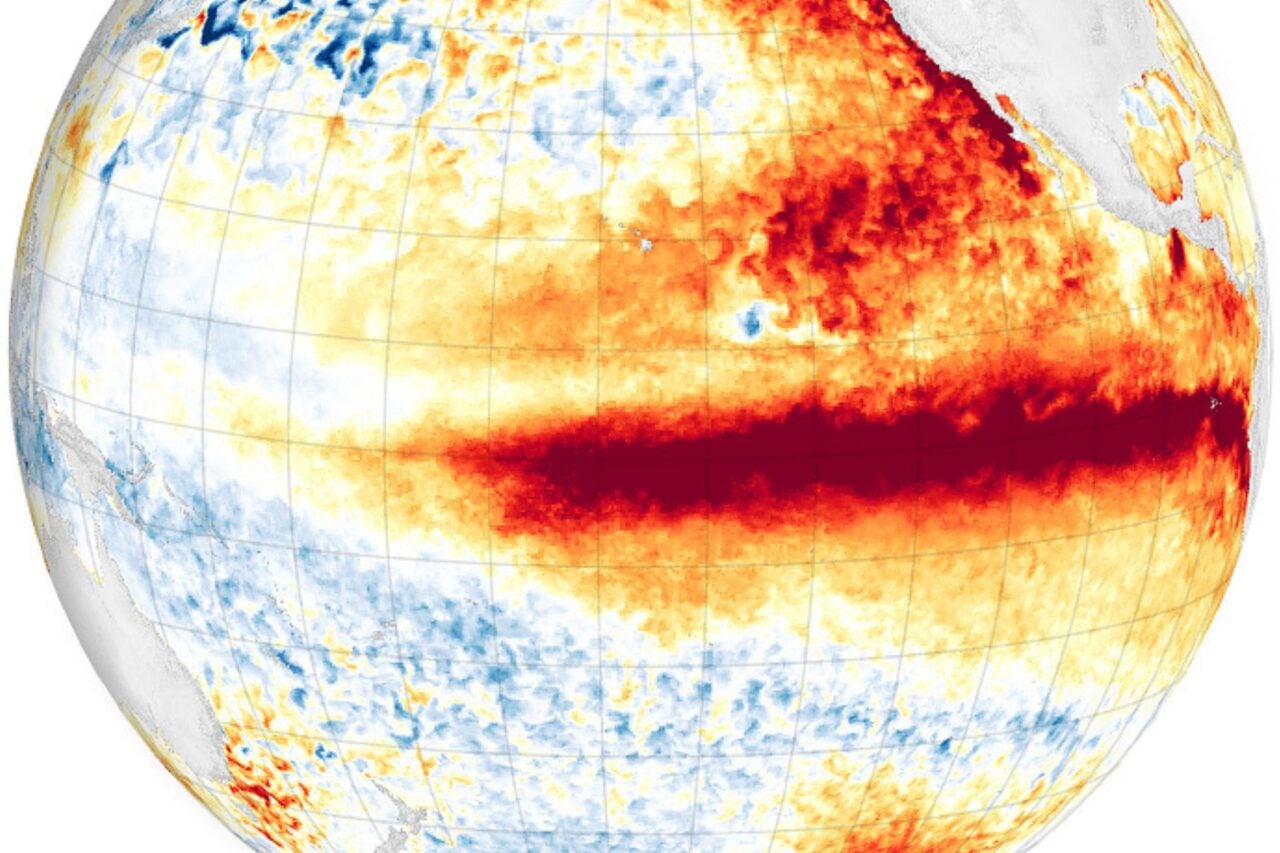
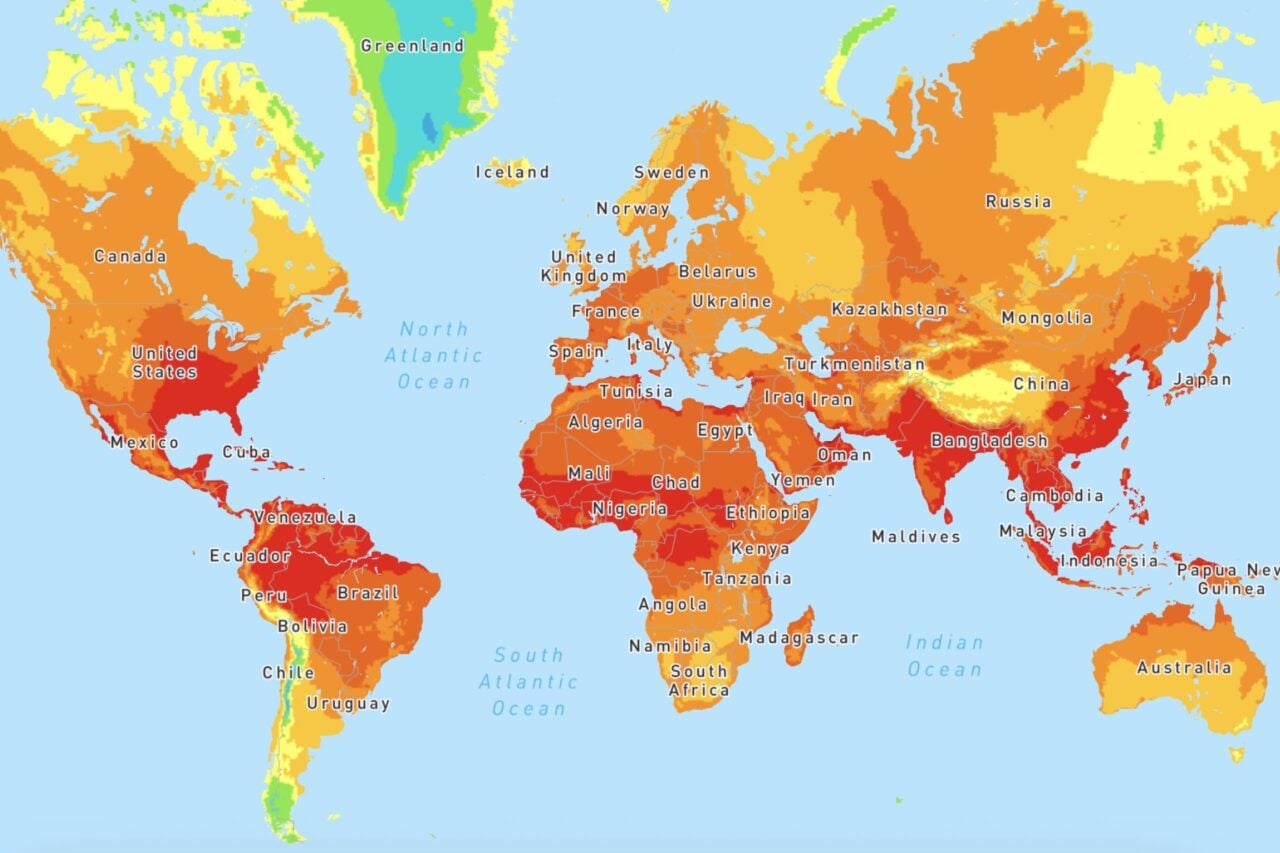
Extreme heat caused by this year’s “super El Niño” could lead to as many as 451,000 excess deaths worldwide in the six months to February 2027, according to researchers at the University of Chicago’s Climate Impact Lab. The number of extremely hot days is expected to rise by 44%, with Nigeria, Indonesia and Sudan among the countries likely to be worst affected. Researchers warn that the impact could extend well beyond the six-month period studied. Carys Garland reports.

SourceFrance 24
BAGANBAZAR GRAPHSource-attributed newsSCIENCE desk
Science

Delaying cherry blossom to reduce frost damage

Climate change is causing many fruit trees to flower earlier, increasing their exposure to damaging late spring frosts. A study led by the University of Göttingen shows that the plant growth regulator ethephon can delay flowering in Kordia, a sweet cherry variety, potentially protecting blossoms and developing fruitlets from frost. The treatment did not significantly delay flowering in a second sweet cherry variety or two apple varieties, highlighting the importance of crop and cultivar selection. The results are published in BMC Plant Biology.

Original sourcePhys.org - latest science and technology news stories
Super El Niño could cause 451,000 excess deaths worldwideSource linked
World

Super El Niño could cause 451,000 excess deaths worldwide

Extreme heat linked to this year’s “super El Niño” could cause up to 451,000 excess deaths worldwide in the six months to February 2027, according to researchers at the University of Chicago’s Climate Impact Lab. The number of extremely hot days is expected to rise by 44%, with Nigeria, Indonesia and Sudan among the countries likely to be most affected. Researchers warn that the impact could extend well beyond the six-month period studied. Chloe Brimicombe, a climate scientist from the University of Oxford, shares further details about this climate phenomenon.

SourceFrance 24
When climate mitigation becomes politicised: The Guardian uncovers IPCC links to Saudi oil industrySource linked
World

When climate mitigation becomes politicised: The Guardian uncovers IPCC links to Saudi oil industry

François Picard is pleased to welcome Eoghan Gilmartin, an award-winning investigative journalist and part of The Guardian team whose investigation examined links between IPCC authors and Saudi Arabia’s oil industry, including Saudi Aramco. Their findings take us to the intersection of climate science, political and economic interests, and institutional credibility, and into the politically consequential terrain of climate mitigation: how societies decide to respond to climate change.

SourceFrance 24
Lake Chad, a region under threat from climate changeSource linked
World

Lake Chad, a region under threat from climate change

People living in Chad’s Lake Province are bearing the brunt of climate change. The region and the communities that have developed there have historically depended on this vast body of water. Fishing, first and foremost, but also farming, are the pillars of local livelihoods. Yet both are increasingly disrupted by erratic weather patterns: dwindling fish stocks, damaged farmland and a rising cost of living.

SourceFrance 24
BAGANBAZAR GRAPHSource-attributed newsSCIENCE desk
Science

Research project identifies pathways to climate-resilient water and soil management

How can regions better adapt their water and soil resources to the impacts of climate change? After four years of research, the European collaborative project Blue Transition, led by the LIAG Institute for Applied Geophysics in Hanover, takes stock. The final report brings together the findings from 16 pilot regions in six countries and identifies three key levers to strengthen climate resilience: changing land use, improving soil health and diversifying water resources and optimizing their use.

Original sourcePhys.org - latest science and technology news stories
BAGANBAZAR GRAPHSource-attributed newsSCIENCE desk
Science

Livestock grazing may boost soil carbon storage in Iceland's subarctic grasslands

Grassland plants transfer large amounts of carbon to soil through their roots, and most of that carbon is stored underground. Therefore, promoting soil carbon storage can help combat climate change. Grazers feed on grassland plants, and conventional wisdom often assumes that removing grazers benefits carbon storage, but a new study in Global Change Biology Communications reveals that the opposite may be the case.

Original sourcePhys.org - latest science and technology news stories
BAGANBAZAR GRAPHSource-attributed newsSCIENCE desk
Science

Origins of Human Culture

We humans are such a successful species. Homo sapiens have been around for only around 100 000 years and in that time we have utterly transformed the world around us. Our shelters allow us to live in all climates and from the poles to the tropics; our technology lets us communicate across the planet. We’ve created art and music and literature; and our agriculture has changed global biodiversity, shifting forever the way we feed ourselves. In other words, human culture dominates the earth. Gaia Vince finds out what has given us the cultural edge over other animals. This includes our closest relatives – the great apes – with whom we share over 95% of our genes. She meets researchers at Birmingham University comparing the abilities of chimps and human children, and has a go at making a prehistoric stone hand axe by flint knapping. Photo credit: William West/AFP/Getty Images

Original sourceDiscovery
BAGANBAZAR GRAPHSource-attributed newsSCIENCE desk
Science

Xiuhtezcatl Martinez - Climate Change Activist (31)

From the age of six, Xiuhtezcatl has been out to improve our world. He worked locally to get pesticides out of parks, coal ash contained, and fracking moratoriums. He has addressed the General Assembly at the United Nations in New York. He is currently a plaintiff in a youth-led lawsuit against the US federal government for their failure to protect the atmosphere for future generations. On a brief visit to Australia he talks with Dr. Karl on how to achieve meaningful change as a youth activist.

Original sourceShirtloads of Science
UN climate change body accused of conflict of interest, Saudi influenceSource linked
World

UN climate change body accused of conflict of interest, Saudi influence

An investigation conducted by the Guardian is raising questions about potential conflicts of interest among experts helping produce the next major assessment from the UN’s Inter-governmental Panel on Climate Change. Out of the 223 lead authors in the part of the body which assesses how emissions can be reduced or removed, 20 have a strong conflict of interest, according to the investigation, with more than half linked to Saudi institutions, including two employees of oil giant Saudi Aramco.

Sourcefrance24.com
Climate change, overfishing: Lake Chad sees fish stocks dwindleSource linked
World

Climate change, overfishing: Lake Chad sees fish stocks dwindle

People living in Chad’s Lake Province are bearing the brunt of climate change. The region and the communities that have developed there have historically depended on this vast body of water. Fishing, first and foremost, but also farming, are the pillars of local livelihoods. Yet both are increasingly disrupted by erratic weather patterns: dwindling fish stocks, damaged farmland and a rising cost of living.

SourceFrance 24
BAGANBAZAR GRAPHSource-attributed newsSCIENCE desk
Science

The Future of the Climate Deal

The incoming administration of President Trump has frightened many in the international environmental community. The result of US election in November was announced during the 2016 Marrakech UN Climate Change Conference, a meeting where most delegates were working to deliver on the promises of the previous Paris accord. Instead, a new US direction seemed to have emerged, with some in the new US cabinet going so far as to suggest the US should withdraw altogether from Paris, scrap the US’s own Clean Power act, and re-open coal mines. Roger Harrabin explores whether the Climate Deal is dead, and whether the EU and other countries, such as China and India, might follow the Trump suit and relax their low-carbon initiatives.Image: Republican presidential nominee Donald Trump holds a sign supporting coal during a rally at Mohegan Sun Arena in Wilkes-Barre, Pennsylvania on October 10, 2016, credit: Dominick Reuter/AFP/Getty Images

Original sourceDiscovery
BAGANBAZAR GRAPHSource-attributed newsSCIENCE desk
Science

Climate Science Debate (36)

Why has Climate Science become so contested ? Dr Karl discusses with two authors. Dr Christopher Wright has written about the past 30 years of Climate Change in "Climate Change, Capitalism and Corporations: Processes of Creative Self-destruction". And Dr Michael Mann, the US researcher who published the hockey stick graph with his latest "The Madhouse Effect : How Climate Change Denial Is Threatening Our Planet, Destroying Our Politics, and Driving Us Crazy".

Original sourceShirtloads of Science
BAGANBAZAR GRAPHSource-attributed newsSCIENCE desk
Science

Dr. Michael Mann & the Hockey Stick Graph. (35)

This podcast is about Science and a chart. Team leader, Professor Michael Mann, drew it 20 years ago using good science. It's been named "The Hockey Stick Graph" because of the way it shoots up. It had no new information. Instead it drew on an international scientific consensus. The issue was that it suggested that humans had already changed our climate. The other problem was the clarity with which it expressed those man-made forces. You didn't need to be a scientist read or understand it. Dr Michael Mann, like Charles Darwin, dared to publish. The self-evident conclusion by many, unleashed powerful interests against both Dr. Mann and the science community. Dr Karl Talks with him about the experience.

Original sourceShirtloads of Science
World leaders gather at UN amid wars, AI fears and global divisionsSource linked
World

World leaders gather at UN amid wars, AI fears and global divisions

World leaders are gathering at the United Nations this week against a backdrop of wars in the Middle East and Ukraine, rising fears over artificial intelligence and mounting economic and climate pressures. The annual General Assembly will test whether the 193-member body can still bring countries together to tackle crises that increasingly transcend borders.

Sourcefrance24.com
BAGANBAZAR GRAPHSource-attributed newsBUSINESS desk
Business

Robert Pindyck on Climate Change

Robert Pindyck of MIT talks with EconTalk host Russ Roberts about the challenges of global warming for policy makers. Pindyck argues that while there is little doubt about the existence of human-caused global warming via carbon emissions, there is a great deal of doubt about the size of the effects on temperature and the size of the economic impact of warmer climate. This leads to a dilemma for policy-makers over how to proceed. Pindyck suggests that a tax or some form of carbon emission reduction is a good idea as a precautionary measure, despite the uncertainty.

Original sourceEconTalk
French farmers turn to tropical crops amid rising temperaturesSource linked
World

French farmers turn to tropical crops amid rising temperatures

In the south of France, climate change is reshaping the region’s fruit production. Rather than fighting against it, a growing number of farmers are learning how to work with it – turning to tropical crops, now well-suited to the local climate. Bananas, papaya and even dragon fruit are being grown in greenhouses but also in open fields, without heating or pesticides. Our Down to Earth team reports.

SourceFrance 24
BAGANBAZAR GRAPHSource-attributed newsSCIENCE desk
Science

Encore of Episode 27: Losing Alaska

We didn't hear very much about climate change during this election cycle — and social science research might give us some insight as to why not. This week, an encore of one of our favorite episodes about why it's so hard for us to wrap our heads around climate change. Hosted by Simplecast, an AdsWizz company. See pcm.adswizz.com for information about our collection and use of personal data for advertising.

Original sourceHidden Brain
BAGANBAZAR GRAPHSource-attributed newsWORLD desk
World

Exclusive: How Sen. Schatz is talking about climate in an affordability crisis

Americans are "connecting the dots" between climate and affordability strain, Sen. Brian Schatz (D-Hawaii) said Monday at an Axios House event on the sidelines of Climate Week and the UN General Assembly.Why it matters: But as pocketbook issues dominate a critical midterm race, Schatz says that doesn't mean the first thing he mentions to constituents is climate. Still, climate-tangent conversations — like utility prices and the data center boom — are looming over the polls.Driving the news: "I think we should talk about climate in the context of people not being able to afford their lives," Schatz told Axios' Ben Geman, pointing to insurance non-renewals, soaring gas prices and rising utility bills."It's not that difficult anymore for us to be able to say, look, one of the reasons things are getting more expensive is we're not addressing the climate crisis," he said, criticizing the federal government's renewables roadblocks."The climate imperatives used to have to be balanced against people's pocketbooks, and now they are perfectly lined up," he added. "We do not have to make trade-offs. They are deciding to make the planet worse and make your pocketbook situation worse."Catch up quick: Schatz has been a leading congressional voice on climate issues, representing a heavily petroleum-dependent U.S. state with high energy prices that's at particular risk from the impacts of climate change.The state has taken on an ambitious clean energy initiative that aims for 100% renewable energy by 2035 on the neighbor islands, including Maui and Hawaiʻi.Friction point: The sweeping GOP budget bill signed into law by President Trump last year phased out wind, solar, and electric vehicle subsidies that the prior administration championed as tools to bolster clean tech.It's one front i

Original sourceAxios
BAGANBAZAR GRAPHSource-attributed newsSCIENCE desk
Science

Children born today in Europe will live through almost twice as much extreme fire weather as their grandparents

A child born in Europe in 2025 will live through more than three additional years of extreme fire weather compared with someone born in 1950 if we continue with current climate policies, according to new research published in the journal Environmental Research Letters. That's an 84% increase for today's babies compared with their grandparents. The vast majority (86%) of this increase is due to climate change rather than increased longevity.

Original sourcePhys.org - latest science and technology news stories
BAGANBAZAR GRAPHSource-attributed newsSCIENCE desk
Science

The Long Hot Summer

This summer the Northern Hemisphere has been sweltering in unusually high temperatures. It’s been hot from the Arctic to Africa. This has led to increased deaths, notably in Canada, and more wildfires, even in Lancashire and in Sweden. Can we say that this heatwave – and the extreme drought in Australia – is a result of climate change? Or is just part of the variable weather patterns we have on our planet? Roland Pease gets answers to these questions from the world’s leading climate and weather scientists. He picks apart the influences of the jet stream, the El Nina and the Atlantic decadal oscillation from that of global warming.Picture: Sacramento River and valley lit by the Delta Fire in California, 2018, Credit: Josh Edelson/AFP/Getty Images

Original sourceDiscovery
BAGANBAZAR GRAPHSource-attributed newsBUSINESS desk
Business

Judith Curry on Climate Change

Judith Curry of the Georgia Institute of Technology and blogger at Climate Etc. talks with EconTalk host Russ Roberts about climate change. Curry argues that climate change is a "wicked problem" with a great deal of uncertainty surrounding the expected damage as well as the political and technical challenges of dealing with the phenomenon. She emphasizes the complexity of the climate and how much of the basic science remains incomplete. The conversation closes with a discussion of how concerned citizens can improve their understanding of climate change and climate change policy.

Original sourceEconTalk
BAGANBAZAR GRAPHSource-attributed newsWORLD desk
World

Dong Mingzhu Honored as a ‘Cool Leader’, Providing a Chinese Solution for Global Climate Governance

Gree Electric Appliances, INC. of Zhuhai SINGAPORE, Sept. 21, 2026 (GLOBE NEWSWIRE) — On September 17, the Global Cooling Pledge Assembly, hosted by the UN Environment Programme (UNEP) Cool Coalition, was held in Singapore. At the event, Martin Krause, Director of the Climate Change Division at UNEP, presented the inaugural “Cool Leaders” individual award to Dong Mingzhu, […]

Original sourceFinancial Post
BAGANBAZAR GRAPHSource-attributed newsSCIENCE desk
Science

Ep. 64: I'm Right, You're Wrong

There are some topics about which it seems no amount of data will change people's minds: things like climate change, or restrictions on gun ownership. Neuroscientist Tali Sharot says that's actually for good reason. As a general rule, she says, it's better to stick to your beliefs and disregard new information that contradicts them. But this also means it's very difficult to change false beliefs. This week, we look at how we process information, and why it's so hard to change our views. Hosted by Simplecast, an AdsWizz company. See pcm.adswizz.com for information about our collection and use of personal data for advertising.

Original sourceHidden Brain
BAGANBAZAR GRAPHSource-attributed newsSCIENCE desk
Science

Carbon - the backbone of life

Carbon is widely considered to be the key element in forming life. It's at the centre of DNA, and the molecules upon which all living things rely.Monica Grady, Professor of Planetary Science at the Open University, explores the nature of carbon, from its formation in distant stars to its uses and abuses here on earth. She looks at why it forms the scaffold upon which living organisms are built, and how the mechanisms involved have helped inform the development of new carbon based technology, and products - from telephones to tennis rackets.One form of carbon is graphene which offers great promise in improving solar cells and batteries, and introducing a whole new range of cheaper more flexible electronics.Carbon is also the key component of greenhouse gases, carbon dioxide and methane. To counter some of the effects of man-made climate change, Scientists are now developing novel ways to speed up this mechanism - using waste materials created from mining and industry.Monica Grady also looks to space, and the significance of carbon in the far reaches of the universe. There is lots of carbon in space, some in forms we might recognise as the precursors to molecules. As elemental carbon seems to be everywhere what are the chances of carbon based life elsewhere?Image: Steam and exhaust rise from the chemical company Oxea (front) and the coking plant January 6, 2017 in Oberhausen, Germany. Photo by Lukas Schulze Getty Images

Original sourceDiscovery
BAGANBAZAR GRAPHSource-attributed newsSCIENCE desk
Science

Africa’s Great Green Wall

Can Africa’s Great Green Wall beat back the Sahara desert and reverse the degrading landscape? The ambitious 9 miles wide and 5000 miles long line of vegetation will stretch all the way from Dakar in the west to Djibouti in the east. Thomas Fessy is in Senegal where the wall has already begun to evolve into a series of forests and garden communities. He meets the planners, planters, ecologists and local villagers to hear how its early progress is reversing years of poor land use, turning nomads back to farmers, empowering women and creating healthy ecosystems for rain fed agriculture. But can it meet its ambition to stabilize an unstable region, reverse the growing trend of migration, fight the effects of climate change and ensure this big African dream doesn’t die in the sand?Picture: The Great Green Wall, credit: BBC Producer Adrian Washbourne

Original sourceDiscovery
BAGANBAZAR GRAPHSource-attributed newsWORLD desk
World

Tinubu mandates Shettima to lead Nigeria’s delegation to 81st UNGA

President Bola Tinubu has mandated Vice President Kashim Shettima to represent him and lead Nigeria’s delegation to the 81st United Nations General Assembly (UNGA) in New York, United States. Shettima disclosed this in a post on X. The delegation will include Rivers State Governor Siminalayi Fubara, Zamfara State Governor Dauda Lawal, ministers and other senior government officials. The 81st UNGA General Debate is scheduled to hold from September 22 to 28, 2026, under the theme, “Restoring Trust, Managing Transformation: A United Nations That Delivers for All.” The UN confirms that the General Debate will run from September 22 to 26 and on September 28. Shettima will deliver Nigeria’s national statement at the General Debate, outlining the country’s position on major global issues, including national development, peace and security, economic growth and international cooperation. According to the statement, Shettima’s participation will include engagements on “the Right to Development, climate action, and other issues of strategic importance to Nigeria and the African continent.” Tinubu mandates Shettima to lead Nigeria’s delegation to 81st UNGA

Original sourceDaily Post Nigeria
BAGANBAZAR GRAPHSource-attributed newsSCIENCE desk
Science

Sea surface temperature biases shift the North Pacific jet stream southward, study finds

Climate models are numerical models used to project future climate change. They simulate the climate from the present into the future by calculating changes in the atmosphere, ocean and other components of the climate system. However, simulations of the present-day climate do not perfectly reproduce observations and contain various biases. The model characteristics that cause these biases can also affect simulations of the future climate. Understanding the causes and impacts of present-day climate biases is therefore important for improving the reliability of future climate projections.

Original sourcePhys.org - latest science and technology news stories
BAGANBAZAR GRAPHSource-attributed newsSCIENCE desk
Science

Maria Merian

Maria Merian was born in 1647. At the time of her birth, Shakespeare had been dead for 30 years; Galileo had only just stood trial for arguing that the Earth moved around the Sun. And yet, here in Germany, was a child who would become an important but oft-forgotten figure of science.Aged 13, she mapped out metamorphosis, catching caterpillars from her garden and painting them in exquisite detail. At that point, most believed that caterpillars spontaneously generated from cabbages and maggots materialised from rotten meat. She later voyaged to Suriname in South America to pursue pupae further, discovering not just new species but also the conditions needed for their survival. Some call her the first field ecologist; others admire her for her eloquent brushwork. However, her studies will help today’s biologists plot which insects lived where. These data are invaluable because this could help scientists predict what species will survive climate change. Naomi Alderman discusses the life and legacy of Maria Merian with biologist and historian Kay Etheridge from Gettysburg College, Pennsylvania and biologist Kathy Willis from Kew Gardens.Picture: Belly-ache bush (Jatropha gossypifolia) with metamorphosis of a giant sphinx moth (Cocytius antaeus), created by Maria Sibylla Merian and Joseph Mulder, Credit: GRI Digital Collections Producer: Graihagh Jackson

Original sourceDiscovery
BAGANBAZAR GRAPHSource-attributed newsBUSINESS desk
Business

John Christy and Kerry Emanuel on Climate Change

John Christy of the University of Alabama in Huntsville and Kerry Emanuel of the Massachusetts Institute of Technology talk with EconTalk host Russ Roberts about climate change. Topics discussed include what we know and don't know about global warming, trends in extreme weather such as hurricanes, rising sea level, the likely change in temperature in the next hundred years. Both scientists also give their perspective on what policies might be put in place to reduce risk from climate change. This episode was recorded before a live audience at the College of Business Administration at the University of Alabama in Huntsville.

Original sourceEconTalk
BAGANBAZAR GRAPHSource-attributed newsBUSINESS desk
Business

ADB allocates up to $6B for blue economy in Southeast Asia

THE Asian Development Bank (ADB) will mobilize up to $6 billion through 2030 to support fisheries, coastal infrastructure and other blue-economy investments in Southeast Asia. ADB President Masato Kanda announced the ASEAN (Association of Southeast Asian Nations) Blue Economy Initiative at the 58th ASEAN Economic Ministers’ Meeting in Metro Manila on Saturday. “The ocean is not just an environmental priority; it is the economic foundation of Southeast Asia,” Mr. Kanda said. “When marine ecosystems degrade, the damage reaches the fishing net, the family table, and the flooded doorstep. We will put up to $6 billion behind the work of restoring fisheries, building resilient coastal infrastructure, and stopping waste before it reaches the water,” he added. Southeast Asia accounts for a fifth of the world’s fisheries and agricultural output, but ecosystem degradation, plastic waste and fishing pressure have been eroding the region’s natural capital, ADB said. “Modeled estimates put expected coastal flood damage across the region at about $11.5 billion a year,” it added. The ADB has yet to disclose how the $6 billion will be distributed among ASEAN member economies. Meanwhile, the bank is also proposing $150,000 in technical assistance for the Philippines to strengthen nutrition and climate resilience in the country’s food systems. The Philippines will receive the largest allocation among seven participating economies under the $800,000 regional program. Cambodia, Indonesia, Timor-Leste and Vietnam were each allotted $125,000, while Bangladesh and Nepal will receive $100,000 and $50,000, respectively. The technical assistance will support the integration of nutrition into ADB country programs, policy discussions and project preparation, as well as the design of nutrition-sens

Original sourceBusinessWorld
BAGANBAZAR GRAPHSource-attributed newsSCIENCE desk
Science

The Long Hot Summer - Part Two

This summer the Northern Hemisphere has been sweltering in unusually high temperatures. It has been hot from the Arctic to Africa. This has led to increased deaths, notably in Canada, and more wildfires, even in Lancashire and in Sweden. Can we say that this heatwave – and the extreme drought in Australia - is a result of climate change? Or is just part of the variable weather patterns we have on our planet? Roland Pease gets answers to these questions from the world’s leading climate and weather scientists. He picks apart the influences of the jet stream, El Niño and the Atlantic decadal oscillation from that of global warming.(Photo: Arctic Pack Ice near Svalbard, Norway. Credit: Bkamprath/Getty Images)

Original sourceDiscovery
BAGANBAZAR GRAPHSource-attributed newsSCIENCE desk
Science

Cooling the City

The summer of 2003 saw the largest number of deaths ever recorded in a UK heatwave - but by 2040 climate models predict the extreme summer temperatures experienced then will be normal. We will also be experiencing colder winters, and droughts and floods will become more common. Our infrastructure, housing, water, sewerage, transport and public buildings are not designed for such conditions. Gaia Vince asks how we can adapt and prepare our cities, where most people live and work, for the new normal weather conditions. New buildings in temperate climates are now designed with keeping us warm in mind, better insulation, more efficient heating and airtight glazing. However when it comes to overheating these measures designed to keep out the cold can be part of the problem. Can we adapt solutions from other countries where extreme heat is a more usual seasonal event? Will we simply have to change the way we organise our day to keep out of the heat? Is the real answer for mad dogs and Englishmen to take a siesta?Picture: Wood thermometer, Credit: Ugurhan/Getty Images

Original sourceDiscovery
BAGANBAZAR GRAPHSource-attributed newsSCIENCE desk
Science

Bringing ice sheets to life: Releasing a dynamic ice sheet modeling workflow for Australia's climate model

Ice sheets are fundamental components of the Earth system. Antarctica and Greenland, the two ice sheets currently on Earth, don't just affect their own regions: What happens on these vast masses of land ice influences weather, climate, society and the environment around the planet.

Original sourcePhys.org - latest science and technology news stories
BAGANBAZAR GRAPHSource-attributed newsSCIENCE desk
Science

I'm Right, You're Wrong

There are some topics about which it seems no amount of data will change people's minds: things like climate change, or restrictions on gun ownership. Neuroscientist Tali Sharot says that's actually for good reason. As a general rule, she says, it's better to stick to your beliefs and disregard new information that contradicts them. But this also means it's very difficult to change false beliefs. In this favorite episode from earlier this year, we look at how we process information, and why it's so hard to change our views. Hosted by Simplecast, an AdsWizz company. See pcm.adswizz.com for information about our collection and use of personal data for advertising.

Original sourceHidden Brain
BAGANBAZAR GRAPHSource-attributed newsSCIENCE desk
Science

Corinne Le Quéré on carbon and climate

Professor Corinne Le Quéré of University of East Anglia talks to Jim Al-Khalili about tracing global carbon. Throughout the history of planet Earth, the element carbon has cycled between the atmosphere, the oceans and the biosphere. This natural cycle has maintained the amount of carbon dioxide in the atmosphere and has allowed life to exist for billions of years. Corinne Le Quéré is a climate scientist who keeps track of where the carbon comes from and where it goes – all on a truly global scale. Corinne Le Quéré is the founder of the Global Carbon Budget, which each year reports on where carbon dioxide is being emitted and where it is being absorbed around the world. More specifically, she studies the relationship between the carbon cycle and the earth’s climate, and how it is changing.

Original sourceDiscovery
BAGANBAZAR GRAPHSource-attributed newsWORLD desk
World

‘No doubt’ of climate change role in deadly China-Nepal flood: scientists

Climate change was a core factor in last month’s deadly glacial mountain collapse on the China-Nepal border that killed more than 1,400 people and left at least 6,600 missing, scientists said Thursday. A man looks at the remains in the aftermath of flash floods at Trishuli in Nepal’s Nuwakot district on September 7, 2026. Photo: Pedro Pardo/AFP. However, scientists from the World Weather Attribution (WWA) group said, the disaster was not caused by a single extreme weather event, rather a “compound crisis” shaped by long-term warming, glacier retreat, permafrost thaw and geological instability. “Relentless warming has lifted the altitude of the freezing threshold on the high Himalaya, exposing ice and permafrost deep in the bedrock to higher and longer thaw temperatures, weakening mountain slopes,” a WWA report said. A massive section of rock and glacier broke away from Langtang Lirung mountain on August 26, triggering a huge flood of water, ice and debris that swept downstream, destroying communities and infrastructure. ‘Irreversible shifts’ Report co-author Walter Immerzeel, a mountain hydrologist at Utrecht University, said the region was undergoing “fundamental, irreversible shifts”, with glacier retreat and permafrost degradation undermining mountain stability. “We conclude that this was a geologically vulnerable slope, potentially weakened by the 2015 earthquake, but it was destabilised further by glacier retreat and permafrost fall,” Immerzeel told reporters. Nepal, a largely rural nation of 30 million people, contributes a fraction of global greenhouse gas emissions compared to industrialised nations. The study found that July and August 2026 were the warmest months locally recorded, while heavy snowfall in late 2025 contributed to increased meltwater before the

Original sourceHong Kong Free Press HKFP
BAGANBAZAR GRAPHSource-attributed newsSPORTS desk
Sports

Chess: Nigel Short to play at south pole in event criticised over climate impact

The former world title challenger, 61, will take on representatives from five other continents in a tournament rated by the global chess body FideNigel Short, the 1993 world title challenger, will head to the Antarctic for his next tournament as the 61-year-old, formerly of Bolton but resident for many decades in Greece, attempts to become the first chess player to win tournaments on seven continents.There is history for the very strongest grandmasters successfully defying the ravages of time: Emanuel Lasker in his mid-60s at Moscow 1935 and 1936, Viktor Korchnoi in his 70s, and, most impressive of all, Vasily Smyslov reaching the 1984 Candidates final against Garry Kasparov at 63. Continue reading...

Original sourceSport | The Guardian
BAGANBAZAR GRAPHSource-attributed newsSCIENCE desk
Science

The misinformation virus

In this online age, the internet is a global megaphone, billions of messages amplified and shared, even when they're false. Fake science spreads faster than the truth ever could, unhindered by national boundaries. Mainstream scientists are struggling to respond. The science journalist and writer, Angela Saini, is fascinated by how bad ideas spread and in this programme she investigates the very real impact of online scientific misinformation. From the dangerous anti-vaccination campaigns to those who deny the reality of climate change, she assesses the scale and extent of the threat we face. And she discovers the sinister world of deliberate disinformation where an army of bots and trolls work to sow dissent and confusion in the online space.Producer: Fiona Hill

Original sourceDiscovery
BAGANBAZAR GRAPHSource-attributed newsSCIENCE desk
Science

The road to Glasgow

Climate change is upon us. In 2018 the IPCC published a report with the most significant warning about the impact of climate change in 20 years. Unless the world keeps warming to below 1.5% degrees Celsius the impact on the climate will be severe. Sea levels will rise, leading to flooding, and extremes of temperature will become more common. The UK Met Office has forecast that the global average surface temperature for the five-year period to 2023 is predicted to be around 1.0 °C above pre-industrial levels. Just before Christmas the COP 25 meeting in Madrid ended with a compromise deal. All countries will need to put new climate pledges on the table by the time of the next major conference in Glasgow at the end of 2020. But there were no decisions on the future of carbon trading and big players such as US, India, China and Brazil opposed calls to be more ambitious in our pledges to reduce man made global warming. Across 2020 in Discovery Matt McGrath will be reporting on what is happening to save the planet. In this first programme he takes stock after Madrid and finds out what the world’s key players say has to be done before the meeting in Glasgow.(Photo: Man with placards and amplifier on global strike for climate change. Credit: Halfpoint/Getty Images)

Original sourceDiscovery
BAGANBAZAR GRAPHSource-attributed newsSCIENCE desk
Science

Ecological grief

As the Earth experiences more extreme weather, and wildlife is dying, from corals, to insects, to tropical forests, more people are experiencing ecological anxiety and grief. Science journalist Gaia Vince has been reporting on the growing crisis across our planet’s ecosystems, and has met many who are shocked and saddened by the enormity of the environmental changes taking place. She talks to scientists and medics working at the frontline of environmental change, and hears that, despite being expected to distance themselves from what’s happening, they are affected emotionally. Ashlee Consulo, of Memorial University on the Canadian island of Labrador, and Courtney Howard, a doctor in Yellowknife, tell Gaia about their experiences of living and working with indigenous peoples in areas where temperatures are rising rapidly and the ice is melting. Steve Simpson of Exeter University and Andy Radford of Bristol University are both professors of biology who have watched coral reefs become devastated by climate change. Recently they wrote a letter to the journal Science headlined Grieving environmental scientists need support to raise awareness of the issues researchers are facing. And Gaia visits the aquarium at the Horniman Museum in London, where Jamie Craggs is trying to breed corals for future generations. Image: Greenland Inuit hunter (Credit: Earl Grad/Getty Images)

Original sourceDiscovery
ROVING REPORTERS: Ducking disaster — what storm-battered Madagascar teaches us about conservation resilienceSource linked
World

ROVING REPORTERS: Ducking disaster — what storm-battered Madagascar teaches us about conservation resilience

Madagascar is often reduced to headlines of disaster as cyclones intensify and ecosystems come under pressure. But that is only part of the story. From a drained lake that nearly wiped out an endemic duck, to storm-affected coastal habitats, this is also a story of resilience, community-led recovery and the practical lessons Madagascar offers on adapting to a changing climate.

SourceDaily Maverick
BAGANBAZAR GRAPHSource-attributed newsSCIENCE desk
Science

How to illuminate your big idea (104)

Dr. Katerina Kimmorley co-founded Pollinate Energy, a solar startup, in Bangalore India. She's since helped expand that business to three more cities, cutting carbon and transforming lives. What drove her from Sydney to the the London School of Economics and the Clean Energy Finance Corporation ? Dr. Kimmorley tells Dr Karl - (and is at the Sydney Spark statup festival). https://www.eventbrite.com.au/e/the-role-of-women-entrepreneurs-in-tackling-climate-change-tickets-49158532494 http://sparkfestival.co/program/#

Original sourceShirtloads of Science
Climate change: Glacier loss and dry rivers threaten water securitySource linked
World

Climate change: Glacier loss and dry rivers threaten water security

The world's rivers experienced one of their driest years in more than three decades in 2025, while glaciers continued to retreat and freshwater reserves kept declining, according to the World Meteorological Organization. The agency warns that climate change and growing water use are making the global water cycle more erratic, increasing the risk of both droughts and floods.

SourceFrance 24
BAGANBAZAR GRAPHSource-attributed newsBUSINESS desk
Business

Martin Weitzman on Climate Change

Is climate change the ultimate Black Swan? Martin Weitzman of Harvard University and co-author of Climate Shock talks with EconTalk host Russ Roberts about the risks of climate change. Weitzman argues that climate change is a fat-tailed phenomenon--there is a non-trivial risk of a catastrophe. Though Weitzman concedes that our knowledge of the climate is quite incomplete, he suggests that it is prudent to take serious measures, including possibly geo-engineering, to reduce the accumulation of carbon dioxide in the atmosphere.

Original sourceEconTalk
BAGANBAZAR GRAPHSource-attributed newsSCIENCE desk
Science

Scientists discover a mysterious new frog hiding in the Amazon

Scientists discovered a new frog species in the flooded forests of the western Amazon, distinguishing it from nearly identical relatives through DNA and its unique call. Adenomera varcena highlights how much Amazonian biodiversity remains hidden even as habitat loss and climate change threaten these poorly understood species.

Original sourceLatest Science News -- ScienceDaily
BAGANBAZAR GRAPHSource-attributed newsBUSINESS desk
Business

Matt Ridley on Climate Change

Science writer and author Matt Ridley discusses climate change with EconTalk host Russ Roberts. Based on his reading of the scientific evidence, Ridley describes himself as a "lukewarmer." While Ridley agrees that humans have made the climate warmer, he argues that the impact is small or positive over some temperature ranges and regions. He rejects the catastrophic scenarios that some say are sufficiently likely to justify dramatic policy responses, and he reflects on the challenges of staking out an unpopular position on a contentious policy issue.

Original sourceEconTalk
BAGANBAZAR GRAPHSource-attributed newsBUSINESS desk
Business

Jesse Ausubel on Agriculture, Technology, and the Return of Nature

Thousands of bears in New Jersey. Humpback whales near New York City. Acres devoted to farming stable or declining even as food production soars. Jesse Ausubel of the Rockefeller University talks with EconTalk host Russ Roberts about the return of nature. Ausubel shows how technology has reduced many of the dimensions of the human footprint even as population rises and why this trend is likely to continue into the future. The conversation concludes with Ausubel's cautious optimism about the impact of climate change.

Original sourceEconTalk
BAGANBAZAR GRAPHSource-attributed newsSCIENCE desk
Science

Irrigation’s climate benefit could equal 363 years of its own emissions

U.S. irrigation produces some greenhouse gas emissions, but new research suggests it prevents vastly more by allowing farmers to grow more food on less land. Without irrigation, replacing lost crop yields could require converting natural ecosystems into farmland, releasing an estimated 6.86 gigatons of greenhouse gases. That is equivalent to about 363 years of current annual U.S. irrigation emissions.

Original sourceLatest Science News -- ScienceDaily
BAGANBAZAR GRAPHSource-attributed newsSCIENCE desk
Science

Episode 296 - Astrobiology with Adam Frank

Astrophysicist and professor at University of Rochester Adam Frank (@AdamFrank4) joins Matt and Andy to talk about his new book Light of the Stars: Alien Worlds and the Fate of the Earth, a look at the history of scientific discoveries on planetary environments and the prospect of alien life, what the very high likelihood that extraterrestrial civilizations have existed in our universe can teach us about the fate of human life on Earth, how an inevitable growing pain of any civilization is climate change and what to do with that information to ensure that our civilization survives its cosmic adolescence.

Original sourceProbably Science
BAGANBAZAR GRAPHSource-attributed newsSCIENCE desk
Science

The sting in the tail

"What’s the point of wasps?" asks listener Andrew, who is fed up with being pestered. For this series, with lockdown learning in mind, Drs Rutherford and Fry are investigating scientific mysteries for students of all ages. Do wasps do anything to justify their presence as a picnic menace?Ecologist Seirian Sumner researches social wasp behaviour and champions their existence. Not only do yellow jacket wasps perform important ecological services as generalist pest controllers of aphids, caterpillars and flies in the UK, they have complex societies and may even perform pollination services, making them more like their better-loved bee cousins than many might think.However, much remains unknown about wasps’ contribution to our ecosystem. Seirian works with entomologist Adam Hart, and together they run The Big Wasp Survey each summer, a citizen science project dedicated to find out more about UK wasp species and their populations. Prof. Hart sets up an experimental picnic with Dr Rutherford to try and attract some native wasps, and discusses why they are so maligned.But in some parts of the world UK wasp species have become a major problem. Just after World War II, having unwittingly chosen some aircraft parts destined for New Zealand as their overwintering home, some wasp queens woke up in the city of Hamilton. With no natural predators or competitors, they quickly established a growing population. Fast forward to today, and by late summer the biomass of wasps becomes greater than all the birds, rodents and stoats in the southern island’s honeydew beech forests. Multiyear nests have been discovered that are over three metres tall and contain millions of wasps. Researcher Bob Brown is digging into wasp nests back in the UK to discover which species keep wasps in check here,

Original sourceDiscovery
BAGANBAZAR GRAPHSource-attributed newsSCIENCE desk
Science

How a pathogen turns flowers into leaves

Scientists have found how a protein produced by bacteria disrupts the mechanism that controls flower development in plants, turning reproductive organs into leaf-like structures. These findings shed light on a plant disease that is expected to spread as climate change expands the range of its insect vectors in northern latitudes. They used a synchrotron technique at ESRF, the European Synchrotron in Grenoble, France. The results are an Editor's Pick in the Journal of Biological Chemistry.

Original sourcePhys.org - latest science and technology news stories
BAGANBAZAR GRAPHSource-attributed newsSCIENCE desk
Science

What are best options for controlling GSL dust, and what would they cost?

A new collaborative report from University of Utah researchers and coordinated by the Wilkes Center for Climate Science & Policy provides Utah Department of Natural Resources, Department of Environmental Quality and policymakers with a comprehensive analysis of the growing risks posed by dust from the exposed lakebed of Great Salt Lake, the potential costs of controlling that dust, and the long-term benefits of stabilizing lake levels.

Original sourcePhys.org - latest science and technology news stories
BAGANBAZAR GRAPHSource-attributed newsSCIENCE desk
Science

Hotter days and more of them

Summer 2026 is likely the hottest summer on record since 1895. The NYT editorial board describes the warming days and warns of what is to come. In many parts of the country, extreme heat affects much more of the year than it once did. In the late 1980s and early 1990s, Fulton County, Ga., which includes Atlanta, spent about 47 days a year with a heat index (a measure that combines temperature and humidity to estimate how hot it feels) exceeding 90 degrees. In recent years, Fulton County’s residents have typically endured 79 such days, an increase of a month. There are several charts and maps by graphics editor Gus Wezerek. The introduction chart, shown above, looks like radiant lines rising off a hot surface. It’s a clever use of a connected scatterplot. The x-axis is the average days per year with a heat index above 90 degrees Fahrenheit, using a 10-year moving average. The y-axis is the difference between points in time. Points are connected from 1995 through 2025. Tags: climate change, heat, New York Times

Original sourceFlowingData
BAGANBAZAR GRAPHSource-attributed newsWORLD desk
World

"I am the Hoax Buster": Trump's war on AI doomers gets personal

President Trump declared war on the AI safety panic Monday, dismissing the industry's apocalyptic warnings as part of a "sick conspiracy" to sabotage America and his legacy.Why it matters: Trump is rewriting a complex, years-long debate over AI's dangers in the partisan grammar that has defined MAGA for a decade — hoaxes, conspiracies, traitors and, at the center of it all, one man."The only control or 'guardrails' that AI needs is a STRONG AND SMART (High IQ!) PRESIDENT," Trump wrote in a barrage of pro-AI Truth Social posts, where he accused Democrats of stoking the panic.State of play: Monday marked a sharp escalation in the administration's long-standing opposition to AI regulation, as Trump recast the safety debate in starkly personal terms.Trump explicitly placed AI doomerism in the same bucket as the Russia investigation, climate change and his impeachments — the latest entry in a catalog of "hoaxes" that has also included the Epstein files and the affordability crisis.He turned his fire on the AI leaders urging restraint, questioning why CEOs would seek regulations that could cripple their own companies and arguing that any slowdown would squander America's lead over China.The intrigue: Trump's campaign against AI doomerism then spilled onto the stage of the "All In Summit" in Los Angeles, where Nvidia CEO Jensen Huang took a call from the president in the middle of a live interview.Addressing thousands of tech executives, investors and founders on speakerphone, Trump dismissed fears of an AI takeover as a "hoax" and assured the crowd that "the robots will not be taking over." Screenshot via Truth SocialBetween the lines: Trump is grafting his own political grievances onto a counter-narrative already taking hold among his Silicon Valley allies: that the AI panic

Original sourceAxios
BAGANBAZAR GRAPHSource-attributed newsSCIENCE desk
Science

Megadrought in Chile

Drought is a massive problem for Chile. Jane Chambers has been living in the capital Santiago for more than ten years and has seen huge changes in that time. It used to rain frequently in the winter months between June and September and the Andes Mountains which run down the whole of Chile were snow-capped all year round. But that doesn’t happen anymore. Jane reports on the impact of the mega drought on the country and what is being done about it. She talks to climate scientists Sebastian Vicuna, Director of the Global Change Research Centre, at the Catholic University of Chile and to Rene Garreaud, a Professor in the Geophysics Department at University of Chile and Deputy Director of the Center for Climate and Resilience Research, about whether the megadrought is the result of natural weather patterns or of climate change. She meets farmers who are struggling to find pasture for their goats in the village of Til Til, and Francisco Meza, a Professor in the department of agriculture and forestry at the Catholic University in Santiago, who is helping agriculture adapt to low rainfall. And Jane hears about ways to increase the availability of drinking water through small-scale desalination and by capturing moisture from the air. Picture: Flows of rivers and reservoirs have reached historic minimums in Chile. A severe drought is hitting the country's central area, making local communities more vulnerable to face the coronavirus pandemic. (Photo by MARTIN BERNETTI/AFP via Getty Images)

Original sourceDiscovery
BAGANBAZAR GRAPHSource-attributed newsSCIENCE desk
Science

Antarctic Krill, Bubbles and Whales with Dr Gwen Fenton (130)

As the Christian world marks almost 2,000 years of Easter, Dr Karl searches for million-year-old air bubbles. The Chief Scientist for the Australian Antarctic Division, Dr Gwen Fenton, outlines why it will take 4 antarctic summers to drill for air that will answer fundamental questions about Climate Change, plus Krill and the fish that Dr Karl stopped eating.http://www.antarctica.gov.au/

Original sourceShirtloads of Science
BAGANBAZAR GRAPHSource-attributed newsTECHNOLOGY desk
Technology

Trump throws out power plant climate pollution rules

The Environmental Protection Agency announced its plans today to kill any remaining standards on how much greenhouse gas pollution power plants are allowed to emit in the US. The move will only make electricity dirtier as AI, electric vehicles, and a revival of domestic manufacturing drive up power demand. The EPA's proposal today is a major escalation of President Donald Trump's efforts to promote fossil fuels while making it easier to build out energy-hungry data centers. Environmental and consumer advocates, meanwhile, are fighting back - arguing that Trump's deregulation spree comes with higher costs for the environment, public health, … Read the full story at The Verge.

Original sourceThe Verge
BAGANBAZAR GRAPHSource-attributed newsSCIENCE desk
Science

The Symbiology of Corals and how it might save them (143)

It's 20 years since our first modern Global Coral Bleaching event. Now they are regular, harder and faster. A deadly trio of climate change conditions are killing corals. Dr Emma Camp, a Marine Bio-geochemist, is at Ground Zero on Australia's Great Barrier Reef. She might have discovered some micro-biological interactions that could throw corals a lifeline. @emmafcamp https://emmafcamp.com/

Original sourceShirtloads of Science
BAGANBAZAR GRAPHSource-attributed newsSCIENCE desk
Science

Africa's climate services need local detail and knowledge, say people who use the information

Across Africa, people are restoring and managing mangroves, grazing lands and urban green areas in the face of increasing threats from climate change. Increasingly, they make decisions based on climate-related information supplied by governments, funders and researchers.

Original sourcePhys.org - latest science and technology news stories
French 2027 presidential elections: Why Gen Z has mobilised for MélenchonSource linked
World

French 2027 presidential elections: Why Gen Z has mobilised for Mélenchon

rench far-left presidential candidate Jean-Luc #Mélenchon is both highly controversial and a #GenZ favourite. Mélenchon's young supporters express admiration for his promises to stage a "citizen's revolution", redistrubute wealth, fight #climatechange and support #Palestine. The candidate's critics have accused him of complancency towards #Russia and antisemitism. Despite being divisive, recent polls predict that Mélenchon will qualify for the second round of #France's 2027 presidential #election, where he would likely face far-right candidate Marine #LePen. So, why has France's Gen Z mobilised for Mélenchon? 🔴 FRANCE 24's Gabrielle Nadler spoke to young voters to find out.

Sourcefrance24.com
BAGANBAZAR GRAPHSource-attributed newsSCIENCE desk
Science

Improved climate forecasts alone won't protect Africa's poorest farmers

As Africa prepares for the arrival of a powerful El Niño weather event, an international team of researchers led by the University of Sydney and Imperial College London has found that access to improved forecasts alone will not protect many of the region's poorest livestock farmers from the impacts of climate change.

Original sourcePhys.org - latest science and technology news stories
BAGANBAZAR GRAPHSource-attributed newsSCIENCE desk
Science

Climate meltdown

The year 2020 started with wildfires raging across parts of Australia, exceptional floods in East Africa, and a heatwave in the Arctic. Extremes persisted through the year in the north - where wild fires consumed record areas in Siberia, and the Arctic ice reached record lows. Death Valley saw the highest reliable temperature yet recorded on the planet, while the Atlantic saw the most active hurricane season on record. An extreme year by many measures, and one that could end up as the hottest on record globally. Roland Pease asks what it tells us about global warming.Picture credit: Wegener Institute / Steffen Graupner

Original sourceDiscovery
BAGANBAZAR GRAPHSource-attributed newsSCIENCE desk
Science

Plant scientist Dale Sanders

Professor Dale Sanders has spent much of his life studying plants, seeking to understand why some thrive in a particular environment while others struggle. His ground breaking research on their molecular machinery showed how plants extract nutrients from the soil and store essential elements. Since plants can’t move, their survival depends on these responses. In 2020, after 27 years at the University of York, he became the Director of the John Innes Centre in Norwich, one of the premier plant research institutions in the world. Meeting the food needs of a growing global population as the climate changes is a major challenge. And, Dale says, it’s not only about maximising yields. We need crops that are more resilient and more nutritious. Drought resistant crop varieties, for example. And zinc-rich white rice. Dale talks to Jim about how plant science is helping to feed the world in a sustainable way and why plant scientists don’t always get the recognition they deserve. Producer: Anna Buckley

Original sourceDiscovery
BAGANBAZAR GRAPHSource-attributed newsSCIENCE desk
Science

Sand Talk with Tyson Yunkaporta (153)

Dr Karl embraces Sand Talk. The first Australians have been exchanging complex concepts this way for 60,000 years. Climate Change and the nature of Time can both be discussed (in Sand Talk).Tyson Yunkaporta and Dr Karl share traditional wisdom and science. https://www.bookdepository.com/Sand-Talk-How-Indigenous-Thinking-Can-Save-World-Tyson-Yunkaporta/9781925773996

Original sourceShirtloads of Science
BAGANBAZAR GRAPHSource-attributed newsSCIENCE desk
Science

Sound solutions

We've been building computers to think like us for years, but our ability to replicate human senses has been impossible. Until now. This technological revolution is starting to profoundly change not only how we interact with the world around us, but is allowing us to see, hear, smell, taste and even touch things we never imagined possible before.An artificial intelligence revolution is super-charging sensing technology, promising us eyes with laser precision, ears that can distinguish every sound in a mile's radius and noses that can sniff out the early signs of forest fires before the first flame forms.Evolutionary biologist and broadcaster Professor Ben Garrod is off to meet some of these sensory innovators and technological pioneers; The archaeologists, ecologists and medics, who are turning our world upside down and inside out.In episode two, Ben finds sound solutions to tricky problems. We’ll hear about the ear which works up to depths of 500m below the ocean. In this light-deprived oceanic environment, we’ll find out how sound has become the most important sense. We’ll learn how noise pollution has inspired a number of revolutionary scientists to create sound-based solutions to better animal conservation. Along the way, we’ll meet engineers and computer programmers who’ve been able to find animals we thought previously extinct, and learn how one colour blind ornithologist mapped the entirety of a Caribbean archipelago so he could help protect his favourite species from storms and freak climate events.Could these new technologies and natural evolutions be redefining what it is to hear? Ben takes us through the amazing adaptations and technological developments that could help stretch our hearing further than ever before.Produced by Robbie Wojciechowski Presented by

Original sourceDiscovery
BAGANBAZAR GRAPHSource-attributed newsSCIENCE desk
Science

Global warming is breaking a 400-year climate link between two oceans

The Indian and Pacific oceans have been climatically linked for centuries, but scientists say that connection is now breaking down in an exceptional way. Ancient climate records suggest volcanoes disrupted the relationship in the past, while today human-caused warming appears to be driving a much more unusual shift.

Original sourceLatest Science News -- ScienceDaily
BAGANBAZAR GRAPHSource-attributed newsWORLD desk
World

Ganeshotsav Security In Kalyan-Dombivli: Over 1,000 Police Personnel And Home Guards To Manage Festival Crowds

Kalyan: The Kalyan-Dombivli region will see heightened security arrangements during the upcoming Ganeshotsav, with 1,066 police personnel and Home Guards being deployed across Kalyan Police Zone-3 to manage crowd movement, traffic and security during the festival.According to DCP Atul Zende of Kalyan Zone-3 a total of 302 public Ganpati mandals, 52,544 household Ganpati idols and 7,220 Gauri Ganpati installations are expected across the zone this year.The security deployment will include two Deputy Commissioners of Police (DCPs), four Assistant Commissioners of Police (ACPs), 25 Police Inspectors (PIs), 80 Assistant Police Inspectors and Police Sub-Inspectors (APIs/PSIs), 795 police personnel and 160 Home Guards.For additional security, two platoons of the State Reserve Police Force (SRPF) will also be deployed during the festival, officials said.Manpada tops household installationsAmong the police station jurisdictions, Manpada will record the highest number of household Ganpati installations, with around 12,000 idols expected to be installed.Dombivli will have around 9,800 household idols, followed by Kolsewadi with 9,560, Vishnunagar with 8,084, Mahatma Phule with 2,800, Bazarpeth with 2,700 and Tilaknagar with 2,050.The large number of household and public installations is expected to require coordinated deployment of police personnel, particularly around major public mandals and immersion-related routes.Prince Rahim Aga Khan V Meets Maharashtra Governor And CM Devendra Fadnavis To Strengthen Partnership On Climate, Health And Development GoalsBazarpeth has highest number of public mandalsAmong public Ganpati mandals, Bazarpeth has the highest number at 72. Mahatma Phule has 46 mandals, Dombivli 43, Kolsewadi 40, Vishnunagar 33, Manpada 25, Khadakpada 23 and Tilakna

Original sourceFree Press Journal
BAGANBAZAR GRAPHSource-attributed newsBUSINESS desk
Business

Philippines seeks investments, rail support from India

PRESIDENT Ferdinand R. Marcos, Jr. sought Indian investments and support for major Philippine rail projects during meetings with businesses and organizations in New Delhi, with some companies expressing interest in fresh capital and expansion in the Philippines, Malacañang said. “Some of them committed to invest fresh capital in the Philippines, some of them committed to expand their businesses in the Philippines,” Presidential Communications Secretary Dave M. Gomez said in a recorded briefing released on Sunday. “The bottom line there, many quality jobs will be added, courtesy of the Indian business sector.” Mr. Gomez said Mr. Marcos had held six or seven meetings, including with three major Indian organizations involved in railways and disaster resilience and four other large businesses. The President told Indian business executives that the Philippines remains an investment destination, citing its workforce as one of its advantages. “As the President said, we have a very young workforce that is tech-capable and tech-savvy,” Mr. Gomez said. An Indian rail organization is also looking at supporting three major Philippine rail projects: the Mindanao Railway, the Cebu mass rail transit system and the expansion of the Philippine National Railways to Tutuban, he said. The Philippines also joined the Coalition for Disaster Resilient Infrastructure (CDRI) on Saturday as its 71st member. The global partnership helps countries boost infrastructure against disasters and climate-related risks. Mr. Gomez said the CDRI could help the Philippines make roads, bridges and ports more resilient to disasters. “They will help us to build infrastructure like roads, bridges, especially ports to be disaster resilient,” he said. The coalition will also share experience and financing approach

Original sourceBusinessWorld
BAGANBAZAR GRAPHSource-attributed newsSCIENCE desk
Science

Earthshot 1

While international meetings to discuss climate change and polices that affect the world can seem rather distant to us as individuals, on a local level there are many exciting and creative initiatives all over the world where people are developing practical solutions to the environmental problems they see. The Earthshot prize highlights many of these projects, ideas and initiatives which have the potential to make a difference locally and globally.In this three part series Chhavi Sachdev looks at the practical work of the prize nominees, and profiles their solutions on a range of subjects; protecting nature, cleaning the air, ocean revival, climate change and waste.Picture: Earth floating in space, Credit: Chris Clor/Getty Images

Original sourceDiscovery
BAGANBAZAR GRAPHSource-attributed newsSCIENCE desk
Science

Tamsin Edwards on the uncertainty in climate science

Certainty is comforting. Certainty is quick. But science is uncertain. And this is particularly true for people who are trying to understand climate change.Climate scientist, Tamsin Edwards tackles this uncertainty head on. She quantifies the uncertainty inherent in all climate change predictions to try and understand which of many possible storylines about the future of our planet are most likely to come true. How likely is it that the ice cliffs in Antarctica will collapse into the sea causing a terrifying amount of sea level rise? Even the best supercomputers in the world aren’t fast enough to do all the calculations we need to understand what might be going on, so Tamsin uses statistical tools to fill in the gaps.She joined the International Panel on Climate Change (IPCC) in 2018 and is currently working on the 6th Assessment Report which will inform the 2021 United Nations Climate Change Conference, COP26. She tells Jim Al-Khalili about her life and work and why she wishes more people would have the humility (and confidence) to consider the possibility that they might be wrong.

Original sourceDiscovery
BAGANBAZAR GRAPHSource-attributed newsSCIENCE desk
Science

Geoengineering The Planet

Geoengineering is already underway from Australia to the Arctic as scientists try to save places threatened by global heating. It’s time for a global conversation about how we research these powerful techniques, with agreements on how and where to deploy them. Global temperature today is 1.2°C hotter than preindustrial levels and it is causing climate change and sea level rise, threatening the lives and livelihoods of millions of people. Coral reef ecosystems are headed for extinction within decades; glacial melt is speeding up with runaway consequences; agriculture has been hit by drought and extreme weather…. And as our carbon emissions rise, it’s only going to get worse, because we’re headed this century for at least 3°C of temperature rise if governments meet their netzero targets. Faced with this heat emergency, scientists are acting. In Australia, they are brightening clouds to make them more reflective, hoping to save the Great Barrier Reef, and coating the waters with a thin reflective film; in the Arctic, glaciers are being covered with fine glass beads to reflect the sun’s heat and slow melting; on the Asian plains, clouds are being seeded to deliver rain over droughtlands. Beaches are being coated with rock dust to try to “react out” the air’s CO2, and where coral reefs have already been destroyed by bleaching, scientists are creating artificial coral structures inhabited by genetically modified coral organisms.No global body is overseeing any of this, but it is mostly local and small scale. As temperatures climb further, heatwaves and deadly weather events will kill even more people than today. Scientists want to look at methods of preventing catastrophic temperature rise that could help large regions – potentially cooling global temperature. They want to se

Original sourceDiscovery
BAGANBAZAR GRAPHSource-attributed newsSCIENCE desk
Science

Earthshot 3 - The prize winners

Over the last 2 weeks we have featured the 15 finalists in the Earthshot prize, an initiative to highlight and award projects designed to conserve and sustain natural environments, and improve our lives in ways that are sensitive to issues such as climate change and biodiversity loss. Here we discuss this year’s winning projects and what future investment could mean for them.There are five prize categories with a million pounds up for grabs in each. Protect and restore nature. Clean our air. Revive our oceans. Build a waste-free world. Fix our climate.Image: Europe, Middle East and Africa region on planet Earth from space. (Elements by NASA) Credit: Harvepino/Getty Images

Original sourceDiscovery
BAGANBAZAR GRAPHSource-attributed newsSCIENCE desk
Science

Earthshot 2 – Tackling our energy crisis

Just how do we balance the growing demand for electricity worldwide with the need to reduce fossil fuel emissions to address climate change? In our second programme on the Earthshot prize Chhavi Sachdev looks at some of the solutions. From projects looking at providing green hydrogen to industry worldwide and remote communities, to village scale solar electricity networks in Bangladesh and a portable pay as you go powerpack in Nigeria.Also how to provide a livelihood for people who live in areas where conservation concerns mean they are no longer able to follow their traditional hunting practices . And we feature solutions for dealing with our wastes in their many forms from cleaning up polluted water to recycling human and agricultural organic waste – including an innovative city based system for collecting and redistributing food that would otherwise be destroyed. The Earthshot Prize is an initiative from the Royal Foundation designed to highlight and reward inspiring solutions to some of the world’s greatest challenges. There are 5 categories with a million pound prize available in each.Protect and restore nature. Clean our air. Revive our oceans. Build a waste-free world. Fix our climate.Image: Earth at night, Credit: Roydee/Getty Images

Original sourceDiscovery
BAGANBAZAR GRAPHSource-attributed newsSCIENCE desk
Science

Deep sea exploration

UCL oceanographer Helen Czerski explores life in the ocean depths with a panel of deep sea biologists. They take us to deep ocean coral gardens on sea mounts, to extraordinary hydrothermal vent ecosystems teeming with weird lifeforms fed by chemosynthetic microbes, to the remarkable biodiversity in the muds of the vast abyssal plains.Helen's guests are Adrian Glover of the Natural History Museum in London, Kerry Howell of Plymouth University and Alex Rogers, scientific director of REV Ocean.They discuss the dramatic revelations made by deep ocean explorers in just the last forty years, and the profound connections that the deep sea floor has with life at the Earth's surface. They also consider the threats to the ecosystems down there from seabed mining and climate change.Producer: Andrew Luck-BakerPicture: Black smoker hydrothermal vents, Credit: Science Photo Library

Original sourceDiscovery
BAGANBAZAR GRAPHSource-attributed newsSCIENCE desk
Science

Southern Ocean may flip from carbon sink to carbon source under mitigation scenarios

Plans to limit the global temperature rise to 1.5°C above preindustrial levels depend on reaching net-zero emissions and, in many cases, actively removing carbon dioxide (CO2) from the air. While this helps limit extreme weather, sea level rise, ecosystem loss and the risk of triggering irreversible climate tipping points, a new study, published in Science Advances, finds that reducing CO2 levels may have an unexpected effect. Climate simulations used in the study suggest that the Southern Ocean around Antarctica may switch from being an important carbon sink to being a prolific source of carbon.

Original sourcePhys.org - latest science and technology news stories
Kenya: Crocodiles pushed towards homes by rising lakesSource linked
World

Kenya: Crocodiles pushed towards homes by rising lakes

Climate change is forcing Kenya's wildlife officers to go on a crocodile hunt on the shores of Lake Baringo in a bid to curb growing human-wildlife conflict. Lakes in Kenya's Rift Valley have risen to levels not seen in at least half a century, pushing the reptiles towards human homes. Officers are tasked with trapping the animals and relocating them — an operation as tricky as it is dangerous.

Sourcefrance24.com
BAGANBAZAR GRAPHSource-attributed newsSCIENCE desk
Science

The Life Scientific: Pete Smith

Pete Smith is very down to earth. Not least because he’s interested in soil and the vital role it plays in helping us to feed the world, mitigate climate change and maintain a rich diversity of species on planet earth. He was born in a pub and failed the 11+ exam (designed to identify bright children just like him) but he became a distinguished professor nonetheless. Tackling climate change in isolation is a mistake, he says. We need to consider all the challenges facing humanity and identify strategies that deliver benefits on all fronts: food security, bio-diversity and human development goals. He tells Jim Al-Khalili about his life and work and the urgent need for our degraded peat bogs to be restored. Peat bogs that have been drained (for grazing or to plant trees) add to our carbon emissions. Healthy peat bogs, however, are carbon sinks. Producer: Anna Buckley

Original sourceDiscovery
BAGANBAZAR GRAPHSource-attributed newsSCIENCE desk
Science

Episode 328 - Live from Perth with Carey Marx

The second stop of the Probably Science Australia tour brings Andy and Matt to Perth to talk with Carey Marx (@careymarx) about watching the Super Bowl in Australia, the Perth's Fringe World Festival, working as a magician, drop bears, when kangaroos learned to hop, the correct population of Perth, vanadium mining, global warming making the oceans bluer, how America's colonization cooled Earth's climate, Australia's slow Internet, GOOP's upcoming Netflix show, Carey demonstrating spoon-bending with a fork (which Patreon subscribers can see the unintended consequences of), punching an asteroid, a USB stick found in frozen seal poo and what makes you cringe. This episode is brought to you thanks to the generosity of Inspiring Australia and The Australian Society for Parasitology.

Original sourceProbably Science
BAGANBAZAR GRAPHSource-attributed newsSCIENCE desk
Science

Tooth and Claw: Komodo dragon

With nicknames like ‘prehistoric monster’ and ‘living dinosaur’, the Komodo dragon has been well and truly judged by its cover. Its gigantic size, razor sharp teeth and deadly attacking power has earned it a vicious reputation. But beneath the scales of this solitary beast are fascinating tales of rapid healing, decoy nests, and virgin births. And as climate change threatens its native Indonesia, can this hostile reptile adapt to living in closer quarters? Adam Hart and guests dig into how a lonely life may be putting the Komodo dragon at risk...Deni Purwandana, program co-ordinator for the Komodo Survival Program in Komodo National Park, and Dr Chris Michaels, team leader of Reptiles and Amphibians at London Zoo.

Original sourceDiscovery
BAGANBAZAR GRAPHSource-attributed newsSCIENCE desk
Science

Preparing for the next pandemic

Infectious diseases which cause epidemics and pandemics are on the rise.Claudia Hammond is joined by an eminent panel of disease detectives, who spell out why the risks are increasing and most importantly, what we can do to predict, prepare and protect ourselves against potentially devastating new outbreaks.Will the next infectious disease to wreak havoc across the globe again jump from animals, a zoonotic jump across species? Think SARS, HIV, MERS, Zika, Nipah Virus, Lassa Fever, Ebola, Avian Flu, Swine Flu, Mpox and of course the coronavirus that causes Covid-19. The panel is unanimous in their plea for recognition that human health is inextricably linked to both animal health and the health of the environment. Without an understanding that we are part of an ecosystem and that climate change and the loss of biodiversity have a direct impact on epidemic and pandemic risk, we’ll struggle to keep ourselves safe they say.Claudia is joined by vet-turned-virologist Marion Koopmans, Professor of Viroscience at Erasmus Medical Centre in the Netherlands and head of the Pandemic and Disaster Preparedness Centre; by Tulio de Oliveira, Professor of Bioinformatics, director of the Centre for Epidemic Response and Innovation (CERI) and the KwaZulu-Natal Research Innovation and Sequencing Platform (KRISP) in South Africa and Malik Peiris, Professor of Virology at the University of Hong Kong’s School of Public Health. Produced by: Fiona Hill and Elisabeth Tuohy Studio Engineer: Duncan HannantImage: Chickens in Thailand Credit: Wut'hi Chay Si Tang Kha/EyeEm/Getty Images

Original sourceDiscovery
Swiss researchers use AI to detect early warning signs of natural disastersSource linked
World

Swiss researchers use AI to detect early warning signs of natural disasters

Scientists have long warned of more intense extreme weather events in the decades to come due to our fast-warming climate. The question they are asking is how we are going to be better prepared as we become more prone to natural disasters.A group of researchers in Switzerland believe that artificial intelligence modeling could revolutionise forecasting systems.

Sourcefrance24.com
BAGANBAZAR GRAPHSource-attributed newsSCIENCE desk
Science

The concept of Proof with Professor Geraint Lewis (193)

What does "proving" a theory really mean ? Is there a difference between Scientifically proving or proving it Mathematically ? Dr Karl and Prof Geraint Lewis discuss the meanings of these ideas and how they are applied today. From pandemics to climate change, we depend on solid science - so how do you tell if something has been proved? http://www.physics.usyd.edu.au/~gfl/ http://drkarl.com

Original sourceShirtloads of Science
Children die in a school fire in BukavuSource linked
World

Children die in a school fire in Bukavu

In tonight's programme we begin in the east of the Democratic Republic of Congo, where children have died after a school fire broke out in the M23 rebel occupied city of Bukavu. Also, Senegal looks to the skies as it seeks to develop its home-grown satellite industry. And finally, we wonder about the future of African cities. How will they cope with the population boom and climate crisis? A question, the Kenya architecture biennale in Nairobi tried to answer.

Sourcefrance24.com
BAGANBAZAR GRAPHSource-attributed newsSCIENCE desk
Science

10,000 years of wheat and barley selection reveal shared climate-adaptation genes

Research teams from INRAE, the University of Clermont Auvergne and the CNRS have reconstructed 10 ancient genomes (paleogenomes) that are the common ancestors of 84 botanical species of agronomic interest. Their work makes it possible to identify particular genes, shared across different species of plants and retained throughout their evolutionary history, that might play a key role in adapting to environmental constraints such as drought.

Original sourcePhys.org - latest science and technology news stories
BAGANBAZAR GRAPHSource-attributed newsSCIENCE desk
Science

New measure captures how scientists' identities shift across academic disciplines

Does the academic discipline of a scientist's doctorate accurately capture their disciplinary affiliation decades later? Consider a scientist who earned a doctorate in physics 25 years ago who now studies climate change, publishes primarily in interdisciplinary journals and considers herself a climate scientist. Does "physics" still accurately describe where she fits in science?

Original sourcePhys.org - latest science and technology news stories
BAGANBAZAR GRAPHSource-attributed newsSCIENCE desk
Science

Fertilizers and extreme heat are damaging coral reefs in the Gulf of Mexico, isotope analyses reveal

Who isn't familiar with the colorful coral reefs from movies like "Finding Nemo" or "The Little Mermaid"? Unfortunately, the reality is often quite different, as these vital ecosystems are under pressure worldwide. Climate change and pollution are causing corals to bleach and die. Even the most resilient coral reefs of the United States are now threatened.

Original sourcePhys.org - latest science and technology news stories
BAGANBAZAR GRAPHSource-attributed newsSCIENCE desk
Science

Archaeologists find a 3,000-year-old Egyptian tomb before it’s too late

While clearing debris to protect ancient Egyptian tombs from flash floods, researchers near Luxor stumbled upon an unknown 3,000-year-old tomb. Its remarkably preserved paintings depict an official named Paser, his wife, religious scenes, and offerings of food and flowers. The discovery comes as climate-driven flooding poses a growing threat to these fragile remains.

Original sourceLatest Science News -- ScienceDaily
‘Birds Supporting Birds’ connects the Philadelphia Eagles with migrating seabirdsSource linked
Science

‘Birds Supporting Birds’ connects the Philadelphia Eagles with migrating seabirds

As the 2026-2027 NFL season kicks off, the Philadelphia Eagles are giving new meaning to their signature “Fly, Eagles, Fly” fight song. The football team is partnering with the National Marine Sanctuary Foundation for Birds Supporting Birds, an initiative to support seabirds off the coast of Massachusetts (and in New England Patriots’ territory) this fall. The team is supporting NOAA’s Stellwagen Bank National Marine Sanctuary Shearwater Tagging Project, an ongoing initiative dedicated to studying the great shearwater (Ardenna gravis) and their migration. Great shearwaters are large, white-and-grey seabirds known for their epic journeys. They travel thousands of miles every year from their remote South Atlantic breeding grounds up to the cooler North Atlantic waters during the nonbreeding season. According to the National Marine Sanctuary Foundation, they fly the equivalent of over 200,000 football fields across the Atlantic Ocean every single year. Birds Supporting Birds will help support researchers in Stellwagen Bank, an 842-square-mile marine sanctuary east of Boston, to tag great shearwaters and track their migratory routes across the Atlantic. “The Eagles are directly funding researchers to attach lightweight, solar-powered satellite transmitters to great shearwaters,” Joel R. Johnson, President and CEO of the National Marine Sanctuary Foundation, tells Popular Science. “These tags track the birds’ migration patterns around the Eastern Seaboard and down to the Southern Atlantic Ocean in real time.” Lovingly known as “The Birds” by their incredibly devoted fanbase, the football team is leveraging their platform to bring attention to ocean conservation and highlight environmental stewardship. A major 2015 study found that the Gulf of Maine is warming faster than 99

SourcePopular Science
Record heat and drought make this year's champagne strongerSource linked
World

Record heat and drought make this year's champagne stronger

For the first time, French champagne producers are allowed to sell their bubbly with more than 13% alcohol, as record heatwaves and drought have resulted in grapes containing unusually high levels of sugar. They fear that climate change may eventually force them to permanently rewrite the rules governing winemaking. Also in the segment, the European Central Bank raised interest rates for the second time this year amid higher energy costs, as a potential new gas crisis looms over Europe.

SourceFrance 24
BAGANBAZAR GRAPHSource-attributed newsWORLD desk
World

Nearly 40% of Hong Kong’s elderly face medium to extreme heat risk – Greenpeace

Nearly 40 per cent of Hong Kong’s elderly live in districts with medium to high or high-extreme heat risk, a new study has found. A subdivided unit in Kwun Tong, on February 8, 2025. Photo: James Lee/HKFP. NGO Greenpeace said on Thursday that it evaluated extreme heat risks in districts across the city by assessing factors such as day and night temperatures, concentrations of senior citizens, and income levels. Kwun Tong, Kwai Tsing, Tuen Mun, and Wong Tai Sin comprised the highest-risk areas, the NGO said. All four contain many old buildings as well as a high number of low-income elderly residents, some of whom live alone, the NGO said. The four districts only have one heat shelter each and these are located far from the areas where many elderly live. They also a lack outdoor green space, Greenpeace added. NGO Greenpeace’s heat map showing heat risks to the elderly across Hong Kong. Photo: Greenpeace. According to the group’s heat map, neighbourhoods with more greenery and country parks generally pose the lowest risk. On Hong Kong Island, Shek O, The Peak, and Pok Fu Lam were logged as low risk, while parts of Aberdeen and Eastern District were higher-risk. More extreme weather Hong Kong’s summer again set record high temperatures this year, with the mercury reaching 39.8 degrees Celsius in Sheung Shui in August. The official temperature at the Hong Kong Observatory also set a historical high that day. In June, the Observatory warned of more extreme weather in the coming year due to climate change and forecasts of a “super-strong El Niño event.” Ren Chao, a climate change expert at the University of Hong Kong’s architecture department who worked with Greenpeace, said the Hong Kong Observatory has predicted that the number of “hot nights” a year could reach 80 or more b

Original sourceHong Kong Free Press HKFP
BAGANBAZAR GRAPHSource-attributed newsSCIENCE desk
Science

Losing Alaska

As floods, wildfires, and heatwaves hit many parts of the world, signs of climate change seem to be all around us. Scientists have been warning us for years about the looming threat of a warming planet. And yet it’s really hard for many of us to wrap our minds around this existential challenge. Why is that? This week, we bring you a favorite episode about why our brains struggle to grasp the dangers of global climate change. If you like our work, please consider supporting it! See how you can help at support.hiddenbrain.org. And to learn more about human behavior and ideas that can improve your life, subscribe to our newsletter at news.hiddenbrain.org. Hosted by Simplecast, an AdsWizz company. See pcm.adswizz.com for information about our collection and use of personal data for advertising.

Original sourceHidden Brain
BAGANBAZAR GRAPHSource-attributed newsSCIENCE desk
Science

Ethical Food with Professor McClements (212)

Eating ethically may become compulsory. If climate change escalates as estimated, carbon-intensive animals and crops may need to be rationed. Food scientist, Professor David Julian McClements, is optimistic that solutions may be at hand. Could we engineer less carbonised food and design a healthier diet ? Dr Karl samples the future of food. drkarl.com

Original sourceShirtloads of Science
BAGANBAZAR GRAPHSource-attributed newsSCIENCE desk
Science

AI pinpoints when fish reach their thermal limit

Researchers have developed an AI-based system that automatically and objectively detects the moment when fish experience loss of equilibrium (LOE) due to temperature stress. The system combines DeepLabCut, a deep-learning AI that captures animal posture from video, with ResNet34, a deep-learning AI-based image classification technology. Their system is expected to help predict the effects of climate change on fish.

Original sourcePhys.org - latest science and technology news stories
BAGANBAZAR GRAPHSource-attributed newsSCIENCE desk
Science

Unaccounted climate feedback loops may amplify warming by 20–30% this century, but cutting emissions will reduce risks

New research shows that warming-induced emissions—greenhouse gas emissions from natural sources driven by rising temperatures—could amplify global warming by approximately 20%–30% and add an estimated 0.2°C–0.4°C of warming this century on top of anthropogenic warming under different scenarios. These major additional drivers of warming are largely unaccounted for in current climate projections and policies.

Original sourcePhys.org - latest science and technology news stories
BAGANBAZAR GRAPHSource-attributed newsSCIENCE desk
Science

The Evidence: Exploring the concept of solastalgia

In The Evidence on the BBC World Service, Claudia Hammond will be exploring the concept of solastalgia; broadly defined as the pain or emotional suffering brought about by environmental change close to your home or cherished place. Made in collaboration with Wellcome Collection, Claudia Hammond and an expert panel examine this relatively new concept, one that might be increasingly heard about as the effects of climate change are felt. Claudia will be hearing stories of solastalgia from communities in Kenya and Indonesia and examining where storytelling fits in with other types of evidence when it comes to health and wellbeing. What kind of impact can personal stories of loss have on policy makers? On stage with Claudia and in front of a live studio audience, are artist Victoria Pratt, Creative Director of Invisible Flock; Daniel Kobei, Director of Ogiek People’s Development Program; epidemiologist Dr Elaine Flores from the Centre on Climate Change and Planetary Health at the London School of Hygiene and Tropical Medicine; former prime minister of Australia Julia Gillard and environmental activist Laetania Belai Djandam Produced by: Helena Selby and Geraldine Fitzgerald Studio Engineers: Emma Harth and Duncan Hannant Photo: Man standing in grey climate whilst looking towards bright climate. Credit: Getty Images.

Original sourceDiscovery
'US Midterm elections tend to be referendums on the unpopularity of the president'Source linked
World

'US Midterm elections tend to be referendums on the unpopularity of the president'

Annette Young is pleased to welcome Michelle Swers, Professor of Government at Georgetown University. She frames the New Hampshire primary as both a major Senate contest and an unusually strong indication of the national political climate ahead of November. While Democrats face a difficult Senate map and cannot afford to surrender an open seat they already hold, the broader midterm political environment might become a referendum on President Donald Trump’s performance. New Hampshire is particularly instructive because its closely divided electorate makes national political currents more visible. Swers argues that Trump’s low approval and the local economic consequences of tariffs on Canada create significant headwinds for Republicans, especially in a state whose political identity is strongly associated with resistance to taxation.

SourceFrance 24
BAGANBAZAR GRAPHSource-attributed newsBUSINESS desk
Business

Moises Velasquez-Manoff on Cows, Carbon Farming, and Climate Change

Journalist and author Moises Velasquez-Manoff talks about the role of dirt in fighting climate change with EconTalk host Russ Roberts. Velasquez-Manoff explains how changes in farming can allow dirt and plants to absorb carbon and potentially reduce climate change. At the end of the conversation he discusses the state of the science on hygiene, parasites, and auto-immune disorders that he discussed in his previous appearance on EconTalk in 2014.

Original sourceEconTalk
BAGANBAZAR GRAPHSource-attributed newsSCIENCE desk
Science

We Broke the Planet. Now What?

We’ve grown accustomed to viewing climate change as an enemy we must urgently defeat. But is that the right metaphor for the greatest existential problem of our time? This week, we consider how to reframe the way we think about life on a changing planet. If you like our work, please consider supporting it! See how you can help at support.hiddenbrain.org. And to learn more about human behavior and ideas that can improve your life, subscribe to our newsletter at news.hiddenbrain.org. Hosted by Simplecast, an AdsWizz company. See pcm.adswizz.com for information about our collection and use of personal data for advertising.

Original sourceHidden Brain
BAGANBAZAR GRAPHSource-attributed newsSCIENCE desk
Science

Metamorphosis: Drosophila melanogaster, hoverfly

Dr Erica McAlister uncovers a treasure trove of remarkable insights from the insect world including the innocuous flies that are Drosophila melanogaster. More is known about these flies than any other animal on the planet, as a model for human genetics. And the hoverfly that arguably undergoes the biggest transformation of any animal and how insect metamorphosis could be a tool to track future climate change.Producer: Adrian Washbourne Presenter: Dr Erica McAlister(Photo: Drosophila melanogaster. Credit: nechaev-kon/Getty Images)

Original sourceDiscovery
BAGANBAZAR GRAPHSource-attributed newsSCIENCE desk
Science

Trillion Dollar fix with Rowan Hooper (226)

Imagine you have a trillion dollars to solve some really big problems. Things like climate change, disease and poverty. Dr Karl meets Rowan Hooper from the New Scientist, who has written about the economics of giant projects. They are more affordable, some pay for themselves and some become more expensive the longer we do nothing. @rowhoop drkarl.com

Original sourceShirtloads of Science
BAGANBAZAR GRAPHSource-attributed newsSCIENCE desk
Science

Tooth and Claw: Wolverines

Adam Hart investigates the largest terrestrial member of the weasel family – the wolverine. They’re far more than just a superhero played by Hugh Jackman! With a reputation for gluttony and ferocity, these solitary killers use snowstorms to hunt much larger prey. Found in the snowy tundra and boreal forests of the Northern Hemisphere, their future looks uncertain – they've come into conflict with Scandinavian farmers by hunting their reindeer and are threatened by climate change in North America and Mongolia. But have we misunderstood wolverines? And can we learn to co-exist with them? Contributors:Rebecca Watters is founder and director of the Mongolian Wolverine Project, as well as the executive director of the Wolverine Foundation, a non-profit that’s dedicated to advancing science-based conservation of wolverines.Jenny Mattisson is a researcher at the Norwegian Institute for Nature Research, who is involved in the monitoring of wolverines in Scandinavia. She has studied interactions between wolverines and Eurasian lynx, as well as their predation of reindeer.Presenter: Professor Adam Hart Producer: Jonathan Blackwell Editor: Holly Squire Production Coordinator: Jonathan Harris Studio Manager: Donald MacDonald (Photo: Wolverine, Credit: Arterra/Universal Images Group via Getty Images)

Original sourceDiscovery
BAGANBAZAR GRAPHSource-attributed newsSCIENCE desk
Science

The Life Scientific: Gideon Henderson

We’re used to hearing the stories of scientists who study the world as it is now but what about the study of the past - what can this tell us about our future?Gideon Henderson’s research focuses on trying to understand climate change by looking at what was happening on our planet thousands of years ago. His work has taken him all around the world - to the deepest oceans and the darkest caves - where he collects samples containing radioactive isotopes which he uses as “clocks” to date past ice ages and other major climate events.As a geochemist and Professor of Earth Sciences at the University of Oxford, his work deals with the biggest questions, like our impact on the carbon cycle and climate, the health of our oceans, and finding new ways to remove greenhouse gases from the atmosphere.But in his role as Chief Scientific Adviser at the Department of Environment, Food and Rural Affairs, he also very much works on the present, at the intersection between the worlds of research and policy. He has overseen the decision to allow gene-edited food to be developed commercially in England and a UK surveillance programme to spot the Covid-19 virus in our waste-water.(Photo: Gideon Henderson. Credit: Gideon Henderson)

Original sourceDiscovery
BAGANBAZAR GRAPHSource-attributed newsSCIENCE desk
Science

Why a wetter Tibetan Plateau still faces 'hot-dry' extremes: The roles of ENSO and the North Atlantic

Since the 1950s, the Tibetan Plateau has experienced pronounced warming and wetting. However, an overall shift toward wetter conditions does not necessarily mean that drought risk has diminished. On the contrary, against the backdrop of continued warming, compound hot-dry events—characterized by the simultaneous occurrence of high temperatures and drought—have become an increasingly important climate risk across the plateau.

Original sourcePhys.org - latest science and technology news stories
BAGANBAZAR GRAPHSource-attributed newsWORLD desk
World

Nepal flood death toll rises to 1,357 as rescuers scour tunnels

The death toll from Nepal’s devastating flood rose on Tuesday to 1,357, with 5,326 people still missing, the country’s disaster authority said nearly two weeks after the August 26 disaster. People look to recover their belongings in the aftermath of flash floods at Devighat in Nepal’s Nuwakot district on September 8, 2026. Photo: Pedro Pardo/AFP. Rescue work continued in Nepal for a 14th day after the devastating glacial and mountain collapse near the China-Nepal border swept away roads, bridges and homes. In China, 43 people were confirmed dead and 519 missing, according to state media, bringing the overall toll to 1,400 dead and 5,845 missing. Nepali rescuers are focusing on three hydropower projects where they believe workers could still be trapped, the disaster agency said. Hundreds of hydropower workers are among the missing, but the rescue of three from deep inside tunnels — two Nepalis on Friday and a Chinese man on Saturday — has raised hopes that others could still be alive. “Our search and rescue operation is ongoing,” Dharam Raj Uprety, chief of the country’s disaster authority, told AFP. “We are hoping that there might still be survivors in at least three projects, and we are pushing our operations there.”‘ Embed from Getty Images Foreign experts, including from China, India and South Korea, are aiding Nepali teams. “We have also received reports that there are stranded people higher on the hill,” Uprety added. With mortuaries overflowing, Nepal has buried hundreds of bodies in mass graves after collecting DNA samples for future identification, according to police. While the exact cause of the glacial collapse is unclear, climate change is accelerating glacial melt worldwide, increasing the risk of such disasters. Nepal, a largely rural nation of 30 million

Original sourceHong Kong Free Press HKFP
BAGANBAZAR GRAPHSource-attributed newsWORLD desk
World

‘Covered in bites’: Pests and extreme heat worsen health risks for Hong Kong’s homeless – NGO

Hong Kong’s homeless population faces escalating health risks as rising temperatures lead to worsening pest infestations and leave individuals on the street more vulnerable to heatstroke, a local NGO has said. Homeless people in Sham Shui Po, on February 4, 2025. File photo: Kyle Lam/HKFP. ImpactHK said on Sunday that extreme weather alternating between record-breaking heat and heavy downpours has created the ideal breeding conditions for pests, such as mosquitoes and midges, at locations where the city’s unhoused congregate. The NGO conducted environment monitoring and pest sampling over 15 days between July and August to identify pest risk at four sites. Over 60 questionnaires were also collected from the sites’ occupants. Across the four locations surveyed, Cherry Street Pedestrian Subway in Tai Kok Tsui recorded the highest pest density – a total of 348 insects were collected over the sampling period, averaging 23.2 per day, according to the NGO. The semi-enclosed tunnel also had an average relative humidity of 87.9 per cent. Tung Chau Street Park in Sham Shui Po saw 135 pests captured over nine monitoring days, averaging 15 per day, the NGO said. Heatstroke risk Meanwhile, survey respondents reported experiencing more severe pest problems on the street compared with staying in hostels. Cockroaches, rats, midges and fleas were identified as common problems. “Infestation rates of cockroaches and rats reached 79 [to] 83 per cent at parks, tunnels and footbridges, while 100% of respondents at the [Tsim Sha Tsui] Cultural Centre reported midge problems,” ImpactHK said in a statement. ImpactHK holds a press conference on September 6, 2026, on the health risks posed by pest infestation and extreme heat to the city’s homeless population. Photo: ImpactHK. Three-quarters of

Original sourceHong Kong Free Press HKFP
BAGANBAZAR GRAPHSource-attributed newsWORLD desk
World

PISA flags classroom disciplinary climate as area for improvement in PH

The classroom disciplinary climate in Philippine schools remains an area requiring attention, with Filipino learners reporting disruptions due to noise, lack of attention and difficulty working during Science lessons, according to the Department of Education"s presentation of the 2025 Programme for International Student Assessment (PISA) results.

Original sourceGMA News Online / News
BAGANBAZAR GRAPHSource-attributed newsSCIENCE desk
Science

How climate change may amplify the impact of earthquakes in the Arctic

Permafrost refers to permanently frozen ground. The rock is held together by ice, much like cement binds concrete. However, when the ice thaws, the ground becomes weak and unstable. During an earthquake, this can trigger a series of natural hazards. An international research team investigated precisely such an event.

Original sourcePhys.org - latest science and technology news stories
BAGANBAZAR GRAPHSource-attributed newsSCIENCE desk
Science

Uncharted: The returning soldier

Hannah Fry explores two tales of data and discovery.In a few specific years across the 20th Century, the proportion of boys born, mysteriously spiked. We follow one researcher’s obsessive quest to find out why. And next, a tale of science and skulduggery. Michael Mann was a respected climate scientist, unknown outside of a small academic circle, until he produced a graph that shocked the world and changed his life forever. Producer: Ilan Goodman

Original sourceDiscovery
BAGANBAZAR GRAPHSource-attributed newsSCIENCE desk
Science

The Life Scientific: Mercedes Maroto-Valer

How do you solve a problem like CO2? As the curtain closes on the world’s most important climate summit, we talk to a scientist who was at COP 28 and is working to solve our carbon dioxide problem. Professor Mercedes Maroto-Valer thinks saving the planet is still Mission Possible - but key to success is turning excess of the climate-busting gas, carbon dioxide, into something useful. And as Director of the Research Centre for Carbon Solutions at Heriot-Watt University and the UK’s Decarbonisation Champion, she has lots of innovative ideas on how to do this. She also has a great climate-themed suggestion for what you should say when someone asks your age… Presenter: Jim Al-Khalili Producer: Gerry Holt Audio editor: Sophie Ormiston Production Co-ordinator: Jonathan Harris

Original sourceDiscovery
BAGANBAZAR GRAPHSource-attributed newsSCIENCE desk
Science

Climate and air quality are closely linked, report highlights

An increase in pollution from wildfires and heat waves risks undermining international efforts to improve air quality and protect human and ecosystem health, according to a new report from the World Meteorological Organization (WMO), which traces the complex interrelationships between air quality and climate.

Original sourcePhys.org - latest science and technology news stories
BAGANBAZAR GRAPHSource-attributed newsSCIENCE desk
Science

Ancient charcoal reveals evidence of wildfires near the South Pole

A journey back in time to the Late Cretaceous: A swampy rainforest with conifers and tree ferns stretches as far as the eye can see, dinosaurs roam through the misty wetlands, and the climate is mild and warm. The average annual temperature is 12°C (54°F)—around two degrees higher than in present-day Germany. There is plenty of water, too, as dry periods are regularly followed by monsoon-like rainy seasons.

Original sourcePhys.org - latest science and technology news stories
BAGANBAZAR GRAPHSource-attributed newsSCIENCE desk
Science

New digital tool shows exactly where California's water goes—and how climate change might disrupt it

Water has always been one of California's most contested resources. For more than a century, battles have raged over how much of the state's water should be diverted to farmland, pumped into cities or used to conserve aquatic ecosystems—and at times, these clashes have even led to violence. The state's water system consists of a dizzying array of reservoirs, rivers, dams and aqueducts, making it challenging even for experts to understand the trade-offs of different management decisions.

Original sourcePhys.org - latest science and technology news stories
BAGANBAZAR GRAPHSource-attributed newsBUSINESS desk
Business

Bjorn Lomborg on the Costs and Benefits of Attacking Climate Change

Bjorn Lomborg, President of the Copenhagen Consensus Center, talks about the costs and benefits of attacking climate change with EconTalk host Russ Roberts. Lomborg argues that we should always be aware of tradeoffs and effectiveness when assessing policies to reduce global warming. He advocates for realistic solutions that consider the potential to improve human life in other ways. He is skeptical of the potential to move away from fossil fuels and argues that geo-engineering and adaptation may be the most effective ways to cope with climate change.

Original sourceEconTalk
BAGANBAZAR GRAPHSource-attributed newsWORLD desk
World

Nepal rescuers continue search for missing as identification of dead remains challenge

Eleven days post the catastrophic floods in Nepal, search teams are tirelessly looking for those still missing. Authorities are confronted with the tough task of identifying casualties, as many bodies are severely affected. Approximately 5,000 people, including several foreign nationals, are still unaccounted for after the ice-rock avalanche. The nation seeks international assistance and advocates for climate justice while striving to restore basic services and repair the widespread damage.

Original sourceEconomic Times